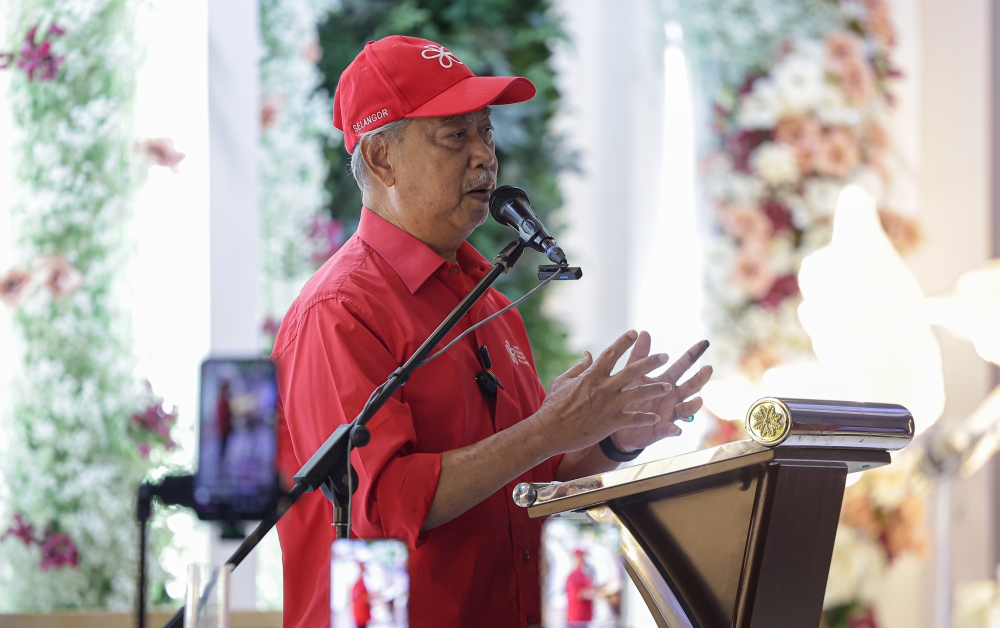
Tan Sri Muhyiddin Yassin has reasserted Parti Pribumi Bersatu Malaysia's role as the sole genuine Opposition force in Parliament, a declaration that reflects the ongoing upheaval characterising Malaysian politics. The statement comes at a time when the nation's political landscape remains fractured, with traditional alignments continuing to dissolve and new configurations emerging to reshape the balance of power in Dewan Rakyat. Muhyiddin's positioning of Bersatu represents both a strategic manoeuvre and a commentary on the fragmentation afflicting the broader Opposition ecosystem in Malaysia.
The emergence of such claims underscores a fundamental reality: Malaysian politics has undergone a profound transformation since the 2022 general election and the subsequent formation of the unity government. Where once distinct blocs — government and Opposition — operated in relative clarity, the current arrangement has blurred traditional demarcation lines. Bersatu, which had transitioned from government to quasi-Opposition status following internal party developments, now finds itself in a unique position to articulate its independence from the prevailing power structures. This positioning carries particular significance given Bersatu's history of shifting allegiances and its members' scattered placement across multiple legislative factions.
Muhyiddin's assertion reflects broader frustrations within the party regarding its perceived marginalisation in national discourse despite retaining parliamentary representation. Bersatu continues to hold substantive numbers in Dewan Rakyat, yet lacks the organisational influence or coalition weight that traditional Opposition parties might leverage. This positioning as Parliament's "only true Opposition" appears designed to reclaim narrative space and distinguish Bersatu from other groups that, while technically not government-aligned, operate within consultative frameworks or maintain tacit understandings with the ruling administration. The distinction Muhyiddin articulates hinges on the notion of principled, uncompromising parliamentary scrutiny.
The claim simultaneously highlights the precarious status of Opposition politics in Malaysia's current configuration. With the unity government consolidating support across previously antagonistic blocs, conventional Opposition formation has become considerably more difficult. The Pakatan Harapan grouping, which functioned as the primary Opposition vehicle following 2018, now forms part of the administrative framework through multiple constituent parties. This reconfiguration has left a political vacuum where robust parliamentary opposition might traditionally materialise, creating space for parties like Bersatu to advance alternative claims to oppositional authenticity. Whether such claims resonate with voters or translate into electoral advantage remains uncertain.
The Malaysian electorate's response to Bersatu's repositioning will prove telling for the party's long-term trajectory. Despite its parliamentary representation, Bersatu has struggled to establish deep grassroots penetration or secure commanding support in particular constituencies. The party's messaging around principled Opposition status must contend with public perceptions shaped by its previous government participation and the controversial circumstances surrounding certain leadership transitions. Public memory of Bersatu's earlier coalitional choices, particularly around the 2020 Sheraton Move, continues to inform assessments of the party's commitment to consistent political positioning. Building credibility as an uncompromising Opposition force requires sustained demonstration of such commitment over extended periods.
The implications of Bersatu's strategic repositioning extend beyond the party's individual circumstances to affect broader Opposition coherence in Malaysia. A fragmented Opposition landscape, with multiple competing claims to authenticity and leadership, typically benefits the governing establishment by diluting counter-majoritarian messaging and splitting non-government votes across numerous competing candidates. Should Bersatu pursue aggressive parliamentary tactics aimed at distinguishing itself from other Opposition elements, such activities might inadvertently fragment Opposition unity further rather than strengthen collective challenge to government policies. Conversely, collaborative Opposition engagement could dilute Bersatu's claims to distinctive principle-driven opposition.
Regional political dynamics add another dimension to Malaysia's Opposition landscape and Bersatu's position within it. Throughout Southeast Asia, Opposition movements have faced increasing complexity navigating coalition politics and managing relationships with governing structures ostensibly opposed to their platforms. The region's experience suggests that sustained Opposition relevance requires clear ideological differentiation, institutional credibility, and consistent messaging over time. Bersatu's recent history presents challenges across each dimension, though the party possesses organisational infrastructure and parliamentary presence that many nascent Opposition movements lack entirely.
The coming months will likely determine whether Muhyiddin's assertion translates into substantive political consequence. Parliamentary questioning intensity, legislative proposals, and public advocacy initiatives will collectively signal Bersatu's commitment to oppositional positioning. Should the party consistently advance substantive policy critiques and legislative alternatives, the claim to distinctive Opposition status may gradually acquire credibility. However, absent such sustained demonstration, the assertion risks appearing merely rhetorical — another manoeuvre in Malaysia's perpetually shifting political chess game. The ultimate validation of Bersatu's opposition credentials will emerge through consistent action rather than declarative statements.
Fundamentally, Muhyiddin's remarks illuminate the unsettled nature of Malaysian politics entering the latter half of 2024. Traditional analytical frameworks distinguishing government from Opposition have lost much of their explanatory power, replaced by a more complex landscape featuring multiple overlapping interests, shifting allegiances, and competing claims to legitimacy. Bersatu's positioning as Parliament's sole authentic Opposition represents both a reflection of this complexity and an attempt to navigate it strategically. Whether the party successfully executes this repositioning will significantly influence not merely Bersatu's electoral prospects but the broader trajectory of Malaysian parliamentary democracy.

