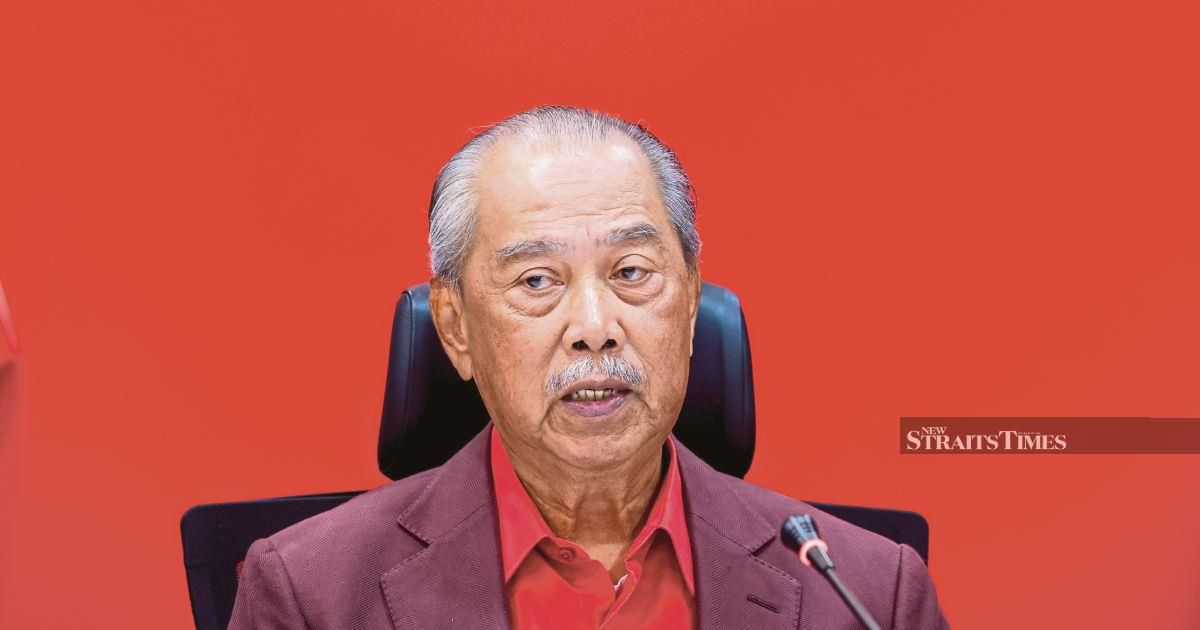
Bersatu president Tan Sri Muhyiddin Yassin has levelled fresh accusations at Umno, alleging that the party is orchestrating a campaign to destabilise the ruling unity government formed with Pakatan Harapan. The allegation carries particular weight given Muhyiddin's recent experiences navigating treacherous coalition politics, during which his Perikatan Nasional administration unravelled amid defections and strategic manoeuvring.
Muhyiddin's assertion suggests a pattern of political behaviour that he views as characteristic of Umno's approach to governing coalitions. The Bersatu leader appears to be flagging concerns about the stability of the current administration, which represents one of Malaysia's most complex political arrangements in recent years. His warning implies that lessons from the PN government's collapse remain unheeded, with similar tactics potentially at play within the broader unity framework.
The unity government brought together traditionally opposed political camps—the Malay-Muslim nationalist Umno alongside the multicultural, reform-oriented Pakatan Harapan—in an unprecedented compact following the 2022 general election. This arrangement was conceived as necessary to prevent political deadlock and ensure stable governance, yet the coalition has remained fragile. Tensions between the constituent parties have surfaced repeatedly, encompassing disagreements over policy direction, ministerial portfolios, and ideological positioning.
Umno's position within this coalition has been complicated throughout. As a party accustomed to dominant power, accepting a subordinate role within a shared government framework has created friction. The party's electoral performance in 2022, which saw it retain the most parliamentary seats among Umno-aligned parties, arguably created expectations of greater influence than the unity arrangement ultimately provided. This frustration may underpin the intra-coalition tensions that Muhyiddin is now highlighting.
The Perikatan Nasional government that preceded the current unity arrangement lasted just 18 months, from March 2020 to August 2021. That administration, which Muhyiddin led, collapsed amid a cascade of ministerial resignations, strategic defections, and parliamentary manoeuvring. Umno, initially part of that coalition, withdrew support when party leadership determined that the arrangement was not serving their interests. The subsequent government formation tilted decisively against Muhyiddin's Bersatu, effectively sidelining the party from executive power.
Muhyiddin's comparison carries an implicit warning: if Umno employed destabilising tactics that ultimately benefited themselves while destroying a previous government, they may attempt similar strategies within the unity administration. The mechanics of such an operation would theoretically involve creating internal conflicts, withdrawing support at critical legislative moments, or encouraging defections among coalition partners' elected representatives. Each of these tools was deployed during the PN era's final months.
From an analytical perspective, Muhyiddin's allegations reveal deeper anxieties about coalition management in Malaysia's fractionalised parliament. With no single party commanding a clear majority since 2018, governments have become dependent on complex arrangements that satisfy multiple, sometimes contradictory, demands. The unity government represents an attempt to stabilise this environment through institutional discipline, yet each component party retains the capacity to unilaterally destabilise the arrangement by withdrawing support.
Umno's perspective on these allegations would likely stress that the party has remained committed to unity government principles while advocating for policies aligned with its electoral mandate and base expectations. Party leaders might argue that internal policy disagreements constitute normal democratic discourse rather than conspiratorial plotting. However, the gap between coalition rhetoric and private positioning has consistently generated suspicion among smaller partners like Bersatu.
For Malaysian observers and regional analysts, Muhyiddin's statement underscores the ongoing fragility of consensus-based governance in the country. The unity government was sold to voters as a necessary stabilising force, yet the very political forces that necessitated such an arrangement remain in play. Coalition mathematics remain precarious, with the government's longevity dependent on continued cooperation among parties with fundamentally differing worldviews and policy preferences.
The implications extend beyond immediate coalition stability. If senior politicians are publicly articulating fears about deliberate sabotage, this signals that trust mechanisms within the unity framework remain underdeveloped. Institutional safeguards that prevent one partner from unilaterally destroying the entire arrangement have apparently failed to satisfy smaller coalition members' concerns. This lack of confidence could itself become a self-fulfilling prophecy, generating the very instability that Muhyiddin warns against.
Looking forward, these tensions raise questions about whether Malaysia's parliamentary system can sustain complex multi-party coalitions over extended periods. The Bersatu leader's warning implicitly argues that the answer remains uncertain. Without addressing the fundamental insecurities that prompt parties to contemplate withdrawal or sabotage, even the most carefully constructed unity arrangements face perpetual vulnerability to the kind of political manoeuvrings that have repeatedly reshaped Malaysian governments over the past four years.

