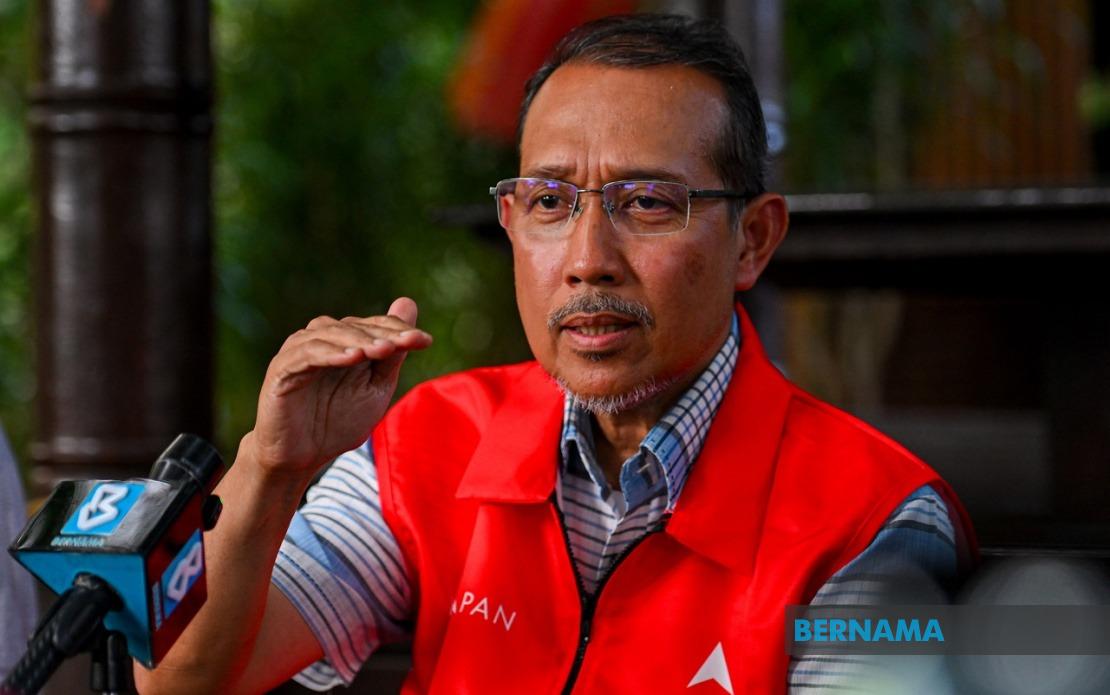
Datuk Muhammad Nazri Kassim, the Pakatan Harapan candidate contesting the Ampangan state seat in Negeri Sembilan's upcoming elections, has articulated an ambitious blueprint to reshape the constituency as a vibrant, economically resilient community. Speaking during a campaign event in Seremban, the candidate outlined his vision of establishing Ampangan as a cleaner, safer township that functions as a genuine economic hub, a strategic repositioning that capitalises on the constituency's advantageous location within the state capital's commercial core.
At the heart of Muhammad Nazri's campaign platform lies a pragmatic focus on foundational infrastructure maintenance—an unglamorous but essential agenda that directly addresses residents' lived experiences. He has identified the systematic upkeep of roads, drainage systems, ditches, and river networks as critical priorities, framing these improvements not merely as maintenance tasks but as prerequisites for preventing the devastating floods that have periodically ravaged the area. This infrastructure-first approach reflects a lesson hard-learned from the major flooding episode of 2021, which exposed vulnerabilities in the constituency's water management capacity and prompted subsequent interventions by the Negeri Sembilan administration.
The candidate highlighted the relative success of the state government's collaborative river management initiatives, noting that a sustained focus on river maintenance over the preceding three to four years had demonstrably reduced the severity of flooding incidents. This track record becomes relevant context for voters evaluating competing claims about service delivery capabilities. Muhammad Nazri has articulated a conception of proper river stewardship that extends beyond disaster prevention into quality-of-life enhancement—suggesting that cleaned, maintained waterways could catalyse the development of recreational facilities including jogging paths, cycling routes, and sporting amenities that would benefit residents across income levels.
Crucially, Muhammad Nazri has reframed infrastructural improvements as economic development catalysts rather than standalone public works. His proposal to revitalise the Benteng district and surrounding areas represents a deliberate attempt to unlock Ampangan's latent commercial potential. The candidate contends that a visibly clean, well-maintained constituency with attractive landscaping and functional drainage infrastructure becomes inherently more appealing to potential visitors and commerce-seeking entrepreneurs. By this logic, investing in environmental quality and orderliness directly translates into expanded business opportunities for small traders and local residents—a formulation that attempts to bridge traditional divides between public services and private economic enterprise.
The Ampangan constituency presents a distinctive political terrain. With 21,336 registered voters and a geographic footprint spanning the heart of Seremban parliamentary division, the seat occupies a position of symbolic importance as well as practical consequence. The contest itself has crystallised into a three-way competition featuring Muhammad Nazri alongside Datuk Dr Mohamad Rafie Malek representing Perikatan Nasional and Noor'azah Harun contesting for Parti Pribumi Bersatu Malaysia. This fragmentation of the opposition vote—split between PN and Bersatu rather than presenting a unified challenge—may afford PH certain tactical advantages in a constituency where traditional party loyalties potentially favour the ruling coalition.
Muhammad Nazri's campaigning methodology reflects contemporary preferences for grassroots engagement over mass media appeals. His adoption of a house-to-house canvassing strategy, whereby the candidate personally visits residents to elicit their concerns and priorities, represents an attempt to construct an evidence-based platform grounded in direct constituent feedback rather than top-down messaging. This approach facilitates the identification of what the candidate characterises as residents' "actual concerns," implying that published policy agendas often diverge from the authentic preoccupations of ordinary voters. By positioning himself as a listener first and agenda-setter second, Muhammad Nazri constructs a political persona emphasising responsiveness and contextual sensitivity.
The electoral calendar has been formalised by the Election Commission, with polling day scheduled for August 1 and early voting permitted on July 28. This timeline grants candidates and their parties approximately one week to intensify outreach efforts and consolidate voter commitment—a compressed window that rewards campaign organisations with substantial ground infrastructure and volunteer networks. For PH, leveraging Prime Minister Datuk Seri Anwar Ibrahim's participation in campaign events demonstrates commitment to the Negeri Sembilan battleground and implicitly endorses Muhammad Nazri's candidacy with the resources and prestige of the federal leadership.
The state election assumes particular significance within Malaysia's broader political landscape. The Negeri Sembilan results will serve as an early indicator of voter sentiment toward the PH-led federal government's performance since assuming office, generating reverberations that extend considerably beyond the state's boundaries. A strong showing would reinforce claims of sustained electoral support for Anwar's administration, whereas disappointing results would embolden critics questioning the government's capacity to deliver material improvements in voter welfare and constituency conditions. In this context, Muhammad Nazri's locally-focused platform addresses immediate resident concerns whilst simultaneously contributing to a broader electoral narrative about governmental competence and development delivery.
For Malaysian observers tracking state-level politics in resource-constrained governance environments, Ampangan's electoral dynamics illuminate persistent tensions between ambitious development aspiration and fiscal realities. The candidate's emphasis on infrastructural maintenance and localised economic revitalisation reflects awareness that constituency-level politics increasingly focuses on visible, tangible improvements—cleaner public spaces, functioning drainage systems, accessible business opportunities—rather than abstract ideological positioning. This materialist orientation suggests shifting voter priorities favouring pragmatic service delivery over rhetorical appeals, a development with implications across Malaysia's competitive electoral landscape as parties adjust campaign strategies accordingly.

