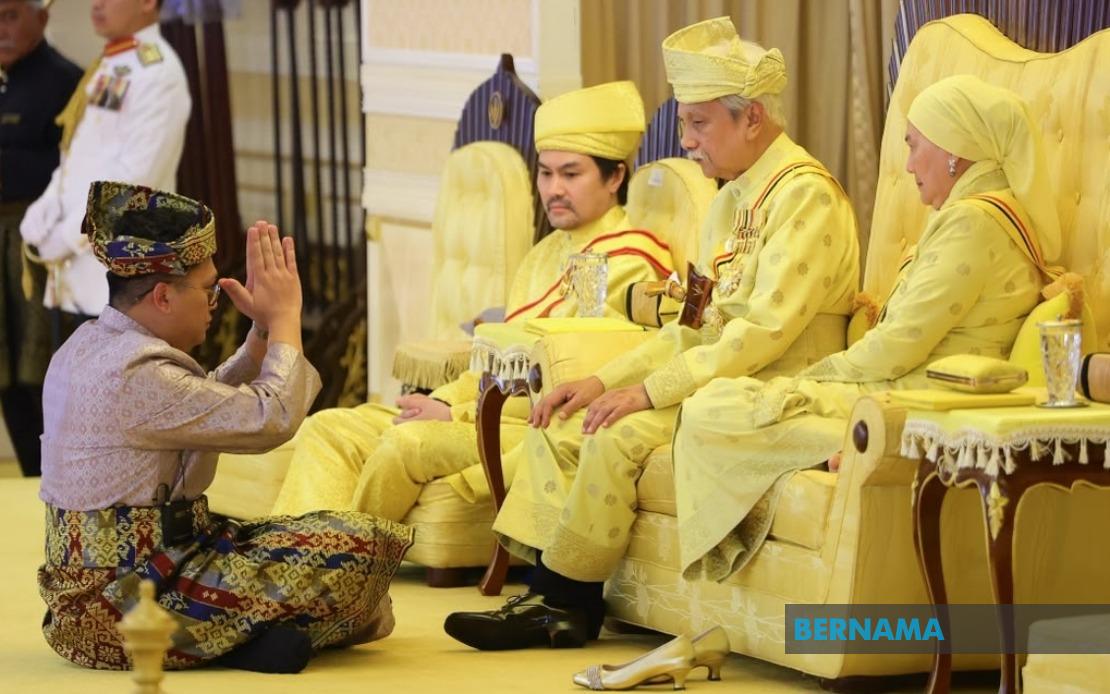
The Yang Dipertuan Besar of Negeri Sembilan, Tuanku Muhriz Tuanku Munawir, officiated the formal installation of Muhammad Faris Johari as the 11th Undang of Luak Sungei Ujong on June 27 at Istana Besar Seri Menanti. The ceremony represented a significant moment in the state's traditional governance structure, marking the elevation of the young professional to one of the hereditary leadership positions that remain integral to Negeri Sembilan's distinctive constitutional arrangements.
The installation followed customary protocols that underscore the ceremonial importance of the role within Negeri Sembilan's Adat Perpatih system. The proceedings commenced with the Orang Empat Istana—the senior palace officials—formally seeking Tuanku Muhriz's permission to begin the ceremony. Muhammad Faris subsequently pledged his loyalty directly to the ruler, a ritual that reinforces both personal allegiance and constitutional obligation to the institution of the Yang Dipertuan Besar. Upon completion of these formalities, Tuanku Muhriz formally proclaimed Muhammad Faris as the 11th Undang and conferred upon him the title Datuk Klana Petra, a designation historically associated with the leadership of Sungei Ujong.
In his remarks during the installation, Tuanku Muhriz emphasised the fundamental importance of upholding the pledges undertaken with unwavering sincerity and personal integrity. The ruler directed particular attention toward the responsibilities of the Orang Kaya, the collective body of traditional chieftains within the state structure, calling upon them to maintain steadfast loyalty to the institution of the Yang Dipertuan Besar and to preserve the respectful and close relationship expected between the customary leadership and the palace. This directive reflects ongoing concerns about maintaining the relevance and cohesion of traditional governance frameworks in contemporary Malaysia.
Tuanku Muhriz articulated a broader vision concerning the preservation of Negeri Sembilan's unique constitutional and cultural identity. He stressed that relationships anchored in mutual respect, genuine trust, and consensus-building remain essential to safeguarding the constitutional monarchy system, protecting customary traditions, and sustaining the state's overall well-being. This emphasis on consensus-based governance is particularly significant given that Negeri Sembilan operates under the Adat Perpatih system—a matrilineal customary framework distinct from other Malaysian states—which requires ongoing commitment to preserve its distinctive principles and practices.
The ruler further extended an appeal to the broader population, urging citizens to collaborate actively with the customary leadership in fulfilling their respective obligations to the state. He particularly highlighted the importance of upholding and transmitting the values embedded within Adat Perpatih, the traditional legal and social system that has been transmitted through generations and remains foundational to Negeri Sembilan's identity. This call represents an acknowledgment that cultural preservation requires not merely institutional commitment but also active participation from the general populace.
Muhammad Faris, aged 28, brings professional credentials that reflect contemporary educational standards alongside his traditional responsibilities. Born on October 30, 1997, he completed a bachelor's degree in accountancy from Universiti Teknologi MARA (UiTM) and subsequently obtained his professional qualification through the Association of Chartered Certified Accountants (ACCA) programme, which he completed in 2022. His marriage to Sharifah Amirah Syed Ismail Ash-Shahab represents an alliance with another prominent family, a consideration of continuing importance within hereditary leadership structures. The combination of modern professional training and traditional custodianship responsibilities exemplifies the contemporary challenge of balancing inherited governance roles with contemporary skill requirements.
The ceremony attracted attendance from senior members of the Negeri Sembilan royal household, including the Tunku Ampuan Besar, Tuanku Aishah Rohani Tengku Besar Mahmud, and other immediate members of the royal family. The presence of Menteri Besar Datuk Seri Aminuddin Harun and heads of state government departments underscored the significance of integrating customary governance with modern state administration. This bridging of traditional and contemporary government structures reflects Negeri Sembilan's continuing evolution in maintaining dual systems of authority.
The installation of Muhammad Faris follows established patterns in Negeri Sembilan's political succession, though the appointment of relatively young individuals to these hereditary positions has become increasingly common as traditional families seek to ensure continuity of leadership during periods of demographic change. The selection process for Undang positions typically remains governed by customary law and family succession, rather than popular election, preserving a form of hereditary governance that sets these appointments apart from Malaysia's electoral political system.
The state administration will conduct a further royal audience later the same day to formally install the 22nd Undang of Luak Rembau, indicating that the palace scheduled multiple traditional ceremonies to complete transitions within the customary leadership structure. These parallel installations suggest that several hereditary leadership positions may have become vacant concurrently, possibly through retirement or succession of longstanding office-holders.
Negeri Sembilan's system of Undang positions and its Adat Perpatih framework remain distinctive within Malaysia's constitutional structure. While most Malaysian states follow more conventional hierarchical governance models, Negeri Sembilan's semi-federal arrangement has historically allowed greater autonomy for customary leaders in local and state affairs. The continued formality with which these appointments are conducted suggests that the state remains committed to preserving these traditional structures despite modernisation pressures affecting other aspects of governance. For Malaysian readers, Muhammad Faris's installation exemplifies how hereditary systems and traditional governance continue to function within Malaysia's constitutional monarchy framework, particularly in states with distinct customary traditions. The appointment also demonstrates how emerging leaders navigate the intersection between professional career development and inherited responsibilities, a tension increasingly visible within Malaysia's traditional leadership structures as younger generations assume positions with both cultural significance and contemporary administrative expectations.

