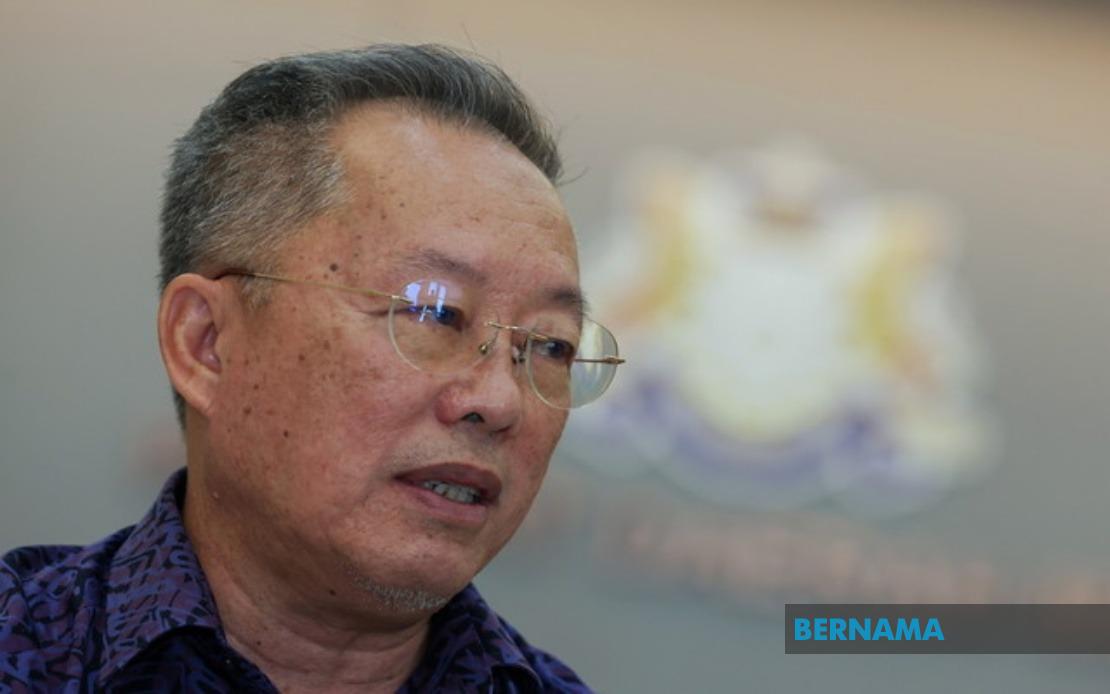
The Muar District Office has firmly rejected allegations that it prevented a government event featuring Prime Minister Datuk Seri Anwar Ibrahim from proceeding, instead clarifying that the programme scheduled for June 15 underwent a venue change in accordance with administrative protocols. District Officer Zainal Eran made the clarification on July 2, emphasizing that the relocation decision reflected institutional commitment to impartiality in the deployment of public facilities rather than any attempt to suppress the engagement initiative.
The original plan called for Anwar's community engagement programme to take place at the Sungai Balang Mukim Penghulu Complex. However, following consultations between the Muar District Administration and the Johor State Development Office, the gathering was shifted to Pantai Leka Food Court Square. Zainal stressed that the fundamental principle guiding this decision was ensuring that state and federal government properties remain insulated from partisan political usage, a position he argued was essential for maintaining institutional neutrality across the electoral cycle.
According to Zainal's account, the district administration faced considerable practical constraints in coordinating the original arrangement. The event notification arrived with insufficient advance warning—less than 24 hours—leaving minimal opportunity for proper logistical coordination with relevant agencies and stakeholders. The abbreviated timeframe, coupled with incomplete programme specifications, created operational difficulties that prompted the administration to explore alternative solutions that could accommodate the event while maintaining orderly execution and administrative compliance.
Despite the relocation, the programme ultimately achieved its intended objective of facilitating direct dialogue between federal government representatives and rural constituents. The rescheduled gathering drew substantial participation from federal government officials, state development office staff, and members of the local community, suggesting that the venue change did not diminish the engagement initiative's outreach impact or public reception. Zainal presented this outcome as evidence that the district administration had actively facilitated rather than obstructed the Prime Minister's community interface.
A subsequent inspection conducted on the morning of the event revealed circumstances that, in the district officer's view, validated the administration's cautious approach. Officials observed that the Pantai Leka Food Court Square vicinity had already been decorated with political party flags prior to the gathering, despite the formal campaign period for the Johor state election not yet having commenced officially. This observation prompted Zainal to reiterate that the relocation decision served a protective function, ensuring that government facilities would not become associated with partisan campaign activity or appear to endorse particular political movements during the sensitive pre-election period.
The timing of these events intersects significantly with the broader Johor electoral calendar. The state election is scheduled for July 11, with early voting designated for July 7, meaning that the June 15 programme occurred during the period when political sensitivities around governmental impartiality reached particular intensity. During such intervals, administrative agencies face heightened scrutiny regarding whether their deployment of public spaces or resources might inadvertently create perceptions of favouring particular political contestants. The Muar District Administration's decision to shift venues demonstrates how such considerations weigh in administrative decision-making processes, even when the event itself carries no formal campaign designation.
Zainal's public statement emphasized the importance of responsible conduct from all stakeholders regarding venue allocations and programme coordination. He urged all parties to refrain from attributing political motivations to what he characterized as routine administrative determinations designed to uphold procedural standards. The framing reflects an institutional perspective that distinguishes between programme obstruction and venue modification based on administrative grounds—a distinction that carries practical implications for how government agencies navigate the intersection of public engagement, electoral periods, and institutional neutrality.
The episode reveals ongoing tensions in Malaysian governance regarding the boundary between facilitating governmental communication with citizens and maintaining clear separation between state machinery and electoral activity. For Malaysian readers and Southeast Asian observers, the incident illustrates how carefully government administrations must calibrate their engagement strategies during election cycles, balancing the Prime Minister's legitimate need to communicate with constituents against regulations designed to prevent state resources from appearing to advance particular political interests. The situation underscores that venue selection decisions, while seemingly technical in nature, carry substantial political and institutional significance in contexts where electoral integrity and impartiality concerns remain paramount.
The Muar District Office's public clarification serves multiple audiences. Internally, it reinforces administrative guidance regarding facility usage and programme coordination during election periods. For the public and opposition stakeholders who had questioned the original arrangement, it provides an official account intended to counter perceptions of administrative overreach or political obstruction. The emphasis on successful programme execution at the alternative venue attempts to demonstrate that administrative requirements and democratic engagement need not be fundamentally opposed, provided that proper coordination mechanisms function and all parties approach venue determinations with shared commitment to institutional integrity.
Moving forward, the incident may influence how future government engagement programmes are scheduled and coordinated during electoral periods across Malaysian states. District-level administrative offices will likely intensify pre-event consultation with higher authorities to ensure adequate notice periods and clear programme specifications before approving government facilities for ministerial activities. This represents an operational consequence of the Muar experience—a refinement of administrative processes aimed at preventing future ambiguity regarding facility usage and programme authorization, particularly when governmental leaders seek to conduct community engagement during electorally sensitive timeframes.

