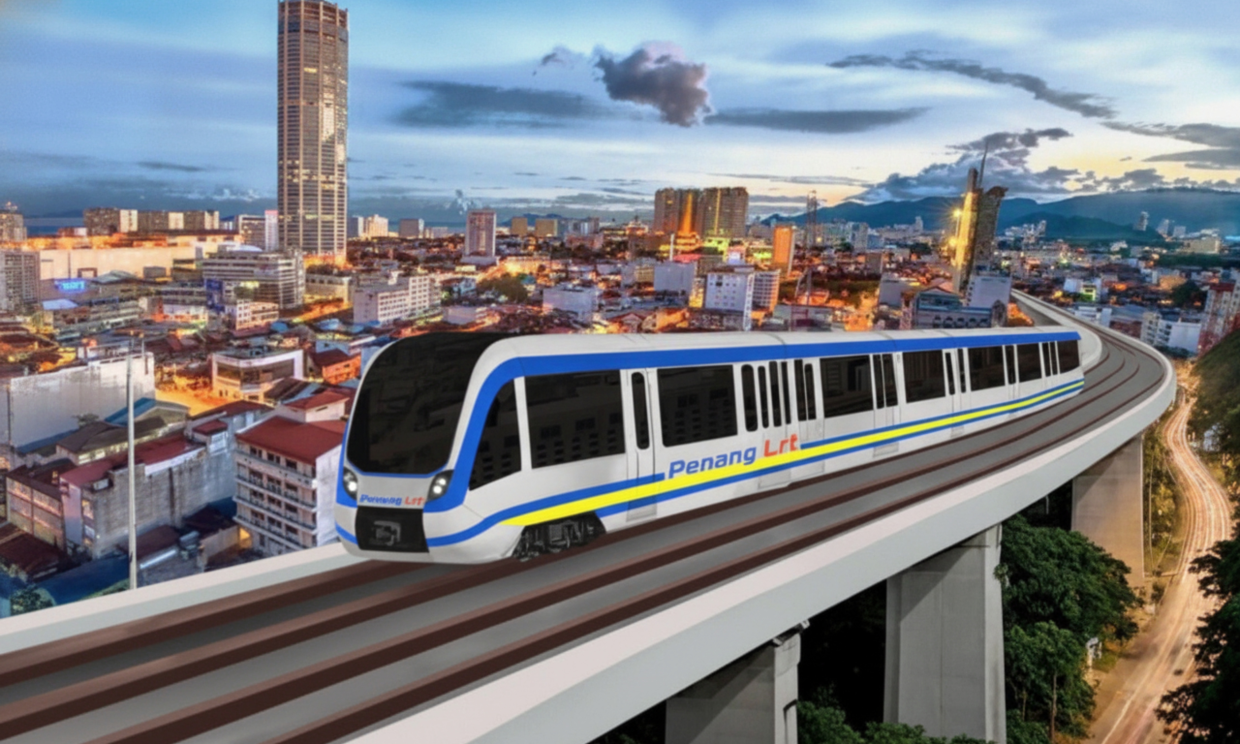
Malaysian Resources Corp Bhd (MRCB) has clinched a RM3.028 billion contract to design, supply, install and maintain the railway systems for the Penang Light Rail Transit Mutiara Line project, representing one of the largest recent infrastructure awards in Malaysia's transport sector. The announcement, made through a Bursa Malaysia filing, underscores MRCB's position as a leading player in major rail infrastructure development amid the country's push to expand urban transit networks across key economic zones.
The contract has been structured as an 90:10 unincorporated joint venture arrangement, with MRCB holding the majority stake alongside a strategic partner. This partnership model is increasingly common in large-scale transport infrastructure projects, allowing MRCB to leverage complementary expertise while maintaining operational control of the delivery framework. Joint ventures of this nature enable Malaysian contractors to spread financial and operational risk while ensuring project continuity and technical proficiency across multiple specialized domains.
The 68.8-month project timeline—approximately five years and nine months—encompasses the full spectrum of railway system development from initial engineering design through to the final handover and operational support phase. This extended duration reflects the complexity of integrating multiple interconnected systems across the entire Penang LRT network. MRCB will be responsible for supplying and installing the trains themselves, a particularly capital-intensive component that requires significant international procurement and local assembly coordination. Beyond rolling stock, the contract covers the installation and commissioning of the signalling infrastructure, which is critical for safe and efficient train operations and frequency management.
Power supply systems represent another critical element under MRCB's purview, involving the design and installation of electrical distribution networks that will support the high-capacity demands of a modern rapid transit system. The telecommunications infrastructure component ensures that all systems—from operational control centres to passenger information displays—can communicate seamlessly across the network. The ticketing system integration, meanwhile, must be compatible with Malaysia's broader public transport payment ecosystem, potentially linking with existing rail and bus networks across Penang and potentially beyond.
The project's contribution to MRCB's future earnings potential has been highlighted by the company as a key strategic benefit, suggesting that the margins and contract terms are favourable. However, the company has also transparently acknowledged the material risks inherent in such large-scale projects. Construction-related uncertainties, including potential delays in material sourcing and equipment delivery, remain persistent challenges in the current global supply chain environment. Price volatility in steel, electronics, and other critical inputs could impact project costs, particularly given the extended project duration.
MRCB's risk mitigation strategy relies on its established track record in delivering complex infrastructure projects across Malaysia. The company has previously overseen several major transport and building initiatives, providing institutional knowledge about project scheduling, vendor management, and quality assurance protocols. The existence of documented operational procedures and control measures suggests that MRCB has systematized its approach to managing variables beyond its direct control, such as international material prices and regulatory approval timelines.
The Penang LRT Mutiara Line represents a cornerstone of the northern state's long-term urban development strategy, addressing transport capacity constraints in one of Malaysia's most economically vibrant regions. Penang's role as a major manufacturing and technology hub means that efficient public transport infrastructure has direct implications for workforce mobility, business productivity, and quality of life for residents. The Mutiara Line's expansion of rail coverage complements existing bus networks and the earlier monorail systems, creating a more integrated transit ecosystem that can compete with private vehicle use.
From a broader economic perspective, the RM3.028 billion contract value reflects substantial capital investment flowing into Malaysia's infrastructure development pipeline. This spending creates direct employment for engineers, technicians, and construction workers, while also stimulating supply chain activity among materials suppliers and equipment manufacturers. The project's extended timeline means sustained economic activity and employment opportunities extending well beyond the initial design and procurement phases.
Market reaction to the announcement was notably positive, with MRCB's share price climbing one sen to 32 sen at midday trading, representing a 3.23% gain. More significantly, Theta Edge, MRCB's joint venture partner in this contract, surged 14 sen or 25.45% to close at 69 sen. The market's enthusiastic reception suggests investor confidence in both the financial viability of the project and the executing partners' capability to deliver on schedule and within budget parameters, factors that typically weigh heavily on equity valuations for construction and infrastructure companies.

