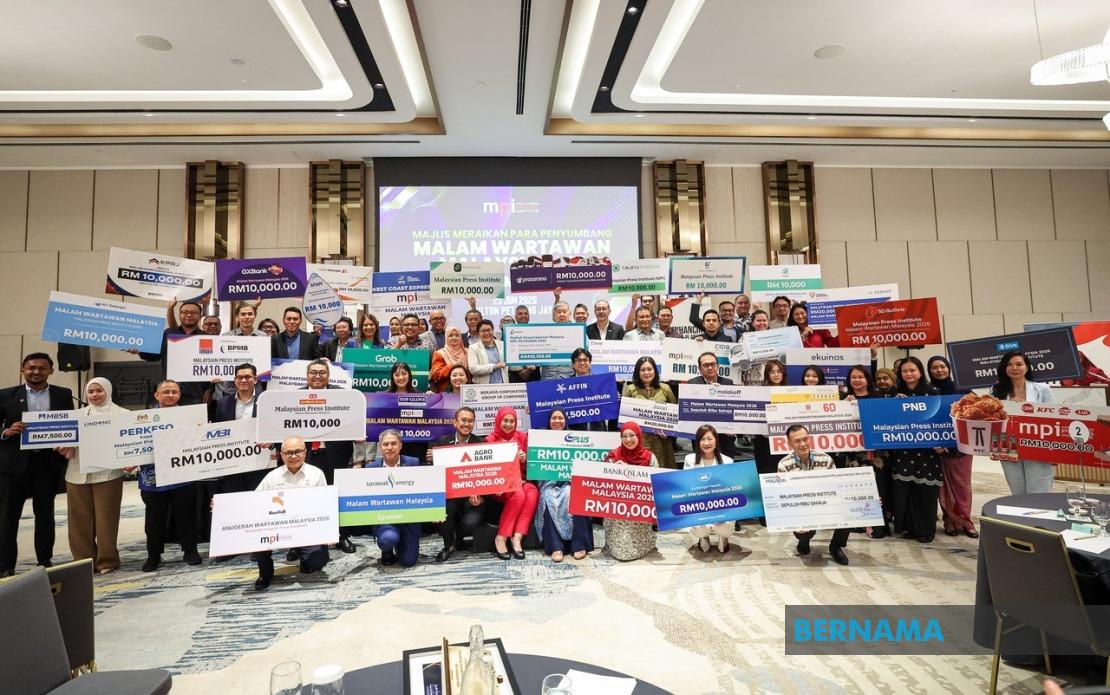
The Malaysian Press Institute (MPI) announced on June 25 that it has successfully mobilised RM1.037 million in financial backing for Malaysia Press Night 2026, the forthcoming iteration of its flagship annual industry celebration. The financial package combines RM587,000 in direct contributions from 60 different organisations alongside RM450,000 in sponsorship from PETRONAS, marking the petroleum giant's continued investment in Malaysian journalism excellence over a three-decade relationship.
Dr Ainol Amriz Ismail, MPI's chief executive officer, articulated the deeper significance of the fundraising achievement during remarks at the Contributors' Appreciation Ceremony held in Kuala Lumpur. He characterised the ensemble of supporters as evidence of collective dedication to sustaining journalism that operates with professional rigour, ethical discipline, and public trust. The phrasing underscores a broader anxiety within Malaysia's media ecosystem about maintaining editorial standards amid commercial and political pressures—a concern that resonates throughout Southeast Asia as news organisations grapple with digitalisation, advertising decline, and information warfare.
PETRONAS's sustained engagement carries particular weight given its three-decade patronage of the MPI-PETRONAS Malaysian Journalism Awards, a programme that has become synonymous with recognising reportorial excellence across the country. The energy conglomerate's continued backing suggests corporate Malaysia's vested interest in a functioning media sector capable of investigating complex stories around governance, environmental issues, and economic accountability. For readers and industry observers, such backing represents a delicate balance: corporate support enables quality journalism, yet raises inevitable questions about editorial independence when major advertisers and sponsors wield considerable leverage.
The event's guest roster revealed the institutional weight MPI commands within Malaysian journalism circles. Attendance included MPI president Datuk Yong Soo Heong, deputy president Farrah Naz Abd Karim, and Datin Paduka Nur-ul Afida Kamaludin, chief executive of Bernama, the national news agency. PETRONAS's participation was represented by Jalina Joheng, general manager of Strategic Communications, Channels and Media Relations. This convergence of senior industry figures and government-linked media executives underscores how Malaysia Press Night functions as a principal gathering point for the formal journalism establishment.
Perhaps most significantly, Prime Minister Datuk Seri Anwar Ibrahim has confirmed attendance at the July 17 event, elevating its political profile considerably. Government attendance at media awards ceremonies carries multivalent implications: it can signal official recognition of journalism's constitutional role, yet simultaneously may subtly shape editorial considerations around coverage of sensitive governmental matters. For Malaysian newsrooms accustomed to navigating complex political terrain, the prime ministerial presence will undoubtedly concentrate minds on the boundaries between celebrating press freedom and maintaining amicable government relations.
Dr Ainol Amriz positioned Malaysia Press Night as fundamentally a celebration of those journalists engaged in the foundational work of fact-gathering, information verification, and accurate reporting. His characterisation reflected an underlying anxiety about journalistic practice in an era of deepfakes, misinformation, and algorithmic echo chambers. This rhetorical emphasis on verification and accuracy stands out because it addresses a real challenge confronting news organisations across Southeast Asia: how to maintain public faith in institutional journalism when social media algorithms reward sensationalism and false narratives spread faster than corrections.
The fundraising success also reflects MPI's broader institutional mission beyond Malaysia Press Night itself. Dr Ainol Amriz indicated that corporate contributions finance professional development programmes, industry training initiatives, and sector-wide projects designed to strengthen journalism across the country. These activities represent an important countervailing force to the commercial pressures fragmenting the Malaysian media landscape, where regional outlets compete fiercely for advertising revenue and reader attention. By pooling resources through MPI, participating organisations maintain shared investment in collective professional standards and capacity-building.
The appreciation ceremony featured a substantive panel discussion as part of what MPI described as its third-edition forum, bringing together prominent voices spanning traditional print, broadcast, and digital media. Malaysian Journalism Icon Datuk A. Kadir Jasin—a veteran commentator whose long career spans government service and independent commentary—shared space with Firdaus Hussamuddin of Karangkraf Group, one of Malaysia's largest media conglomerates; Namanzee Harris from TV AlHijrah, representing the Islamic broadcast sector; and Thiaga Rajan Muthusamy of Vanakkam Malaysia, reflecting the Tamil-language press. This composition suggests deliberate effort to represent Malaysia's media ecosystem in its full diversity, encompassing mainstream and community outlets, secular and faith-based broadcasters, and outlets serving different linguistic communities.
For Malaysian readers and media industry participants, the successful fundraising carries broader implications about the sustainability of quality journalism infrastructure. The RM1.037 million figure, while substantial, must be contextualised against the actual operating costs of modern newsrooms, digital transformation requirements, and investigative journalism projects that demand significant resource investment. The fact that MPI can mobilise such backing annually demonstrates institutional credibility and corporate goodwill, yet also raises questions about whether such voluntary contributions represent a stable long-term funding model for the training, recognition, and professional support that contemporary journalism requires.
The inclusion of PETRONAS as primary sponsor also invites consideration of how specific industries utilise media relations and journalism awards as tools of corporate reputation management. The petroleum sector globally faces sustained scrutiny over environmental impact, climate transition, and energy security—issues frequently generating investigative reporting. Through association with journalism awards and institutional support, energy companies position themselves as stakeholders in a functional media ecosystem, a positioning that simultaneously provides journalists with resources and potentially influences how energy-related stories get framed and contextualised.
Looking forward to the July 17 ceremony, Malaysia Press Night 2026 will operate in a particular moment for Asian journalism. Economic pressures continue forcing newsroom consolidations and staff reductions, while platforms like artificial intelligence present both tools for efficiency and threats to traditional journalistic employment. Within this context, an annual event celebrating journalism excellence, underwritten by major corporations and graced by prime ministerial attendance, serves symbolic functions beyond mere award distribution—it affirms, at least rhetorically, that Malaysian society remains invested in journalism's institutional role, even as the economic foundations supporting that profession shift beneath its feet.

