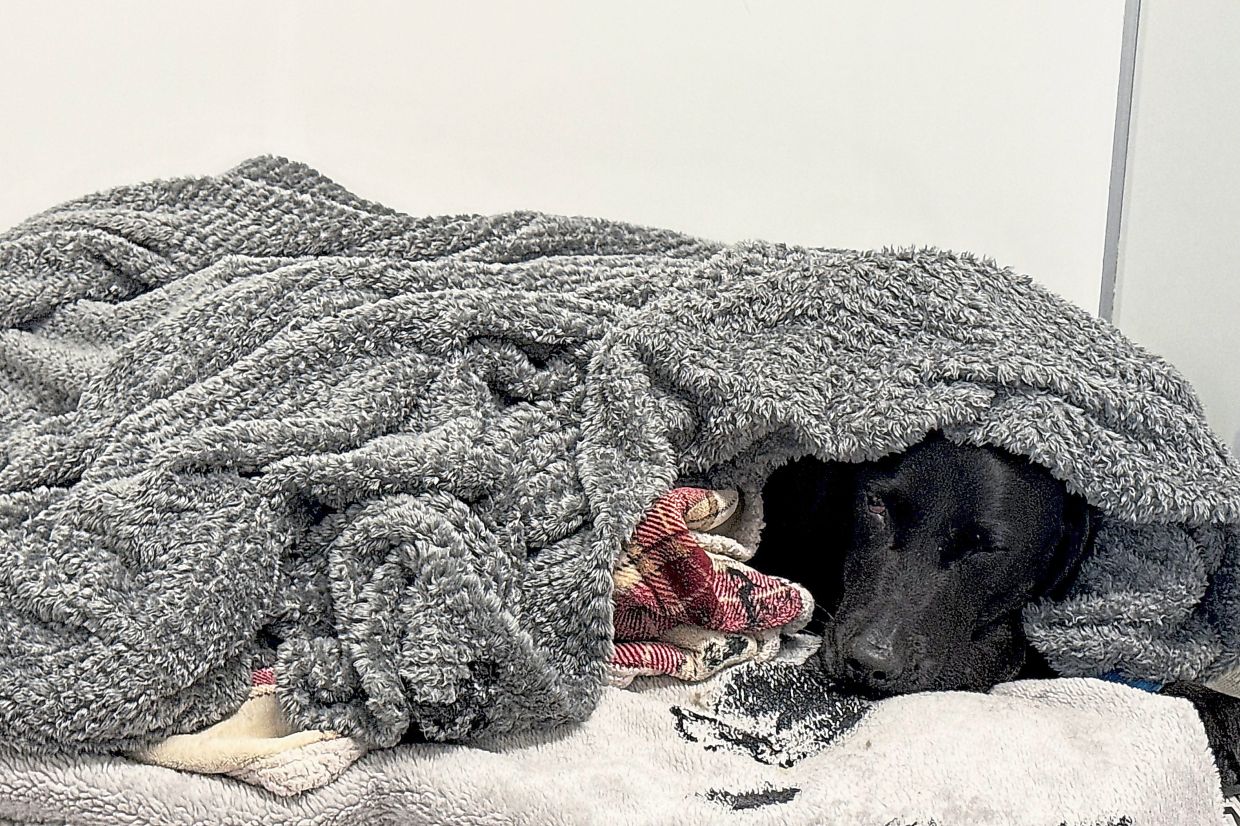
A routine family hike up Ben Nevis, Britain's tallest mountain, turned into a medical emergency when one of the dogs accompanying the group apparently consumed cannabis along the trail. Christina Bluhme, an experienced canine trainer with two and a half decades of professional experience, was midway through the ascent with her son Magnus and two dogs when her five-year-old black Labrador retriever Tokyo began displaying alarming symptoms that initially left the group bewildered about what was unfolding.
Tokyo's condition deteriorated rapidly as the group pushed toward the 1,345-metre Scottish Highland peak on July 5. The dog began swaying unsteadily, exhibiting movements reminiscent of intoxication, before losing the ability to walk altogether. Despite Bluhme's extensive background working with dogs, she found herself unable to identify what had afflicted her beloved pet. "She had a very bad trip," Bluhme later reflected on the frightening ordeal. "It was a very terrifying experience." The situation was compounded by the mountain's unpredictable weather, which had transformed from clear skies at the hike's outset into driving rain and plummeting temperatures around 5 degrees Celsius.
With Tokyo incapacitated and the group positioned more than three hours from the trailhead at high altitude, Bluhme made the difficult decision to abandon their summit ambitions. She instructed Magnus that descending the mountain took absolute priority over completing their climb. When Magnus called for assistance, however, the initial police response suggested uncertainty about whether a rescue team could be deployed. The situation might have become catastrophic had fortune not intervened in the form of the volunteer Lochaber Mountain Rescue Team, who happened to be descending after assisting with a helicopter evacuation of another injured hiker from the summit.
The rescue team's intervention proved decisive and remarkably swift. Responders placed Tokyo, who weighs approximately 25 kilograms, onto a stretcher and navigated the treacherous, rain-slicked rocky descent with impressive speed and agility. What would normally constitute a lengthy evacuation was completed in roughly an hour, a pace that left Bluhme astonished. "They were almost running," she recounted. "I was clinging on to the stretcher. They were so agile and so fast. It was incredible." The efficient rescue delivered the group to the trailhead, where veterinary personnel from Crown Vets in nearby Fort William were standing prepared to receive the dog.
Initial diagnostic efforts at the veterinary clinic pursued conventional explanations for Tokyo's neurological symptoms, with clinicians first considering spinal complications. However, a senior veterinarian recognised the pattern of Tokyo drifting in and out of consciousness as indicative of neurotoxin exposure rather than structural injury. When the veterinary team consulted with a poison control centre, the clinical presentation aligned precisely with cannabis intoxication. The diagnosis suggested that Tokyo had encountered and consumed cannabis-laced material discarded along the hiking trail—a hazard that increasingly threatens British pets.
The condition proved responsive to treatment, with veterinarians administering activated charcoal to mitigate the toxic effects. Tokyo achieved complete recovery overnight, emerging the following day without apparent lasting consequences from her intoxicating experience. Bluhme noted the striking contrast between her dog's distressed state and her rapid return to normalcy: "The next day it was like nothing ever happened. She recovered so quickly, and I'm the one still hanging a bit."
While Tokyo's case represents one family's harrowing mountain adventure, it reflects a broader trend affecting pet populations across Britain and extending far beyond. Cannabis toxicity in domestic animals has emerged as an increasingly documented veterinary concern in the United Kingdom, with cases climbing steadily in recent years. The problem proves substantially more acute in the United States, where the phenomenon has escalated dramatically as cannabis legalisation progresses across American states. The American Society for the Prevention of Cruelty to Animals formally recognised cannabis as one of the top ten toxins affecting pets for the first time in 2023, marking a significant milestone in veterinary health tracking.
The financial cost of Tokyo's rescue and treatment ran to £1,000, a sum that Bluhme considered eminently justified given the alternative outcome she had feared during the mountain ordeal. For Malaysian pet owners and those across Southeast Asia, Tokyo's experience carries cautionary implications as cannabis legalisation trends gradually reshape the global regulatory landscape. While recreational cannabis remains controlled throughout the region, the case underscores how environmental hazards associated with more permissive jurisdictions can inadvertently affect pets—whether through trail debris left by careless hikers or through other exposure pathways as social attitudes evolve.
The incident also highlights the critical role of specialist emergency services in remote terrain, particularly the volunteer rescue teams whose rapid response prevented a potentially fatal outcome. The Lochaber Mountain Rescue Team's readiness and capability transforming a catastrophic scenario into a manageable veterinary case demonstrates why maintaining robust outdoor rescue infrastructure remains essential for mountain tourism and recreation. For British hikers and pet owners venturing into Highland terrain, Tokyo's story serves as a sobering reminder that mountains present hazards extending well beyond traditional environmental perils.

