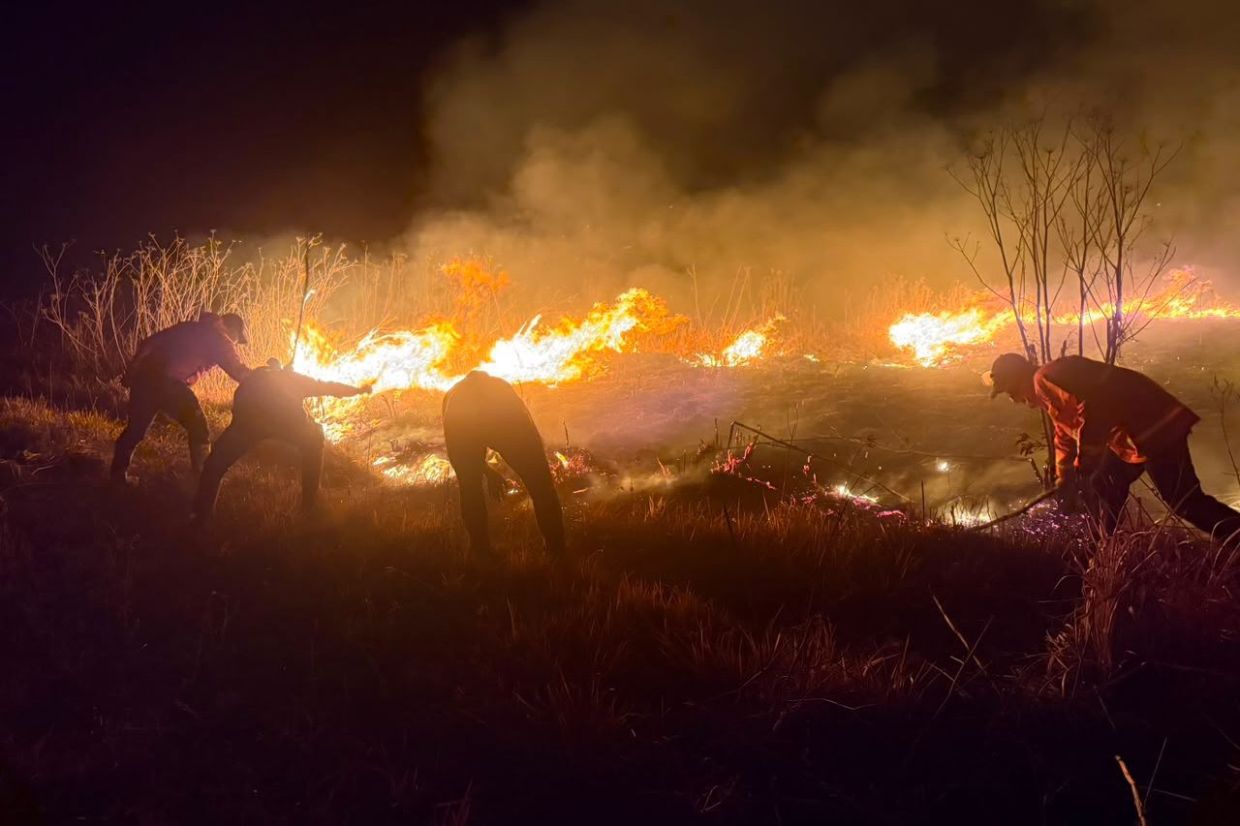
A significant wildfire engulfing Mount Bromo in East Java has now consumed around 520 hectares of landscape, marking a sharp deterioration in what was already a critical situation for Indonesia's environmental managers. The fire intensified dramatically over the weekend after strong winds swept across the slopes, carrying flames deeper into the mountain's grassland regions and accelerating destruction that had begun earlier in the week.
Rudijanta Tjahja Nugraha, the head of Bromo Tengger Semeru National Park Authority, acknowledged the severity of the expanding crisis during weekend briefings. He pointed to meteorological conditions as a primary factor in the fire's rapid progression, explaining that sustained wind activity beginning Saturday afternoon had transformed what might have been a containable incident into a sprawling emergency. The fire's movement from higher elevations downward into lower zones presented particular challenges for firefighting operations already stretched across the volcanic terrain.
The underlying vulnerability of the landscape itself contributed significantly to the disaster's scale. Months of dry weather had left vegetation across the mountain parched and exceptionally flammable. This combination of tinder-dry grasslands, scrub forests, and natural savanna meant that once flames took hold, they encountered minimal natural resistance. Local ecological conditions essentially created an environment primed for rapid fire propagation—a situation increasingly common across Indonesia during dry seasons as climate patterns shift.
The national park authority made the decision to close all access points to Mount Bromo beginning Saturday evening, implementing a full tourist closure effective until further notice. This dramatic measure reflected serious concerns about visitor safety given the active fire conditions and unpredictable wind patterns. Administrators moved to mitigate economic disruption for affected tourists by offering straightforward alternatives: visitors could either reschedule their trips for later dates or request full refunds of their booking payments. The closure highlighted the tension between environmental protection and economic considerations that Indonesia regularly navigates with its major tourism destinations.
Investigative efforts to determine the fire's origin have been handed to law enforcement authorities, according to statements from Forestry Minister Raja Juli Antoni. The minister underscored the government's position on intentional forest destruction by warning that anyone found responsible for deliberately burning forest and land areas would face appropriately severe penalties under Indonesian law. Such pronouncements reflect growing pressure on the government to demonstrate serious consequences for environmental crimes, particularly given Indonesia's international commitments on forest preservation.
Authorities had already suggested on Friday that human activity likely initiated the blaze, a conclusion that shifted initial investigative focus toward potential criminal responsibility rather than natural causes like lightning strikes. This assessment carries significant policy implications, as it suggests either carelessness resulting in accidental ignition or deliberate arson. Either scenario raises uncomfortable questions about enforcement of fire prevention protocols in protected areas and the effectiveness of patrols designed to deter intentional burning.
The Mount Bromo emergency unfolds against a broader Southeast Asian context of intensifying wildfire challenges. Indonesia's position as a mega-biodiverse nation with extensive tropical forests makes it particularly vulnerable to cascading ecological damage from large fires. When blazes consume significant savanna and forest areas, the impacts extend far beyond immediate destruction—they trigger cascading effects on wildlife habitats, contribute to regional air quality degradation, and generate substantial carbon emissions that factor into regional and global climate conversations.
For Malaysian observers, the Mount Bromo situation carries particular relevance given Malaysia's own experience with transboundary haze from Indonesian fires. The geographic proximity of Southeast Asian nations means that large-scale burning in one country inevitably affects air quality and environmental conditions across borders. The rapid spread of the Mount Bromo fire demonstrates how vulnerable protected areas remain despite official status, raising questions about resource allocation and enforcement capacity across the region's conservation infrastructure.
The incident also underscores persistent challenges in coordinating environmental protection with tourism economics in Southeast Asia. National parks and protected areas increasingly serve dual functions as conservation zones and major economic engines for regional development. Managing these competing priorities requires sophisticated governance frameworks and sustained investment. The Mount Bromo closure represents responsible environmental stewardship but also represents lost revenue during peak season—a calculation that parks managers throughout the region constantly navigate.
Looking forward, the Mount Bromo situation may catalyze renewed scrutiny of Indonesia's forest management protocols and fire prevention strategies. The speed with which the fire expanded once conditions became favorable suggests that early detection and rapid response systems, while present, may require enhancement. Investment in firefighting capacity, particularly for terrain as challenging as volcanic slopes, remains an ongoing priority for Indonesian environmental management authorities.
The incident also reflects broader questions about land use practices and vegetation management in protected areas. Some environmental analysts argue that strategic vegetation thinning and controlled burns during appropriate seasons could reduce catastrophic wildfire risk. However, implementing such interventions in protected areas requires careful balancing against conservation objectives. As Indonesia faces increasingly intense dry seasons in coming years, these management questions will likely become more urgent for policy makers.

