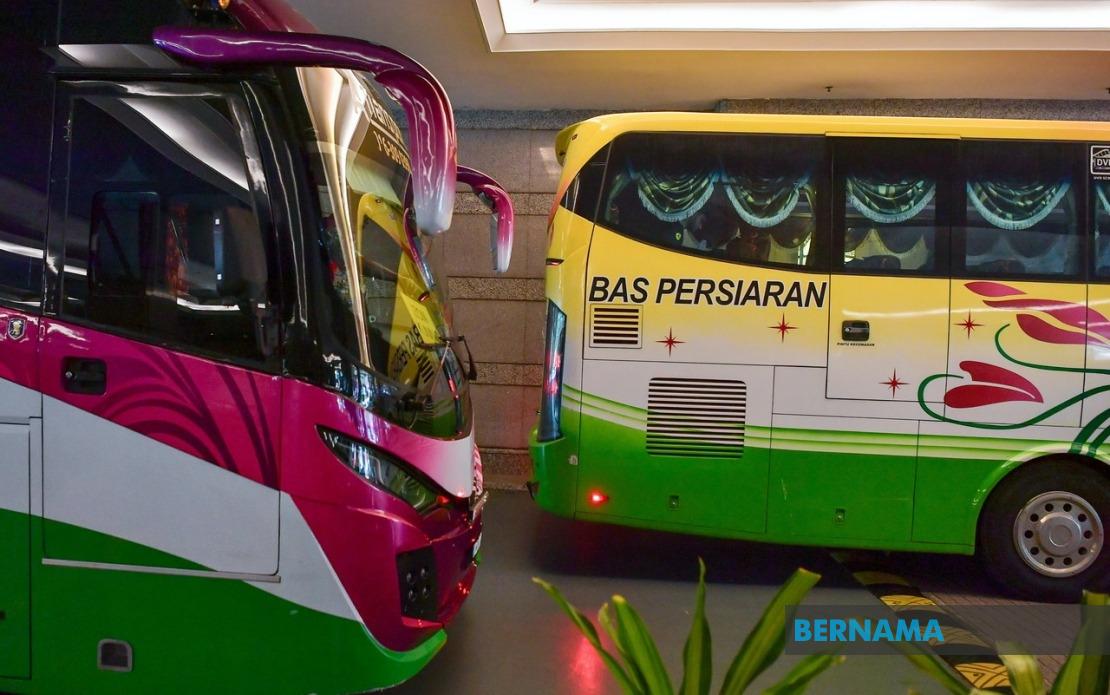
The Ministry of Tourism, Arts and Culture has made an urgent appeal to tour bus operators and their representative associations across the country to provide detailed diesel usage information and supporting documentation without further delay. The ministry contends that this data is essential for the government to properly evaluate the financial impact of rising fuel costs on the bus transportation sector and to formulate appropriate remedial measures.
In justifying the data collection exercise, MOTAC explained that accurate operational cost analysis forms the bedrock of any meaningful assistance programme. The ministry cannot responsibly recommend tax incentives or other forms of relief to the Ministry of Finance without substantive evidence demonstrating the actual burden imposed on operators by escalating diesel prices. Without such empirical foundation, any assistance package risks being either inadequate or misdirected, potentially failing to address the genuine hardship experienced across the industry.
The Ministry of Finance has already signalled its openness in principle to considering support packages for tour bus operators. However, this conditional approval comes with a critical caveat: the finance ministry requires comprehensive and reliable data before it can make definitive commitments or determine the scale and structure of any relief measures. This represents a common government procedure where spending decisions must be grounded in documented evidence rather than anecdotal complaints or generalised industry claims.
MOTAC's frustration is evident in noting that despite previous requests, the required information remains outstanding from many operators and associations. The ministry specifically highlighted the need for comparative fuel cost figures covering the period before and after the Middle East crisis, which presumably refers to geopolitical events that have influenced global energy markets and, consequently, Malaysia's domestic fuel prices. Such comparative data would help quantify the magnitude of cost increases facing individual operators and the sector collectively.
The ministry has not approached this matter passively. It received a memorandum from nine tourism associations detailing the adverse effects of diesel price increases on tour bus operations and has since organised engagement sessions with industry representatives. These consultations have provided MOTAC with qualitative insights into the challenges faced by operators, from reduced profit margins to competitive pressures that limit their ability to pass costs to consumers. However, these conversations, while valuable for understanding the human dimension of the crisis, cannot substitute for hard numerical evidence.
MOTAC's position reveals an important principle underlying government assistance: that support mechanisms must be precisely calibrated to actual need rather than distributed broadly on the basis of perceived hardship. Improperly designed relief can create grievances among those who feel their circumstances were not adequately recognised or among taxpayers questioning whether assistance was truly warranted. By insisting on data submission, MOTAC seeks to ensure that any eventual package is defensible, equitable, and perceived as legitimate by both beneficiaries and the broader public.
For the Malaysian tourism industry, the stakes are considerable. Tour bus operations represent a critical link in the tourism supply chain, connecting international and domestic visitors to attractions across the peninsula and wider region. When fuel costs spike dramatically, operators face genuine dilemmas: absorb the costs and see margins compress, or raise prices and risk losing price-sensitive bookings to competitors or alternative transport modes. Many operators, already operating on thin margins in a competitive market, find themselves in genuine financial distress.
The reference to fiscal position and sustainable economic growth in MOTAC's statement suggests that the government's approach balances industry support against broader macroeconomic considerations. Wholesale diesel subsidies, while politically popular, impose significant budgetary costs and can create market distortions. Targeted tax incentives or limited assistance packages offer a middle path, but only if data demonstrates that such measures genuinely address the problem rather than providing windfall benefits to operators who could absorb costs through modest price adjustments.
For operators yet to comply with MOTAC's request, the ministry's message carries implicit urgency. Delays in submission could push evaluation timelines further into the future, postponing any relief measures. Given that fuel prices remain elevated and operators are absorbing losses in real time, prompt data submission becomes strategically important for industry interests. Associations representing operators should recognise that complete participation strengthens their collective negotiating position and enhances the credibility of their requests for government support.
The staged implementation approach referenced by MOTAC suggests that any assistance will not arrive as a single comprehensive package but rather will roll out in phases following comprehensive review. This approach allows the government to monitor impacts and adjust measures as circumstances evolve, though it also means that full relief may take considerable time to materialise. Industry patience and cooperation with data collection thus become essential for maintaining momentum toward eventual assistance.
For Malaysian travellers and tourism stakeholders more broadly, this administrative process carries practical implications. Uncertainty about future fuel cost pass-through and pricing strategies may affect tour package availability and rates in coming months. Clarifying the assistance framework could enable operators to stabilise pricing and maintain competitiveness, potentially benefiting consumers through more predictable and stable tourism services throughout the region.

