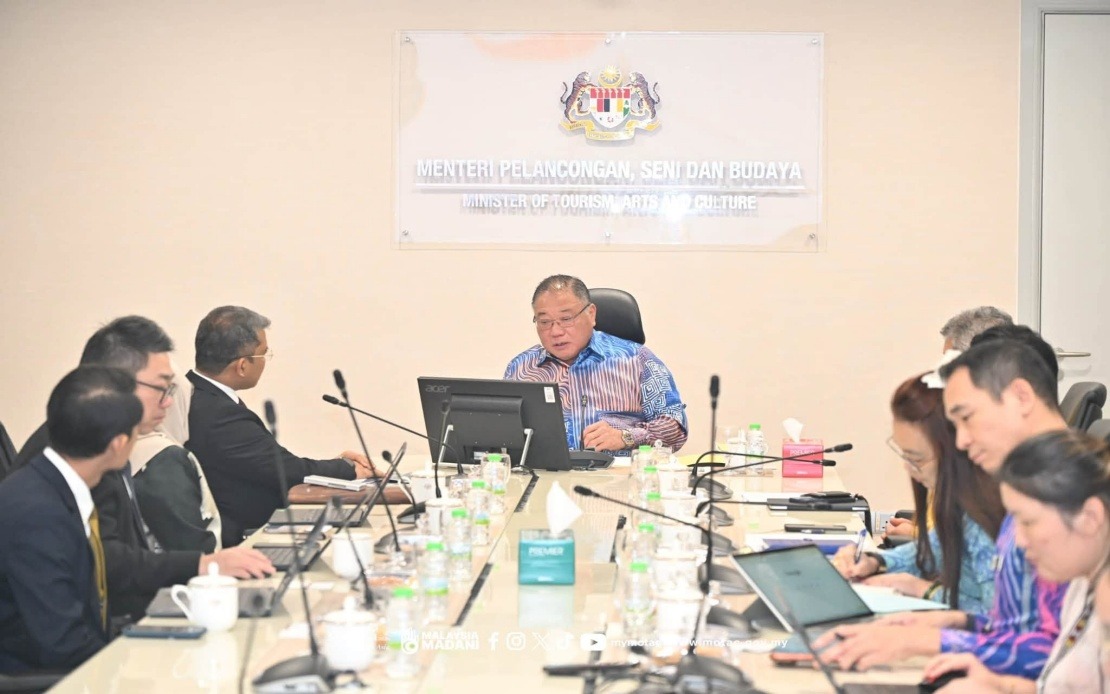
Tourism, Arts and Culture Minister Datuk Seri Tiong King Sing and Malaysia Aviation Group president and chief executive officer Captain Nasaruddin A Bakar have agreed to deepen their strategic alliance, signalling a coordinated push to position Malaysia as a premier travel destination and ensure the Visit Malaysia Year 2026 campaign achieves its ambitious targets following its extension into the new year.
The collaborative framework emerging from their Putrajaya discussions represents a shift towards integrated government and private sector action on tourism growth. Rather than operating in silos, MOTAC and MAG are now working in tandem to address supply-side constraints that have historically limited Malaysia's capacity to capitalise on global tourism demand. The airline's pivotal role in this equation cannot be overstated—as the carrier moves to expand its route network and frequency, the tourism ministry can simultaneously coordinate destination marketing efforts that amplify the appeal of those newly accessible markets.
Among the concrete initiatives being pursued is the deliberate expansion of MAG's international connectivity, with particular emphasis on three critical source markets: India, China, and Europe. These regions represent substantial pools of high-spending tourists whose travel patterns have been recovering robustly since the post-pandemic normalisation. For Malaysia, deepening air links with these markets directly translates to higher visitor volumes and extended average length of stay, both critical metrics for tourism revenue. Additionally, the exploration of emerging destinations such as Fukuoka introduces a valuable feeder market strategy, positioning Malaysia as a natural hub for onward travel within Southeast Asia and potentially capturing transit passengers who might otherwise bypass the country entirely.
The low season challenge represents a persistent structural problem for Malaysia's tourism industry. Rather than accepting seasonal volatility, the two organisations are jointly designing promotional campaigns and flight pricing strategies to stimulate demand during traditionally slower periods. This approach—sometimes termed "counter-seasonal marketing"—requires careful coordination between the carrier's yield management and the tourism board's advertising spend, ensuring that discounted fares are paired with compelling reasons for international travellers to choose Malaysia during these windows. The economic gains from filling aircraft seats and hotel beds during shoulder seasons can substantially improve industry profitability across the entire value chain.
Beyond headline-grabbing route announcements, the partnership acknowledges that competitiveness in modern tourism hinges on the quality and consistency of the passenger experience. Joint discussions have identified cabin facilities modernisation, service standards, in-flight catering, and cabin crew training as focal areas for improvement. These operational dimensions may seem peripheral to tourism marketing, yet they fundamentally shape how international visitors perceive Malaysia from the moment they board a Malaysian-registered aircraft. A passenger who experiences attentive service and well-maintained facilities arrives predisposed to viewing Malaysia favourably, setting the emotional tone for their entire stay and influencing their likelihood of returning or recommending the destination to peers.
The domestic tourism ecosystem requires particular attention within this partnership framework. Both MOTAC and MAG recognise that sustained growth depends not solely on international visitor arrivals but on ensuring that local hotels, restaurants, tour operators, guides, and artisans derive meaningful economic benefit from tourism activity. By deliberately structuring their collaboration to amplify opportunities for these stakeholders, the two organisations are building political and economic resilience into the Visit Malaysia Year 2026 initiative. This inclusive approach reduces the risk that tourism growth concentrates wealth in a narrow corridor of large international operators, instead distributing gains across smaller communities and regional economies.
The timing of this partnership reinforcement carries strategic weight. The original Visit Malaysia Year designation was set to conclude in 2025, yet its extension into 2026 reflects confidence in the campaign's momentum and recognition that tourism recovery trajectories benefit from sustained, multi-year marketing efforts. By formally deepening their collaboration now, MOTAC and MAG are signalling to international tour operators, travel agencies, and potential visitors that Malaysia's commitment to positioning itself as a competitive global destination is genuine and sustained, not merely transient.
From a broader economic perspective, aviation and tourism represent increasingly intertwined drivers of growth for middle-income Southeast Asian economies. Malaysia's position as a regional aviation hub—with Kuala Lumpur International Airport serving as a critical junction point—creates natural synergies with tourism promotion. When international carriers perceive strong tourism demand to Malaysia, they voluntarily increase frequencies and capacity, creating a virtuous cycle. Conversely, weak tourism demand can lead carriers to reduce service, undermining competitiveness. By actively coordinating aviation expansion with tourism marketing, MOTAC and MAG are attempting to manage this cycle rather than remain passively subject to it.
The collaborative emphasis on Indian, Chinese, and European markets reflects careful market selection based on demographic trends and travel propensity. India's expanding middle class, China's renewed appetite for outbound leisure travel following pandemic disruptions, and Europe's consistent high-spend tourism profile each present distinct opportunities and require tailored marketing messaging. The partnership's acknowledgement of this diversity suggests a sophisticated approach rather than generic promotional activity, maximising the effectiveness of marketing investments by aligning messaging with market-specific preferences and travel drivers.
Looking ahead, the success of this partnership will be measurable through concrete metrics: growth in visitor numbers from designated source markets, improvement in load factors during low season, revenue increases for domestic tourism operators, and sustained airline capacity expansion. The Visit Malaysia Year 2026 campaign, supported by coordinated government-industry action, enters its crucial implementation phase with both momentum and institutional commitment now visibly aligned.

