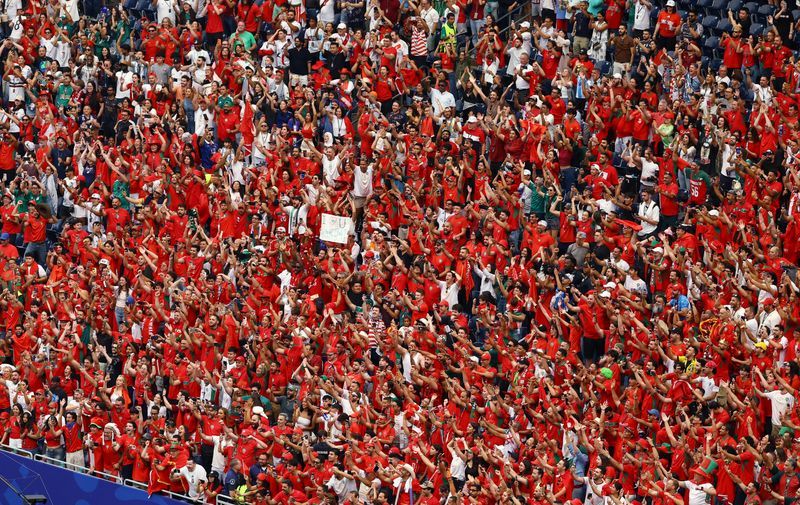
Morocco's progression to the World Cup quarter-finals came at Canada's expense on Saturday in Houston, where the North Africans produced a composed second-half performance to secure a 3-0 victory and end the co-hosts' promising tournament campaign. Azzedine Ounahi proved the decisive force with a brace, guiding the Atlas Lions into the last eight for the second tournament running while extinguishing Canada's hopes of extending an improbable run that had already delivered the nation's first-ever World Cup points and victory.
The match exposed a stark contrast between the two teams' finishing quality and mental fortitude. Canada, buoyed by newfound World Cup success earlier in the group stage, arrived in Houston with genuine momentum and determination to defy expectations as a team ranked outside the top 40. Morocco, by contrast, entered as seasoned World Cup campaigners who had already reached the semi-finals at Qatar 2022 and carried the weight of that experience into their knockout fixture. Yet the opening 45 minutes belonged to the underdogs, with Canada pressing aggressively from the first whistle and creating a succession of meaningful opportunities that Morocco's defence struggled to contain.
The concerning moment for Morocco came early when Ismael Saibari, who had proven instrumental throughout the tournament with three goals, suffered a hamstring injury that forced his removal after just 22 minutes. Soufiane Rahimi stepped in as his replacement, a substitution that initially appeared to compound Morocco's difficulties as they found themselves increasingly pinned back by Canada's relentless energy and attacking intent. For much of the first half, Morocco failed to threaten the Canadian goal with any conviction, not registering a serious attempt until the 28th minute as their vaunted midfield struggled to establish control of the game's rhythm and tempo.
Canada's inability to translate their dominance into goals would prove catastrophic to their ambitions. Despite enjoying the better of the early exchanges and launching wave after wave of attacks, the North Americans failed to capitalise on opportunities that in a different context might have decided the outcome. This profligacy proved particularly costly given that Alphonso Davies, Canada's talismanic winger who had shouldered much of the creative burden throughout their group-stage campaign, was absent due to ongoing fitness concerns that had dogged him since the tournament's outset.
The decisive turning point arrived within five minutes of the restart when Morocco finally sparked to life. Working from a carefully choreographed free kick routine, Achraf Hakimi delivered a precisely weighted low pass from the right flank to an unmarked Ounahi, who dispatched a side-footed finish from 25 yards into the bottom corner of the net. The goal immediately shifted the psychological balance, draining the confidence that had sustained Canada's challenging first-half performance and allowing Morocco to impose their greater experience and technical composure on the encounter.
Once ahead, Morocco's superiority became increasingly evident as the second half progressed. The structural disadvantage of chasing the game became apparent when Canada, desperate to restore parity, pushed their defensive line higher in search of an equaliser. This tactical vulnerability proved immediately exploitable for Morocco's more astute players, and Ounahi added a second goal in the 82nd minute when a devastating four-on-two counter-attack concluded with Brahim Diaz setting up the midfielder to finish emphatically into the top corner.
Rahimi, the man who had replaced the injured Saibari in the opening stages, contributed the third goal during another rapid break that showcased Morocco's devastating efficiency once they found their rhythm. The substitute's contribution encapsulated Morocco's second-half transformation from the disjointed team that had laboured through the opening period into a slick, purposeful unit that punished every defensive indiscretion and capitalised ruthlessly on transitional opportunities.
For Canada, the defeat represented a painful conclusion to a tournament that had already exceeded realistic expectations. The North Americans entered Qatar facing inevitable underdog status but had nonetheless carved out a credible narrative by earning points and securing a victory in the group stage. However, encountering Morocco's greater tournament experience and individual quality in a knockout environment exposed the gulf between emerging competitive nations and established World Cup performers. The absence of Davies compounded their difficulties, as the winger's creative talents might have provided the cutting edge required against a Morocco team that was vulnerable during the opening period.
Morocco's advancement sets up a quarter-final fixture on July 9 against either Paraguay or France, depending on the outcome of their round of 16 clash scheduled for the same day. The North Africans' progression validates their status as serious tournament contenders who have demonstrated remarkable consistency across two successive World Cups. Their capacity to overcome a sluggish opening period and impose their quality during the crucial second half suggests they possess the mental and technical attributes required to pose problems for any remaining opponent, including major European powerhouses.
The victory also reinforces an emerging narrative about African football's competitive evolution at the World Cup. Morocco's consecutive quarter-final appearances represent genuine achievement within a global context where African representation frequently faces structural challenges. Their clinical dispatch of Canada, despite the co-hosts' spirited first-half resistance, demonstrates that technical proficiency and experience ultimately determine outcomes in knockout football. The North Africans' path forward depends on maintaining the intensity and purposefulness they displayed after the interval while avoiding the sluggish openings that have characterised previous matches in their campaign.

