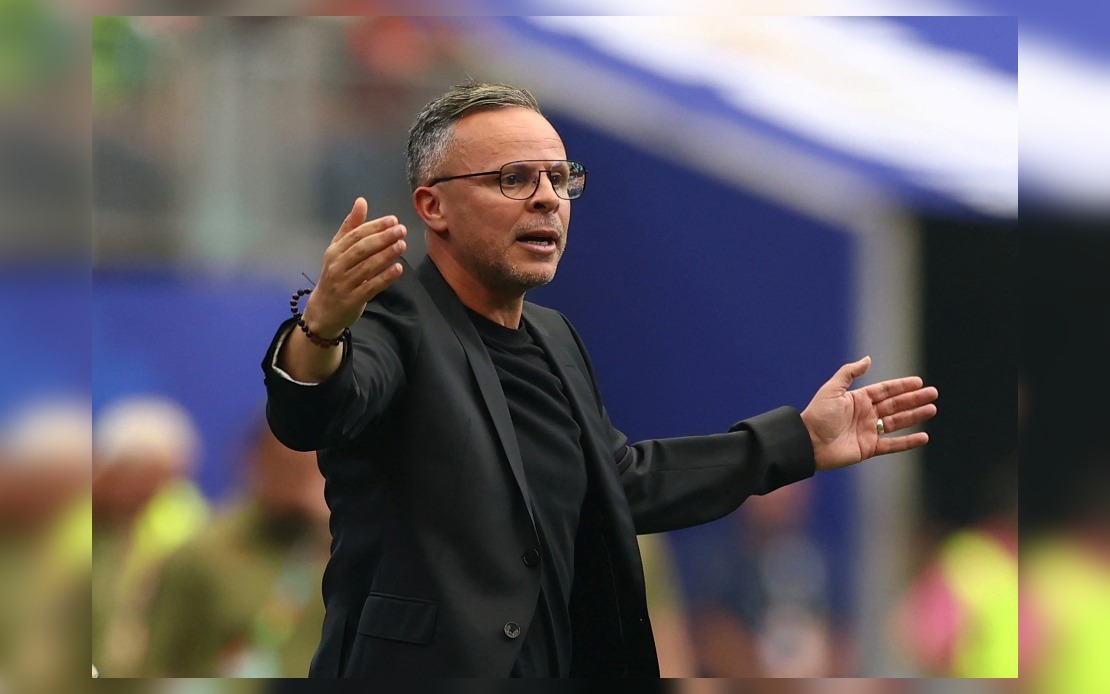
Morocco has shed its underdog status to emerge as a serious World Cup threat, according to head coach Mohamed Ouahbi following his team's commanding 3-0 victory over Canada in the Round of 16. Speaking at a press conference in Houston on Saturday, Ouahbi emphasised that Morocco now commands respect as a major footballing force rather than serving as a tournament curiosity. The emphatic scoreline underscored the North African nation's evolution from a regional power to a continental heavyweight capable of competing with global elites.
Outahbi's assessment carries weight given Morocco's remarkable trajectory in recent years. The team became the first African nation to reach the World Cup semifinals in 2022, a breakthrough that fundamentally altered perceptions of the country's footballing infrastructure and development. Now in consecutive World Cup quarterfinals, Morocco has demonstrated consistency that extends beyond a single tournament success. This progression reflects systematic improvement in player development, tactical sophistication, and competitive mentality—hallmarks of an established footballing nation rather than a fleeting phenomenon.
The tactical mastery displayed against Canada revealed the depth of Morocco's footballing evolution. Though Canada controlled much of the first half with aggressive pressure and incisive attacks whenever possession was regained, Morocco recalibrated at the interval. The Atlas Lions emerged as a different proposition in the second half, methodically dismantling their opponents through shrewd positional adjustments that constrained Canada's attacking opportunities. The transformation proved decisive as Azzedine Ounahi struck twice before Soufiane Rahimi sealed the outcome with a late goal.
Outahbi credited the in-game adjustments as fundamental to the dominant performance, explaining that Morocco shifted focus to penetrating passes behind Canada's defensive line. This tactical manoeuvre forced the Canadians into a reactive stance, defending within their own territory and unable to regain the initiative that had defined their first-half approach. The coach's ability to identify weaknesses and implement corrections mid-match exemplified the strategic acumen now expected of Morocco's management. Such composure and adaptive thinking distinguish contenders from surprise packages.
The magnitude of Morocco's achievement is sharpened by the context of Round of 16 football, where defensive solidity typically constrains scorelines. Ouahbi acknowledged this reality, noting that dominant 3-0 victories remain relatively uncommon at this tournament stage. His observation underscores how thoroughly Morocco outperformed expectations against a Canadian side that had competed with reasonable competence in the group phase. The emphatic nature of the result signalled Morocco's capacity to overwhelm quality opposition rather than merely edge past them.
Yet Ouahbi's confidence tempers neither complacency nor overconfidence. His pre-match prediction that Canada would pose Morocco's toughest test to date proved accurate, suggesting realistic appraisal of opposition strength. Even in victory, the coach maintained analytical distance, acknowledging Canada's intensity despite the scoreline disparity. This equilibrium between confidence and respect characterises the mindset of established programmes, where success breeds clarity rather than delusion.
Morocco's next assignment intensifies considerably with a quarterfinal clash against France, who defeated Paraguay 1-0 in Boston. The meeting will carry historical echoes, as France defeated Morocco in the 2022 World Cup semifinals, a result that still resonates across North African football communities. However, Ouahbi consciously reframed the narrative away from revenge, instead emphasising Morocco's forward momentum and ambition to reach the final. This positioning matters psychologically, allowing the team to chase success rather than settle past grievances.
Outahbi's declaration that Morocco wants to progress as far as possible while making their people proud reflects the elevated expectations now surrounding the programme. The coach's language deliberately avoids qualification or apology, speaking instead of legitimate ambitions to contest the tournament's concluding matches. Such rhetoric would have seemed presumptuous for an African nation at a World Cup merely four years ago; its naturalism now signals how dramatically Morocco's standing has shifted.
For Southeast Asian readers, Morocco's trajectory offers instructive lessons about sustained football development. The nation has invested systematically in player pathways, competitive structures, and coaching expertise, producing consistent returns over multiple tournament cycles. This model contrasts sharply with sporadic bursts of success unmoored to institutional development. Malaysia and neighbouring nations watching Morocco's rise might reflect on the prerequisites for elevating football programmes from regional competitiveness to global relevance—namely patience, infrastructure investment, and strategic planning extending beyond individual competitions.
The implications extend beyond Morocco itself. African football's growing competitiveness at the World Cup, evidenced not merely by Morocco but by Senegal's deep runs in recent years, suggests the continent's footballing influence continues ascending. Global football hierarchies, long dominated by European and South American powers, face genuine challenge from emerging African programmes demonstrating technical excellence and tactical sophistication. Morocco's self-confident articulation of major-nation status reflects this broader continental shift.
Outahbi's insistence that Morocco's emergence represents only a beginning hints at ambitions extending well beyond the current tournament. The coach envisions sustained competition at football's highest levels rather than temporary excellence followed by decline. This perspective, grounded in institutional confidence, distinguishes true footballing progress from isolated achievements. As Morocco prepares to face France, the North African nation carries forward a compelling narrative of continental football's evolution and African football's rightful place among the sport's elite forces.

