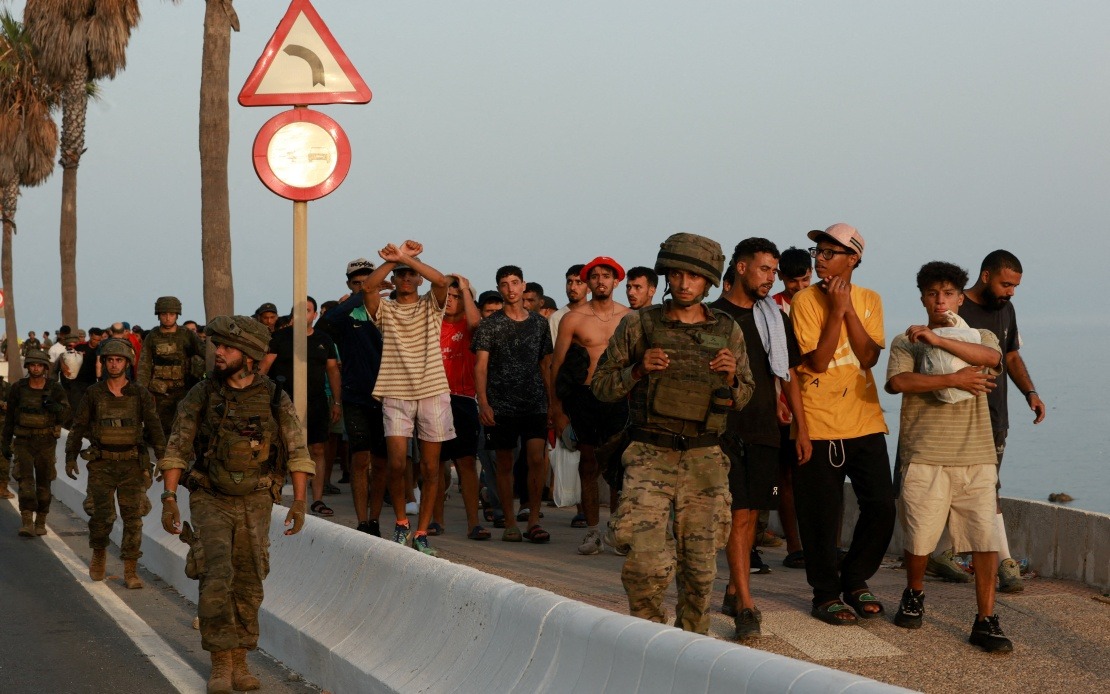
Morocco's government has pinpointed social media disinformation and organized human trafficking as the primary catalysts behind the unprecedented influx of migrants attempting to breach the Spanish enclave of Ceuta in recent days. Officials from the Interior Ministry suggest that false information circulating online, combined with systematic trafficking operations, created a confluence of circumstances that prompted tens of thousands of people to attempt the perilous crossing from Moroccan shores.
A critical trigger for the surge, according to Moroccan authorities, involved widespread misinterpretation of a Spanish court decision. Migrants, it appears, received incorrect information suggesting that a judicial ruling had effectively opened pathways for them to enter Europe without facing immediate deportation upon arrival. This legal misunderstanding, amplified through social networks, created a false sense of opportunity that motivated many to undertake the journey despite the documented risks.
The scale of the migration event has been staggering. While Spanish officials estimate that between 50,000 and 60,000 migrants successfully entered Ceuta within just a few days, Morocco's own count stands at approximately 40,000 individuals who crossed into the Spanish territory. Additionally, another 1,135 people attempted to reach Melilla, the second Spanish enclave on Morocco's coast, though Moroccan authorities report that all those who arrived in Melilla were promptly returned to Morocco.
The humanitarian cost of these crossings has been devastating, revealing stark differences between official accounts from each country. Morocco reported that at least 11 people died attempting the passage to Ceuta, while Spanish authorities documented a significantly higher death toll of at least 72 fatalities. These figures underscore the lethal conditions that migrants face when undertaking such journeys, particularly given the dangerous maritime and coastal conditions typical of the Strait of Gibraltar region.
For Malaysian readers, this crisis offers important lessons about the vulnerability of migrants throughout global migration routes. Southeast Asian nations, including Malaysia, regularly contend with similar challenges involving migrant populations seeking better lives in developed nations. The Ceuta incident demonstrates how misinformation can rapidly mobilize large populations toward dangerous migration attempts, a phenomenon increasingly seen in Southeast Asia where social media penetration is high and migrant networks are extensive.
Moroccan and Spanish authorities were actively engaged in coordinating efforts to determine the full extent of casualties and to identify the origins of those involved in the crossings. The ongoing investigation reflects the complex international cooperation required when migration crises span borders and involve citizens from multiple nations. Understanding victim demographics would assist both governments in identifying which countries were source nations for the migrants and potentially addressing push factors that motivate migration.
The incident highlights the critical role that human trafficking networks play in contemporary migration movements across the Mediterranean and North Africa. Rather than viewing migrants solely as willing economic participants, authorities in both Morocco and Spain increasingly recognize that organized criminal networks exploit desperation, leverage false information, and profit substantially from facilitating dangerous journeys. This criminal dimension adds layers of complexity to policy responses, requiring law enforcement cooperation alongside immigration management.
For Southeast Asian policymakers monitoring these developments, the Ceuta crisis reinforces the need for robust digital literacy campaigns and stronger coordination with social media platforms to combat misinformation targeting vulnerable populations. Malaysia, Indonesia, and Thailand all face scenarios where rapid-fire false information about migration opportunities can trigger sudden population movements. The Spanish enclave experience suggests that even subtle judicial developments, when distorted by trafficking networks through social channels, can mobilize tens of thousands of people within days.
The disparity between Moroccan and Spanish casualty figures also raises questions about data collection, identification procedures, and the thoroughness of investigations when mass migration events occur. Both nations face resource constraints when attempting to document and verify deaths in maritime contexts, and the discrepancy between 11 and 72 deaths suggests either incomplete Moroccan reporting or differing methodologies in how deaths are attributed to crossing attempts. This ambiguity underscores how international migration crises often unfold with incomplete information, complicating policy responses and humanitarian interventions.
From a Southeast Asian perspective, the Ceuta situation serves as a cautionary tale about allowing migration narratives to be shaped primarily by social media and criminal networks. The confluence of factors—misinformation, legal misunderstanding, trafficking facilitation, and desperation—created conditions that overwhelmed local capacity and resulted in preventable deaths. Malaysian authorities and regional migration specialists have increasingly recognized that addressing migration challenges requires not only border enforcement but also strategic communication, public education about realistic pathways, and disruption of trafficking supply chains that weaponize false information to generate profit.

