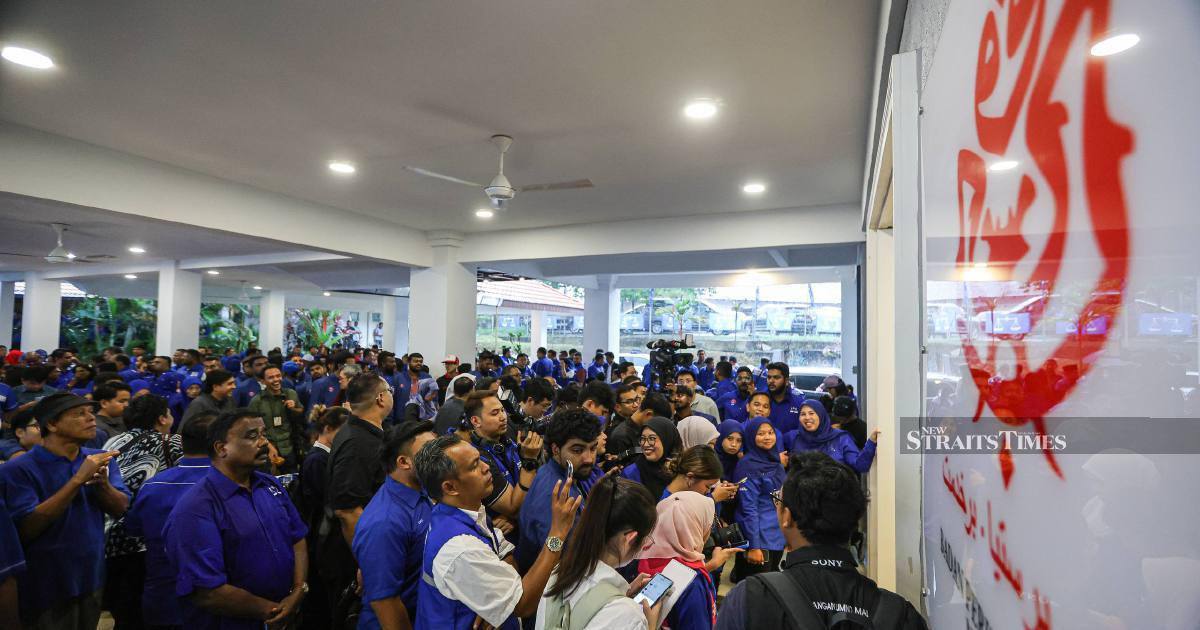
The Johor Umno headquarters in Johor Baru has become the focal point of Malaysia's political calendar as Barisan Nasional prepares to reveal its hand for the state election contest. Senior party figures, rank-and-file members, and grassroots supporters descended on the venue, creating an atmosphere charged with anticipation as the coalition moves from behind-the-scenes negotiations to public candidacy announcements.
For Barisan Nasional, Johor represents territory the coalition has long considered its stronghold. The state has historically been a significant component of the coalition's electoral map, and control of Johor's legislative assembly carries proportional weight in national politics. The gathering at party headquarters reflects the strategic importance the coalition places on the forthcoming contest, with senior leadership personally overseeing the candidate selection and announcement process rather than delegating it to mid-tier functionaries.
The candidate announcement process carries particular significance this election cycle given the shifting political dynamics across Malaysia. Over the past few years, state-level contests have demonstrated that electoral assumptions cannot be taken for granted, and even traditionally safe territories now require energised campaigns and carefully calibrated candidate selection. The visible enthusiasm displayed at the headquarters gathering suggests Barisan Nasional intends to mount a vigorous campaign to retain control, signalling that party strategists view this election as competitive rather than predetermined.
Johor's demographic and geographic composition presents distinct challenges for any governing coalition. The state encompasses urban centres requiring sophisticated campaign operations, rural constituencies where personal connections and local development projects carry outsized influence, and suburban areas where swing voters increasingly decide electoral outcomes. The candidate slate selected at this juncture will determine whether Barisan Nasional can effectively address these varied constituencies or whether opposition parties can exploit perceived weaknesses in specific demographic segments.
The attendance by multiple tiers of Barisan Nasional leadership underscores the coalition's intention to project organisational cohesion and unified purpose. In Malaysian politics, the symbolism of senior figures appearing together at major party events carries practical importance beyond mere optics—it sends signals to party grassroots about which candidates enjoy institutional backing and which contests the leadership considers priorities. The gathering thus functions simultaneously as a practical administrative exercise and a political communication to internal and external audiences.
For Johor residents and Malaysian observers monitoring state-level politics, the announcement represents the transition from speculation to concrete electoral positioning. Voters can now assess which individuals the coalition has selected to represent them, evaluate whether these candidates reflect their communities' demographics and interests, and consider how the candidate slate's composition might shape policy priorities should Barisan Nasional retain control. The selection process itself often reveals the coalition's strategic thinking about which constituencies present challenges and which it considers secure.
The enthusiasm evident among supporters attending the announcement reflects broader patterns in Malaysian electoral behaviour, where state elections generate genuine grassroots engagement despite national politics dominating media attention. State governments control portfolios directly affecting daily life—land approval, local infrastructure, state education initiatives, and development priorities—making state election campaigns meaningful exercises in democratic participation rather than secondary contests to national contests.
Barisan Nasional's public emphasis on candidate announcements also serves to catalyse party machinery activation across Johor's constituencies. Formal candidacy announcements provide focus points for volunteer recruitment, campaign resource allocation, and grassroots mobilisation efforts. The headquarters gathering functions as a starting gun for downstream party activities, transforming leadership decisions into concrete campaign operations at divisional and sub-divisional levels throughout the state.
The political context surrounding this election extends beyond Johor's state boundaries. State election results influence perceptions of the ruling coalition's trajectory and prime ministerial competence, affect dynamics within Barisan Nasional's constituent parties, and generate momentum or setbacks that reverberate through the political system nationwide. Johor's election outcome would therefore carry implications for Malaysian politics broadly, making the candidate selection process consequential beyond the state's administrative borders.
Observers noting the event's atmosphere and scale might assess it as indicative of Barisan Nasional's confidence in electoral prospects or alternatively interpret the large gathering as necessary mobilisation to address perceived vulnerabilities. Malaysian political analysts typically read such gatherings for subtle indicators—which candidates receive prominent positioning during announcements, which party figures speak in support of which candidates, and whether the event projects cohesion or reveals internal tensions about candidate selections.
The formal announcement process also establishes starting points for individual candidate campaigns across Johor's parliamentary and state constituencies. Candidates can now begin official campaigning activities, canvas voter preferences, and develop local campaign narratives addressing their specific constituencies' concerns. The Johor headquarters event thus represents not merely an announcement but the institutional launch of dozens of simultaneous campaigns operating across different constituencies with distinct characteristics and electoral dynamics.
As the candidate slate becomes public knowledge, opposition parties will respond by finalising their own candidate selections and developing counter-narratives about governance records and policy alternatives. The election campaign effectively commences at the moment candidates become public knowledge, triggering the sustained political competition that will continue until polling day. The Johor headquarters gathering therefore marks not a conclusion but an acceleration, transforming anticipated changes into observable political reality.