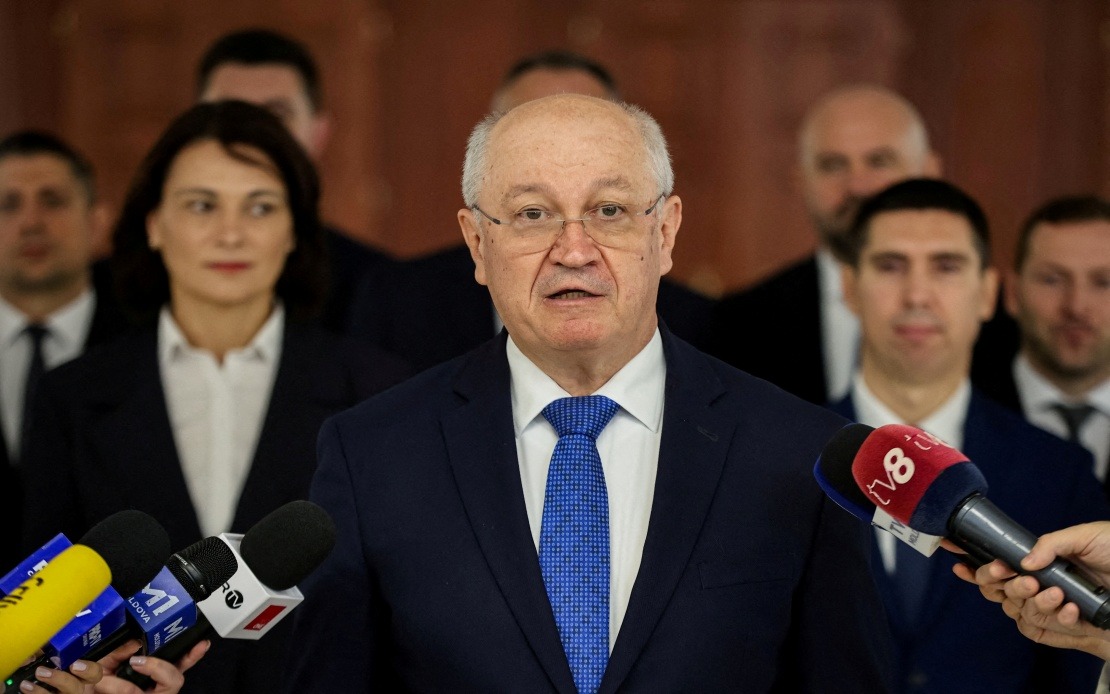
Alexandru Munteanu concluded his tenure as Moldova's Prime Minister on Friday, announcing his resignation through a post on X without offering substantive details regarding the decision. Having assumed the premiership in November 2025, Munteanu served for approximately eight months before determining that continuation in the role had become untenable. The brevity and vagueness of his public statement left observers and political analysts searching for clarity on what prompted the abrupt departure from one of Eastern Europe's most sensitive political positions.
Munteanu's announcement centred on a single justification: that he could no longer execute his duties "in accordance with my principles and convictions." This formulation, while resonant with the language of principled resignation, provided little concrete information about the specific disagreements, policy conflicts, or governance challenges that necessitated his exit. The deliberate ambiguity suggests either a desire to avoid public recrimination or an attempt to preserve diplomatic relations with the ruling coalition and President's office, both of which typically influence prime ministerial tenure in Moldova's fractious political ecosystem.
The timing of Munteanu's resignation carries significance for Moldova's broader geopolitical position. The country has been navigating competing pressures from the European Union and Russia, with its government ostensibly pursuing European integration while maintaining pragmatic relations with Moscow. A Prime Minister's resignation mid-term often signals deeper institutional friction or disagreement over fundamental policy direction, particularly on matters touching energy security, NATO relations, or economic reform priorities that divide the political establishment.
For Malaysian observers and Southeast Asian policymakers, Moldova's political instability offers a cautionary lens on governance fragility in smaller nations caught between great-power competition. Moldova's population of approximately 2.6 million, combined with its Soviet legacy and geopolitical exposure, creates governance vulnerabilities that resonate with broader regional concerns about democratic resilience and institutional capacity in developing democracies facing external pressures.
The absence of detailed explanation from Munteanu is itself noteworthy within the context of modern political communication. Contemporary resignation announcements, especially from senior government figures, typically include prepared statements articulating policy disagreements, personal circumstances, or institutional conflicts. Munteanu's resort to a terse social media post suggests either extraordinary sensitivity surrounding his departure or a calculated decision to deny political opponents ammunition by remaining silent on contentious matters.
Moldova's recent political history demonstrates recurring patterns of executive instability. Prime ministerial transitions have frequently reflected tensions between pro-European factions and those advocating closer ties with Russia, as well as disputes over anti-corruption measures and judicial reform. Munteanu's eight-month tenure, ending before his second year in office, fits this pattern of interrupted premierships characteristic of Moldovan governance since independence.
The institutional consequences of mid-term resignations extend beyond individual transitions. Constitutional procedures require identification of a successor capable of commanding parliamentary confidence, a prerequisite that can prove complicated in fragmented legislatures. Moldova's parliament reflects deep ideological divisions that complicate coalition-building, meaning Munteanu's departure could trigger weeks of political negotiations before a new premier gains sufficient support.
International observers, particularly those monitoring Moldova's European aspirations, will scrutinise whether the resignation reflects disappointment with the pace of EU-aligned reforms or represents resistance to policies perceived as threatening national stability. The EU has made anti-corruption measures and democratic governance prerequisites for closer integration, creating potential friction points between reform advocates and those prioritising pragmatism or continuity.
Munteanu's decision to resign rather than seek to resolve internal differences through negotiation or compromise suggests either irreconcilable positions or calculations that remaining in office would compromise his political future. This calculation itself reveals something about Moldova's contemporary political environment, where principle and pragmatism often prove incompatible within executive structures subject to competing institutional pressures.
The successor's identity and policy orientation will significantly influence Moldova's trajectory on European integration, energy security, and relations with Russia and NATO. A Prime Minister sharing Munteanu's (admittedly unclear) principled concerns might accelerate certain reforms, while a more pragmatist successor could emphasise stability and cautious diplomacy. Either approach carries implications for Moldova's delicate balancing act within Europe's eastern borderlands.

