The Ministry of Higher Education has signalled heightened vigilance regarding the security of Malaysian students scattered across West Asian nations, responding to deteriorating conditions in the region that have prompted major powers to issue urgent travel advisories. Minister Datuk Seri Dr Zambry Abd Kadir disclosed that his ministry is maintaining active coordination with Wisma Putra, the country's foreign service headquarters, to track developments and implement protective measures as circumstances evolve. The announcement comes against a backdrop of shifting geopolitical dynamics that have created unpredictable conditions for citizens studying abroad, particularly in conflict-sensitive zones.
The immediate trigger for enhanced scrutiny stems from the United States government's decision to urge its nationals to depart the region—a signal that global powers view current security risks as sufficiently serious to warrant extraordinary measures. Dr Zambry acknowledged this development while stressing that American foreign policy positions can shift rapidly, meaning today's stance may differ substantially from tomorrow's approach. Nonetheless, Malaysia's posture reflects a commitment to erring on the side of caution rather than complacency, treating the fluid situation as requiring sustained, rather than episodic, attention. This measured stance balances diplomatic awareness with practical concern for student welfare.
The magnitude of Malaysia's educational presence in West Asia underscores why such vigilance matters. Egypt alone hosts thousands of Malaysian students pursuing diverse academic pathways, from Islamic theology to medicine, dentistry, pharmacy, and allied health professions. Jordan accommodates between one thousand and two thousand Malaysian scholars, representing substantial numbers relative to Malaysia's overall student population abroad. Morocco, though hosting fewer Malaysians currently, is experiencing steady growth in enrolment, suggesting increasing interest in North African institutions among Malaysian families. Collectively, these cohorts represent not merely individual educational pursuits but strategic national assets—a framing Dr Zambry himself emphasised—whose future contributions to Malaysia's professional and intellectual landscape justify protective institutional investment.
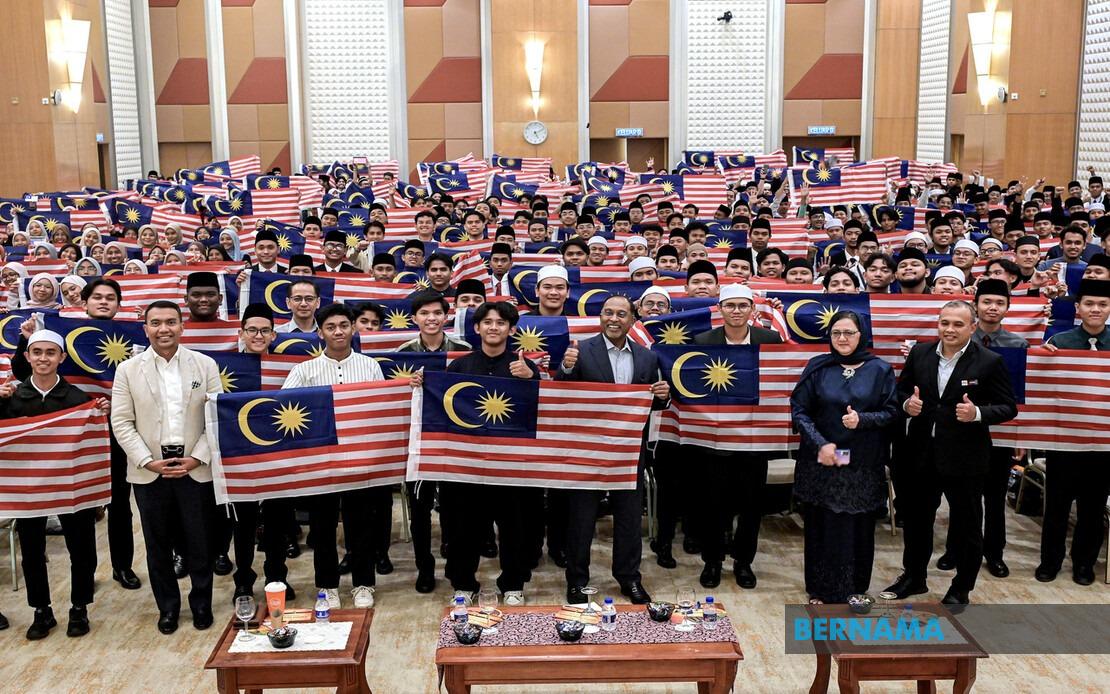
The timing of these reassurances coincides with preparation for a major intake. Four hundred fifty-six Malaysian students are scheduled to commence studies in Egypt, Jordan, and Morocco beginning September 1st, having recently participated in the International Charisma Programme organised jointly by the Higher Education Ministry and the Malaysia Nationhood Academy. This cohort has received structured briefings on welfare protocols, established contact with ministry officials, and obtained practical guidance intended to ease their transition and establish support networks before departure. The programme represents a deliberate institutional effort to bundle academic preparation with security consciousness and cultural orientation, recognising that overseas study involves vulnerabilities beyond academic performance.
Infrastructural readiness forms a crucial underpinning of Malaysia's protective strategy. The ministry maintains Education Malaysia offices in both Egypt and Jordan, positioned to provide immediate assistance and maintain regular contact with student populations. Morocco, lacking a dedicated office, nonetheless remains integrated into the support architecture through coordination mechanisms anchored in Egypt's presence. These structures enable rapid communication, emergency assistance deployment, and ongoing welfare monitoring rather than reactive crisis management. Dr Zambry stressed that all such facilities remain perpetually prepared for contingencies, suggesting drills or protocols designed to ensure institutional capacity translates into timely action should circumstances deteriorate.
Crucially, the Higher Education Ministry has not identified specific concerns affecting Malaysian students currently in Egypt, Jordan, or Morocco, indicating that despite regional turbulence, the immediate threat environment has not substantially impacted educational continuity or individual safety. This distinction matters: it suggests that while regional tensions are real and warrant monitoring, they have not yet manifested in direct threats to Malaysian educational interests or personnel. The ministry's stated readiness to respond immediately should new developments emerge signals confidence in existing protocols while maintaining appropriate humility about the limits of prediction in volatile environments.
Beyond security logistics, Dr Zambry articulated a broader vision of overseas study as encompassing character formation alongside credential acquisition. He invoked the Arabic-rooted concepts of ta'lim (knowledge transmission), tarbiah (personal development), and ta'dib (ethical cultivation), framing educational excellence as inseparable from moral formation. This philosophical positioning reflects Malaysian educational policy's integration of Islamic pedagogical traditions with contemporary higher education practice, and implicitly conveys to departing students that their mission extends beyond individual advancement to embodying values that will eventually benefit Malaysian society upon their return.
The minister's remarks also positioned Malaysia itself as an increasingly attractive destination for international students, citing enrolment from approximately one hundred eighty countries as evidence of Malaysia's rising educational reputation. This framing serves multiple purposes: it projects confidence in Malaysian institutions' competitiveness, suggests that the nation's educational sector does not depend on any single source country for sustainability, and implicitly frames the protection of Malaysian students abroad as reciprocal to Malaysia's own efforts to attract foreign learners. Such symmetrical positioning reinforces that educational exchange constitutes a valuable bilateral relationship warranting serious institutional commitment from both partners.
The practical implications for Malaysian families with students in West Asia are straightforward: the Higher Education Ministry positions itself as the primary institutional interface between anxious families and government resources, with Wisma Putra providing strategic intelligence guidance. Families are invited implicitly to channel concerns through ministry channels rather than attempting independent navigation of complex political terrain. The emphasis on pre-departure orientation programmes suggests that prospective students should expect detailed security briefings and practical preparation as standard institutional procedure, not exceptional response to crisis.
Regionally, Malaysia's approach reflects broader Southeast Asian diplomatic practice: maintaining institutional readiness to protect nationals abroad while avoiding rhetorical escalation or public alarmism that might complicate diplomatic relationships or discourage valuable educational exchange. The careful acknowledgment of US policy volatility without criticism, combined with emphasis on Malaysia's independent assessment of risks, positions the country as a responsible actor neither blindly following external powers nor dismissing their concerns. For Malaysian students considering or already pursuing studies in West Asia, this approach offers qualified reassurance: vigilance is active but not panicked, institutional support is structured and accessible, and educational pursuit remains compatible with reasonable security precautions.

