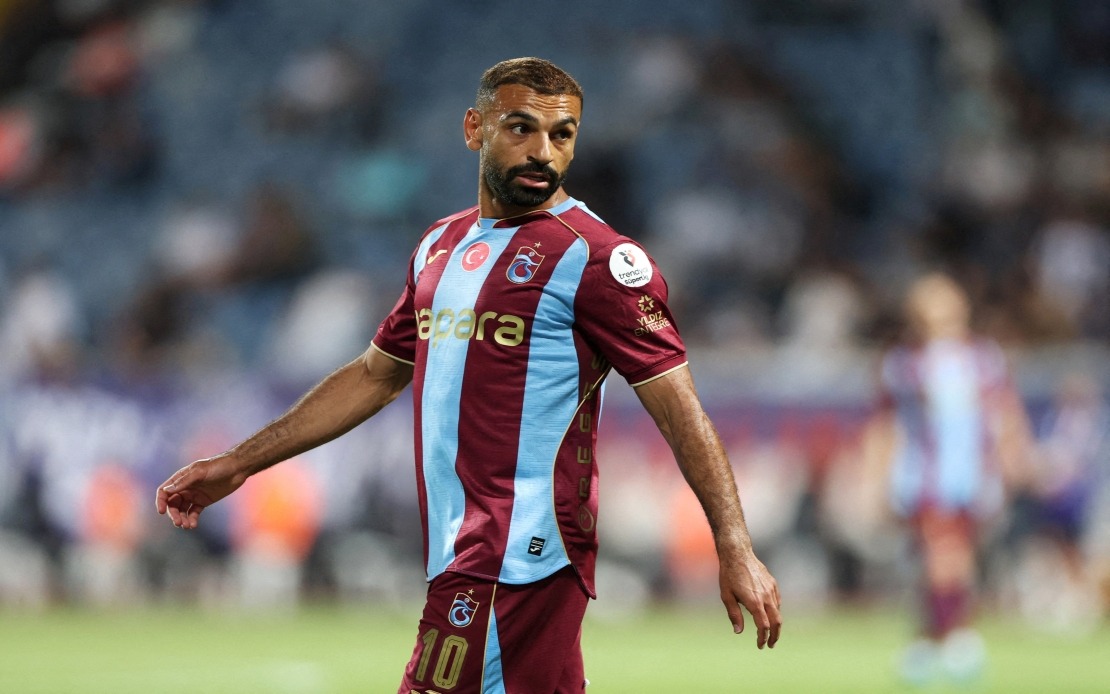
Mohamed Salah's arrival at Trabzonspor has electrified Cairo's commercial landscape, with his claret-and-blue jersey now commanding prominent shelf space in sports retailers throughout the Khan el-Khalili bazaar. Within a fortnight of the Egyptian football icon completing his transfer to the Turkish Super Lig, merchants across Cairo's historic marketplace have begun stocking the No. 10 shirt, positioning it alongside traditional Egypt national team merchandise. The rapid commercial response underscores the immediate and tangible impact of the 32-year-old's career decision on everyday economic activity in the Egyptian capital.
Retailers in the ancient bazaar—a destination that recently hosted consecutive high-profile visits from Egyptian President Abdel Fattah el-Sisi and French President Emmanuel Macron—are pricing Salah's Trabzonspor jersey between 400 and 500 Egyptian pounds, equivalent to approximately eight to ten United States dollars per unit. The pricing strategy reflects both the mass-market appeal of the merchandise and the competitive retail environment within Khan el-Khalili. Traders report sustained customer interest, suggesting that the initial enthusiasm for Salah's Turkish venture extends beyond devoted football aficionados to encompass casual supporters and souvenir-seeking visitors.
The commercial momentum extends beyond physical retail channels. Egyptian and Arab football enthusiasts have widely circulated video footage documenting the rapturous reception Salah experienced upon arrival in Turkey, with social media platforms amplifying expressions of national pride regarding his relocation. This digital enthusiasm has created additional pressure on local retailers to maintain adequate stock levels and meet demand from multiple demographic segments seeking authentic or replica Trabzonspor merchandise.
Shopkeeper Salah Abdulmecid, a merchant operating within the bazaar, articulated the emotional and cultural dimensions underlying the commercial activity. Abdulmecid characterized the transfer as a source of satisfaction for Khan el-Khalili's business community, emphasizing perceived cultural and religious similarities between Egyptian and Turkish societies. His remarks reflected a broader narrative circulating among vendors and customers alike—that Salah's placement within the Turkish football ecosystem represented a natural extension of existing societal affinities rather than a departure from Egyptian identity.
A supporter encountered within the bazaar, having donned the Trabzonspor jersey directly outside a retail establishment, expressed unqualified enthusiasm for Salah's career trajectory in Turkey, invoking religious sentiment and blessing the footballer's professional prospects. This spontaneous testimonial captured the intersection of personal identification with the athlete and broader hopes for successful integration into Turkish football culture. The incident also illustrated how the jersey functions as a symbolic garment enabling supporters to perform their connection to Salah while simultaneously affirming his new institutional allegiance.
Egyptian sociologist Said Sadik has articulated an analytical framework positioning Salah as a facilitator of soft power between Egypt and Turkey, describing his influence as transcending conventional sports fandom. Sadik's assessment emphasized that Salah's celebrity penetrates demographic strata ordinarily indifferent to football, extending his relevance into broader social conversation. This observation carries particular weight given Egypt's population of approximately 105 million, where even passive awareness of Salah's activities generates measurable commercial and cultural consequences.
Sadik referenced the bilateral diplomatic dimension of Salah's transfer, noting that Egyptian and Turkish foreign ministers acknowledged the footballer during their recent engagement. Turkish Foreign Minister Hakan Fidan's August visit to Egypt provided an official platform for recognizing Salah's significance within contemporary Turkey-Egypt relations. The inclusion of sports personalities within high-level diplomatic discourse reflects their utility as cultural bridges capable of humanizing international relationships and generating positive sentiment across populations.
The Turkish reception accorded to Salah upon his arrival functioned as a reciprocal signal of popular affinity, Sadik suggested, demonstrating that enthusiasm for the Egyptian footballer among Turkish audiences extended beyond sectarian or institutional boundaries. This bidirectional embrace—whereby Egyptians celebrate Salah's Turkish placement while Turks enthusiastically welcome him—creates a virtuous cycle of positive sentiment that transcends traditional diplomatic channels and operates at the level of ordinary citizen interaction.
For Malaysia and broader Southeast Asia, the Salah phenomenon illuminates mechanisms through which individual athletes accumulate sufficient cultural capital to influence bilateral perceptions and generate measurable economic activity. The transfer illustrates how football—a sport commanding passionate followings throughout the Muslim-majority region—functions as a vehicle for strengthening ties between distant societies. Just as Egyptians and Turks have mobilized around Salah as a shared point of identification, Southeast Asian nations might similarly leverage football personalities to strengthen intra-regional connections and enhance people-to-people engagement.
The Jersey sales across Khan el-Khalili also demonstrate how sporting transfers generate immediate commercial opportunities for retail economies, particularly in tourism-dependent sectors. Cairo's bazaar merchants recognized the commercial potential of Salah-branded merchandise and responded with speed and sophistication. Southeast Asian retailers might similarly capitalize on the heightened visibility of regional or diaspora footballers who secure prominent European club positions, thereby converting celebrity into sustained revenue streams.
Sadik's framing of Salah as a unifying figure bridging distinct societies resonates particularly for multinational Southeast Asian contexts where shared football enthusiasms frequently cross ethnic and religious boundaries. The footballer's ability to command attention and admiration from Egyptians and Turks alike—despite their distinct national traditions—parallels the inclusive appeal of football stars throughout Asia, where passionate support transcends conventional markers of identity.
The sustained enthusiasm for Salah within Egypt, evidenced by the continued commercial activity and media attention, suggests that his transfer has not diminished but rather transformed and extended his cultural significance. Rather than representing a loss to Egyptian football, his Turkish placement has positioned him as an ambassador capable of generating pride through his performances and simultaneously enriching Egyptian-Turkish popular connections. This dynamic may offer lessons for other nations regarding how to frame athlete departures not as deficiencies but as extensions of national soft power operating on international stages.
The Khan el-Khalili bazaar episode ultimately reveals football's capacity to generate genuine commercial activity and authentic sentiment at the grassroots level while simultaneously operating as a diplomatic and cultural asset within official governmental discourse. Salah's jersey alongside Egypt's national team colours in historic Cairo bazaar windows encapsulates this duality—representing both the passion of ordinary supporters and the calculated interest of political actors recognizing sport's utility within contemporary statecraft.

