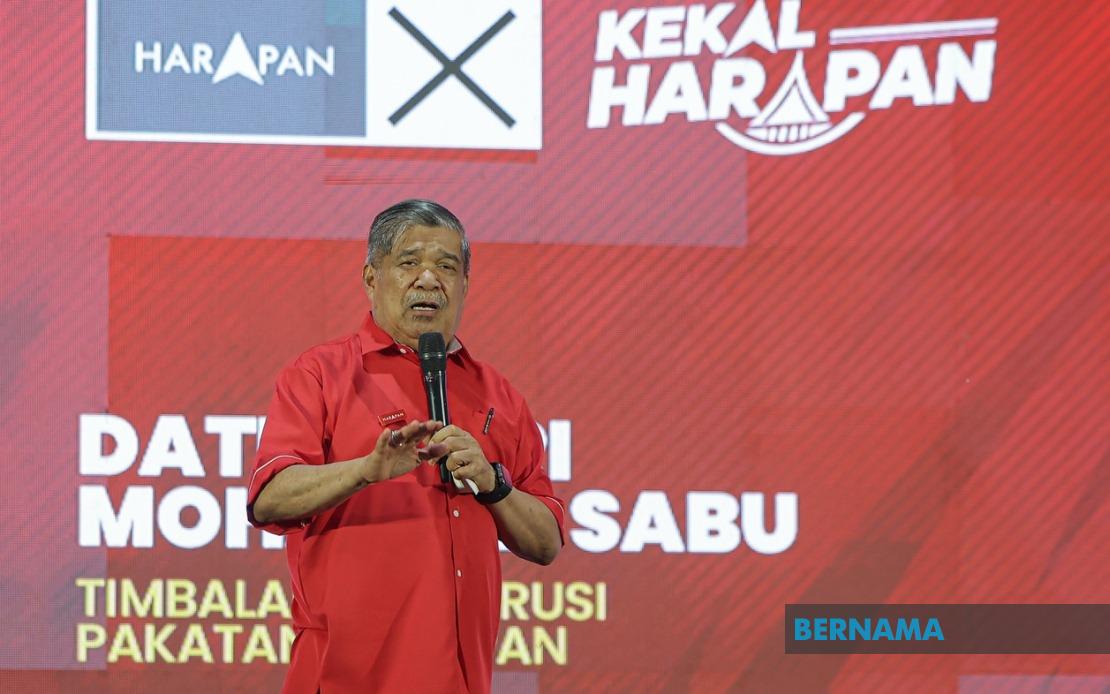
Amanah president Datuk Seri Mohamad Sabu has issued a stark warning to voters in Negeri Sembilan, urging them to resist what he characterises as a corrosive pattern of political opportunism that has come to define Malaysian electoral contests. Speaking in Seremban on July 22, Mohamad Sabu framed his appeal as a defence of democratic integrity, arguing that the electorate bears responsibility for refusing to reward parties that abandon principles in favour of naked ambition.
At the heart of his criticism lies a concern about what he terms 'marriage-divorce' politics—a colloquialism capturing the phenomenon of parties repeatedly severing and forging alliances depending on which combination promises power. This pattern, Mohamad Sabu contends, has become increasingly prevalent in Malaysian politics, creating an environment of uncertainty that fundamentally undermines faith in the political system. His language is deliberately provocative, using the metaphor of matrimonial dissolution to suggest both the casual disregard for commitment and the destabilising consequences of constant realignment.
The Amanah leader's intervention reflects deeper anxieties within Malaysia's opposition coalition about the sustainability of political partnerships. By invoking the specific history of one party's alliance-switching—moving sequentially between Barisan Nasional, Pakatan Rakyat, Bersatu, and back towards BN—Mohamad Sabu seeks to expose what he views as the unprincipled nature of such manoeuvring. This catalogue of broken partnerships demonstrates, in his view, how certain political organisations have become mechanisms for personal advancement rather than vehicles for coherent ideological platforms or policy agendas.
For Malaysian observers, Mohamad Sabu's critique touches on an uncomfortable reality about the country's competitive politics. The capacity of major parties to attract defecting MPs and realign coalitions has generated three changes of government since 2018, creating what many analysts describe as a period of exceptional institutional fragility. Each reconfiguration has required complex negotiations that, while formally democratic, have often occurred without fresh electoral mandates, raising questions about representational legitimacy.
The implications for Negeri Sembilan voters extend beyond abstract constitutional concerns. A state government produced through unstable coalitions faces practical difficulties: long-term policy planning becomes compromised when coalition partners may withdraw support; development projects lack the continuity essential for meaningful progress; and ministerial appointments become subject to factional bargaining rather than merit-based considerations. These material consequences help explain why Mohamad Sabu's intervention emphasises the voters' power to demand better.
Crucially, Mohamad Sabu's intervention also serves a tactical purpose within Amanah's broader positioning. By criticising alliance-switching as culturally corrosive, he simultaneously defends Pakatan Harapan's (or its successor coalition's) stability and coherence—even as that coalition itself has experienced fractures. This rhetorical move allows Amanah to occupy the moral high ground, positioning itself as the principled alternative to opportunistic competitors. The strategy depends, however, on voters accepting the distinction between principled coalition management and unprincipled party-hopping.
The broader context illuminating this debate involves the structural incentives embedded in Malaysia's electoral system. With 222 federal parliamentary seats distributed across diverse constituencies and state legislatures, coalition politics remains essential for governance. Yet the lack of strong internal party discipline mechanisms, combined with the possibility of attracting crossovers, has created conditions where flexible allegiances become politically rational. Reversing this tendency requires not merely voter awareness but institutional reforms that heighten the costs of defection.
Regionally, Malaysia's experience with political instability resonates across Southeast Asia, where several democracies struggle with similar coalition management challenges. Thailand's chronic coup-making, Cambodia's dominant-party fragility, and the Philippines' personalised politics all demonstrate how institutional weakness can undermine democratic development. Mohamad Sabu's framing of voter responsibility thus connects to broader questions about how electorates can collectively enforce accountability on political elites.
The challenge facing voters in Negeri Sembilan—and potentially elsewhere in Malaysia—involves distinguishing between legitimate tactical alliances and unprincipled opportunism. Parties will invariably argue that their current alignment reflects changed circumstances or political evolution rather than mere calculation. This hermeneutical difficulty means that Mohamad Sabu's appeal ultimately depends on voters developing sophisticated political judgment, able to identify patterns of behaviour that distinguish the principled from the purely expedient.
Moreover, effectively rejecting marriage-divorce politics requires voters to have credible alternatives. If all major contenders demonstrate similar patterns of alliance-switching, calls for greater stability become hollow. This reality underscores why Mohamad Sabu emphasises Amanah's (and Pakatan Harapan's) consistency, even as critics might question the coherence of coalitions that have themselves undergone significant reconfiguration.
Looking forward, whether Malaysian voters heed this injunction against unstable politics will substantially shape the country's democratic development. A public genuinely committed to punishing alliance-switching would create powerful incentives for parties to maintain commitment to coalition partners and substantive policy platforms. Conversely, continued electoral tolerance for such manoeuvring would likely entrench the pattern, deepening cynicism about political elites while further weakening institutional stability that democracies require for long-term health and effective governance.

