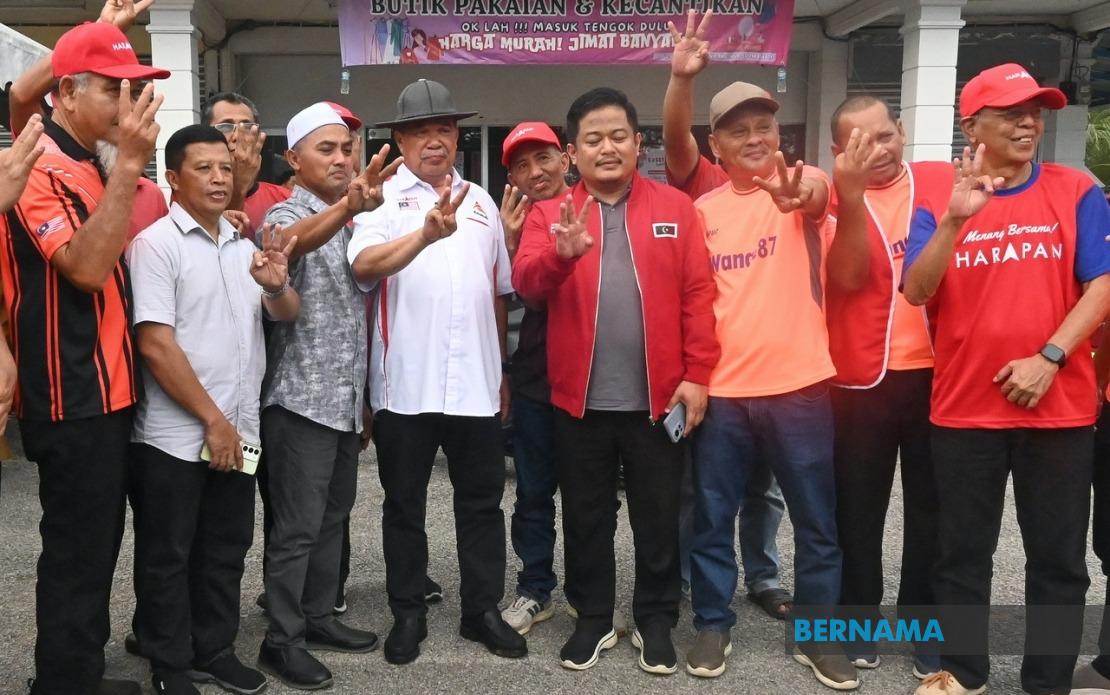
Datuk Seri Mohamad Sabu, president of Amanah and the nation's Minister of Agriculture and Food Security, has made an urgent appeal to Johor voters ahead of this weekend's state election, framing the ballot as a decisive moment for implementing a comprehensive reform agenda. Speaking in Batu Pahat following a campaign tour through the district, Mohamad Sabu stressed that granting Pakatan Harapan the mandate to govern Johor is fundamental to translating the coalition's recently unveiled manifesto from campaign rhetoric into substantive policy delivery.
The crux of Mohamad Sabu's argument centres on a critical distinction between articulating promises and executing them. He directly addressed suggestions from opposing camps that the PH manifesto represents merely cosmetic copying of existing platforms, asserting instead that the document reflects genuine grassroots consultation and represents authentic commitments born from extensive field engagement. The minister emphasized that the manifesto emerged not from isolated decision-making but from careful listening to the concerns, grievances, and aspirations expressed by ordinary Johor residents across different communities and settings.
Crucially, Mohamad Sabu articulated a temporal dimension to implementation, pledging that should PH secure victory in the July 11 ballot, concrete action would commence immediately thereafter. He specifically referenced July 12 as the date when substantive progress would begin, signalling organisational readiness and a commitment to rapid action rather than prolonged preparation periods. This timeline carries particular significance in Malaysian electoral contexts, where voter expectations regarding governmental responsiveness have intensified amid growing demands for efficient service delivery and visible results within the opening months of administration.
The minister's characterization of the manifesto's strength lying in implementation rather than mere articulation reflects a broader strategic messaging approach employed by Pakatan Harapan in this electoral cycle. By consciously pivoting from the mere presentation of policies toward emphasizing execution capability, the coalition appears to be addressing accumulated voter cynicism regarding unfulfilled campaign promises. This represents an implicit acknowledgment that Malaysian electorates increasingly evaluate political actors on demonstrated performance rather than rhetoric alone, particularly in state-level contests where governance outcomes become directly observable.
Modamad Sabu's assessment of campaign reception in rural constituencies provides illuminating context regarding PH's electoral trajectory in Johor. He noted a markedly contrasting response compared to the 2018 general election period, when Pakatan Harapan remained relatively unfamiliar in rural villages and smalltown markets across the state. The current reception, he observed, has transformed significantly, with rural voters now approaching PH candidates and leaders proactively, requesting photographs and engaging in substantive conversation. This shift from skeptical reserve to enthusiastic engagement suggests either genuine shifts in rural voter sentiment or, alternatively, successful cultivation of ground-level political presence through sustained community engagement.
The distinction between 2018 and 2024 campaign environments carries implications extending beyond mere popularity metrics. In 2018, PH's surprise federal victory, despite its decisive character, occurred partly through urban-centric support combined with sufficient inroads into suburban constituencies. Rural Malaysia, however, traditionally constituted stronghold territory for established political organisations, with their institutional networks, administrative familiarity, and patronage systems providing structural advantages. That Mohamad Sabu identifies positively transformed rural reception suggests either erosion of these traditional advantages or, more optimistically for PH, successful penetration of constituencies once considered politically immutable.
The manifesto itself, while not extensively detailed in the available reporting, appears designed to address accumulated grievances and identified priorities among Johor's diverse population. By emphasizing the document's origins in popular consultation rather than technocratic formulation, Mohamad Sabu frames the manifesto as representative of collective aspiration rather than elite imposition. This rhetorical framing carries particular resonance in Malaysian political culture, where concepts of rakyat (people) and grassroots legitimacy exercise significant persuasive force in electoral discourse.
For Malaysian observers and Southeast Asian regional analysts, the Johor election represents a crucial test case regarding coalition resilience and electoral competitiveness following the federal administration's installation. The state constitutes economically significant territory, encompassing major urban centres, extensive rural hinterlands, and strategically vital port facilities. Electoral performance in Johor thus carries implications extending beyond state-level governance, influencing national political momentum and coalition positioning for anticipated federal electoral contests.
Modamad Sabu's specific framing of manifesto implementation as the meaningful distinction between rival political offerings suggests the coalition has identified tangible governance delivery as its primary competitive advantage. Rather than depending upon opposition disunity or incumbent complacency, PH appears positioned to centre its electoral appeal upon demonstrated capacity to translate policy commitment into citizen benefit. This represents a substantive strategic choice, implicitly acknowledging that rhetorical superiority alone no longer provides sufficient electoral ballast in increasingly sophisticated voter environments.
The early voting procedures for security personnel, scheduled for July 10, and the principal polling day on July 11 will represent the formal validation of these accumulated campaign efforts and messaging strategies. Should Pakatan Harapan secure the anticipated majority, Mohamad Sabu's pledge regarding rapid implementation will become subject to rigorous public scrutiny, establishing metrics through which voter satisfaction or disenchantment may subsequently be measured in future electoral cycles.

