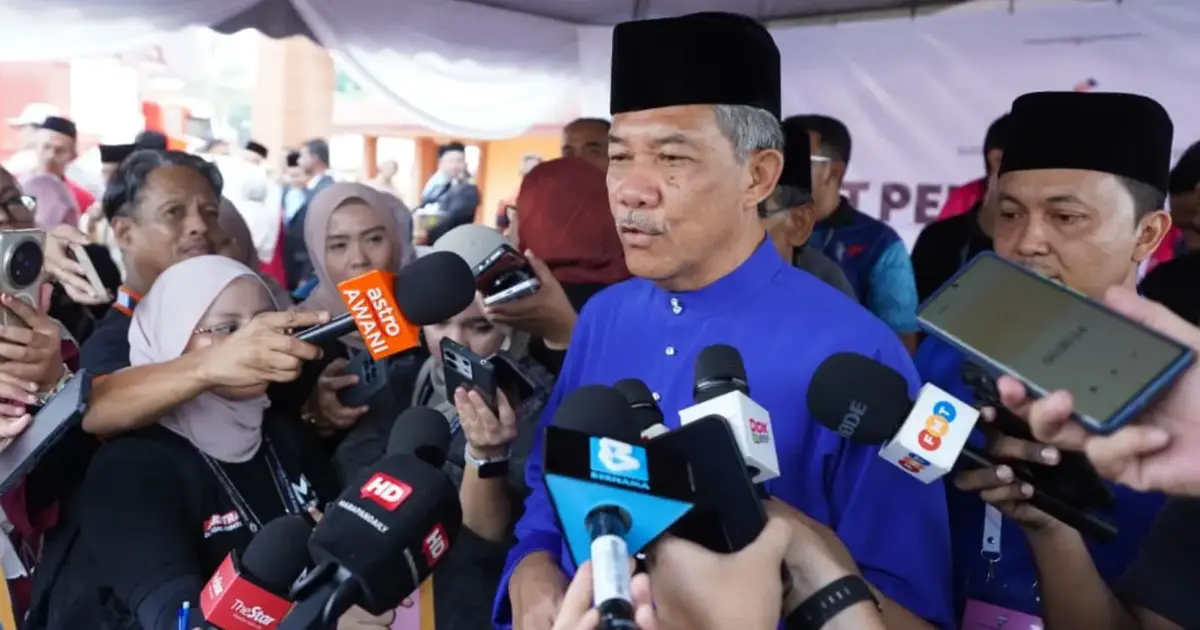
Mohamad Hasan has issued a direct warning to Barisan Nasional candidates in Negeri Sembilan, instructing them to avoid making the state's adat institution a focal point of their election campaign rhetoric. The senior party figure stressed that Negeri Sembilan's customary institution must be treated with appropriate respect, and that introducing it into the charged atmosphere of electoral politics risks aggravating sensitivities that remain raw within the state's political and social landscape.
The caution reflects growing concern within BN leadership about how contentious local issues can become flashpoints during campaign season. In Malaysian electoral contests, particularly in states with strong traditional hierarchies and customary frameworks, the intersection of politics and cultural institutions has historically proven volatile. By signalling this boundary to candidates, Mohamad Hasan appears to be attempting to forestall a scenario where adat-related grievances become campaign ammunition, potentially alienating communities and deepening fissures already present in Negeri Sembilan's political fabric.
Negeri Sembilan occupies a unique position within Malaysia's constitutional structure because of its devolved monarchical system and the considerable autonomy its adat institution exercises in matters of custom and tradition. Unlike most other Malaysian states, Negeri Sembilan's governance incorporates a federal council of rulers representing its constituent districts, and the adat framework carries substantial weight in local decision-making and cultural affairs. This distinctive institutional arrangement means that adat-related decisions can trigger broader ramifications across the state's political landscape.
The explicit instruction to campaign operatives underscores an apparent recognition within BN circles that the adat issue carries sufficient sensitivity to warrant preemptive damage control. Introducing contested adat matters into campaign discourse could mobilise opposition movements or splinter BN's own electoral coalition if different communities interpret adat-related statements as advantaging particular groups or challenging established traditions. For a coalition seeking to maintain unity across diverse constituencies, such divisive territory represents dangerous electoral terrain.
In the Malaysian context, adat issues frequently intersect with questions of indigenous rights, land tenure, succession protocols, and cultural recognition. These are not merely abstract constitutional matters but touch directly on the material interests and identity concerns of local populations. When politicians weaponise such issues for campaign advantage, they risk transforming cultural institutions into political battlegrounds where the underlying substance becomes secondary to factional positioning.
Mohamad Hasan's directive essentially positions BN as a force for institutional stability on this particular front. By asking candidates to maintain a cordon sanitaire around adat matters, he signals that the coalition's electoral strategy will not involve destabilising challenges to customary frameworks. This approach contrasts with potential opposition tactics that might seek to mobilise discontent with adat-related decisions as a campaign vehicle, making BN's protective posture potentially advantageous if voters perceive opposition candidates as threatening institutional disruption.
The warning also likely responds to recent tensions or disputes within Negeri Sembilan related to adat governance that remain unresolved or politically sensitive. Rather than allow these underlying disputes to become campaign fodder, Mohamad Hasan appears determined to quarantine them from electoral contestation. This represents a strategic calculation that BN's interests are better served by projecting respect for adat institutions than by attempting to exploit grievances around their operation.
For Malaysian observers, this episode illustrates the delicate balancing act required in electoral politics when states possess distinctive institutional arrangements. Campaign messaging that works effectively in states with straightforward administrative structures can backfire spectacularly in jurisdictions where customary frameworks carry constitutional weight and deep cultural resonance. Mohamad Hasan's intervention suggests BN has learned this lesson and is determined not to repeat mistakes that could undermine party cohesion or alienate crucial voter blocs in Negeri Sembilan.
The directive also carries implications for how Malaysian political parties generally approach federalism and devolved governance. By treating adat as a boundary that electoral politics should not cross, Mohamad Hasan implicitly affirms that certain institutional domains merit protection from partisan contestation. This principled stance, if genuinely adhered to, could establish a precedent for respecting constitutional autonomy even during heated campaign periods when the temptation to exploit every available advantage runs high.
BN candidates receiving these instructions must navigate a narrow path during their campaigning, focusing on economic development, service delivery, and bread-and-butter governance issues while maintaining conspicuous silence on adat-related matters. This constraint, while protecting institutional integrity, also potentially disadvantages candidates who might otherwise seek to address legitimate constituent concerns about how adat institutions function in practice. The challenge lies in distinguishing between inappropriate politicisation and necessary democratic accountability for bodies wielding institutional power.

