Malaysia is positioning itself as a vocal advocate for Palestinian rights by sending Foreign Minister Datuk Seri Mohamad Hasan to lead its delegation at an extraordinary meeting of the Organisation of Islamic Cooperation's Council of Foreign Ministers in Jeddah. The gathering, convened to examine recent developments affecting Palestinians, underscores Malaysia's sustained commitment to the cause at a multilateral level, even as the regional geopolitical landscape remains fraught with tensions.
The one-day extraordinary session represents a continuation of earlier diplomatic efforts through which OIC member states attempt to forge consensus on the Palestinian question. This coordinated approach is particularly significant given the diverse interests and foreign policy priorities among the organisation's membership, which spans Africa, the Middle East, Asia, and beyond. For Malaysia, participation in such forums serves both as an expression of solidarity with the Palestinian struggle and as an opportunity to shape collective Muslim-majority country responses to developments on the ground.
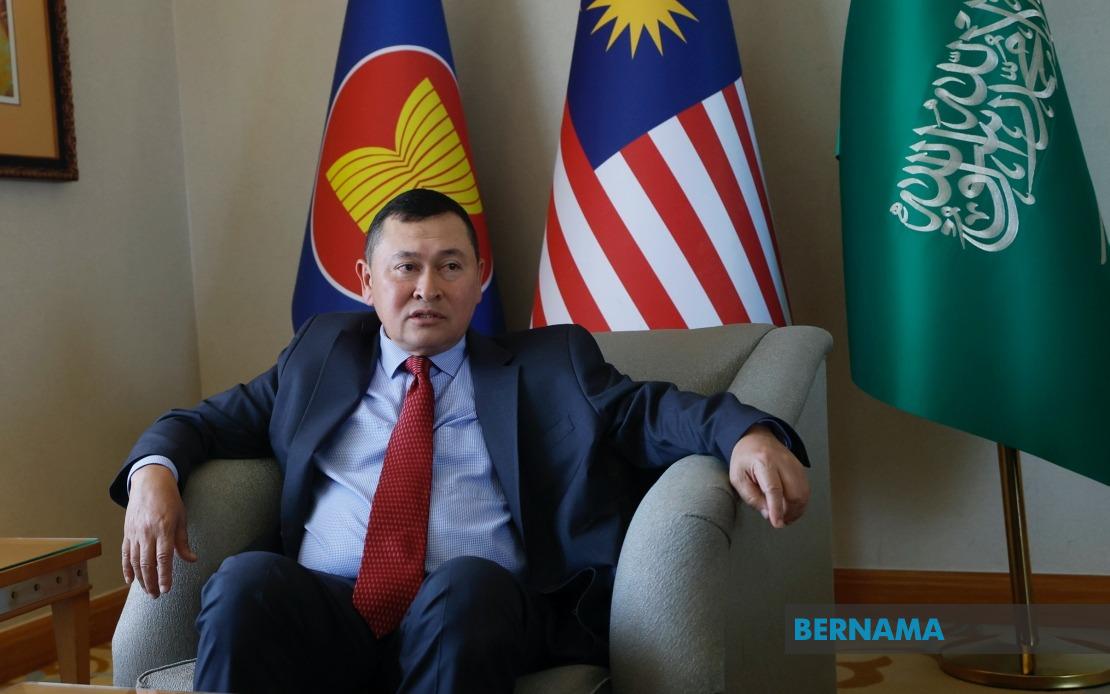
According to Datuk Syed Bakri Syed Abdul Rahman, Malaysia's Ambassador to Saudi Arabia and Permanent Representative to the OIC, Mohamad will present Malaysia's National Statement during the proceedings. This formal address will reaffirm the country's foundational position on the Israeli-Palestinian conflict, articulating support for Palestinian self-determination and the establishment of an independent, sovereign Palestinian state anchored to pre-1967 borders. Such statements carry weight in diplomatic circles, as they establish official records of a nation's stance that inform subsequent bilateral and multilateral engagement.
The breadth of Malaysia's intended remarks extends beyond abstract principles of statehood to encompass concrete grievances. Mohamad is expected to address Israel's military operations and the humanitarian catastrophe unfolding in Gaza, whilst also highlighting the precarious conditions facing Palestinians in the West Bank and the implications of ongoing settlement expansion into disputed territories. By layering these specific concerns into the National Statement, Malaysia frames the Palestinian question not merely as a historical or religious issue but as a humanitarian emergency demanding urgent international attention.
Malaysia's participation carries particular resonance given the country's historical role as a champion of developing-world interests and as a bridge-builder within the Muslim-majority bloc. By sending its Foreign Minister rather than a lower-ranking official, Kuala Lumpur signals the priority it attaches to the Palestinian cause within its foreign policy hierarchy. This diplomatic positioning reflects both genuine ideological commitment and strategic calculations about maintaining Malaysia's credibility within OIC circles, where such displays of solidarity are culturally and politically significant.
The meeting is poised to generate formal outcomes that extend beyond rhetorical gestures. According to Syed Bakri, delegates are expected to adopt a resolution specifically addressing the Palestinian question and Al-Quds Al-Sharif, a designation for Jerusalem that carries deep religious significance for Muslims. This resolution would formally condemn Israel's military actions against Palestinians and mobilise OIC member states towards joint initiatives. Such collective pronouncements, whilst not binding under international law, contribute to normative pressure and diplomatic isolation strategies.
Beyond the Palestine-focused agenda, the extraordinary meeting will also address the election of a new OIC secretary-general, a position that influences the organisation's capacity to advocate for member states' priorities. The selection of leadership at the OIC level has ramifications for how aggressively the organisation pursues Palestinian advocacy versus other competing concerns amongst its disparate membership. Malaysia's voice in such selections, amplified through Mohamad's presence, carries institutional significance for future OIC effectiveness.
The Foreign Minister's visit to Jeddah is also strategically timed to enable bilateral engagement with counterparts from numerous countries. These side meetings, whilst often overshadowed by the main conference agenda, frequently serve as venues for substantive discussions on deepening bilateral cooperation across sectors including business, trade, and investment. For Malaysia, such interactions present opportunities to lever its diplomatic capital on the Palestinian question into tangible economic benefits or enhanced strategic partnerships, demonstrating how advocacy on values can be interwoven with pragmatic national interests.
Malaysia's commitment to the Palestinian cause extends beyond diplomatic statements to encompassing humanitarian dimensions. The country has consistently emphasised its role in facilitating aid delivery to Palestinians affected by conflict, a position Syed Bakri reiterated by highlighting Malaysia's desire to ensure humanitarian assistance reaches vulnerable populations. This dual approach—combining political advocacy with material support—distinguishes Malaysia's engagement and appeals to constituencies within the country that view support for Palestinians as an ethical imperative rather than mere geopolitical posturing.
The Malaysian position on Palestine reflects broader Southeast Asian and Muslim-majority country perspectives that have become increasingly aligned on this issue, despite divergent interests on other matters. By participating robustly in OIC forums, Malaysia reinforces its credentials as a champion of collective Muslim interests whilst simultaneously positioning itself as a model of how a successful, diverse, developing nation can maintain principled foreign policy positions without sacrificing economic pragmatism or international integration. This balance resonates with many OIC members navigating similar tensions between ideological commitments and practical statecraft.
For Malaysian observers and policymakers, the Jeddah meeting represents a moment where regional security concerns intersect with global human rights advocacy. The developments in Palestine, whilst geographically distant, carry symbolic weight within Malaysia's domestic political discourse and its identity as a Muslim-majority nation with global aspirations. The Foreign Minister's mission therefore serves multiple constituencies—the Palestinian people themselves, the broader OIC membership, Malaysia's domestic audience, and the international community monitoring whether Muslim-majority nations can translate diplomatic unity into meaningful action.
The outcomes of this extraordinary session will likely reverberate through bilateral channels and multilateral platforms in subsequent weeks. Member states' adherence to any collectively endorsed positions will become a metric by which to assess whether the OIC can translate rhetorical consensus into coordinated strategic responses. Malaysia's leadership role in these discussions positions the country to shape not only the immediate resolutions emerging from Jeddah but also to influence longer-term diplomatic strategies concerning Palestinian advocacy within regional and international forums.

