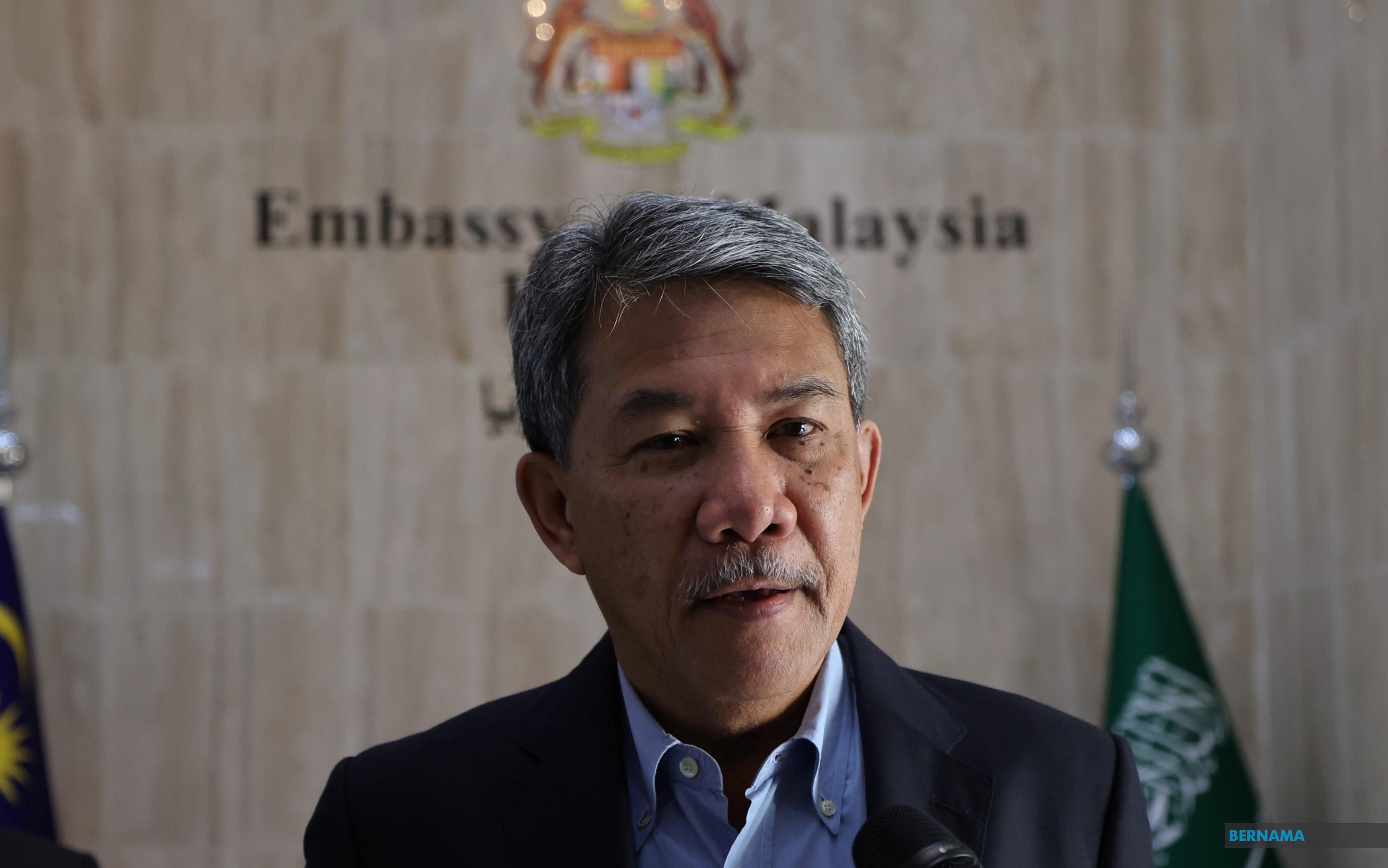
Foreign Minister Datuk Seri Mohamad Hasan is undertaking a three-day working visit to Brunei that will centre on two significant bilateral engagements aimed at deepening cooperation and resolving outstanding issues between the neighbouring countries. The visit, which runs until August 22, marks an important moment in Malaysia-Brunei relations as senior officials prepare to review progress on multiple fronts, from economic collaboration to boundary matters that have long occupied both governments' attention.
The centrepiece of Mohamad Hasan's itinerary is the 27th Malaysia-Brunei Exchange of Letters Implementation Meeting scheduled for August 21, which he will co-chair alongside Brunei's Second Minister of Foreign Affairs, Datuk Seri Setia Erywan Mohd Yusof. This mechanism, held annually, functions as a crucial diplomatic channel through which both nations evaluate the health of their bilateral relationship and chart a course for future engagement. The meeting provides an opportunity to assess how effectively previous agreements are being implemented and to identify areas where coordination can be strengthened.
The following day brings the 27th Malaysia-Brunei Annual Leaders' Consultation on August 22, a higher-level gathering that reflects the priority both governments attach to their bilateral partnership. These structured dialogues have become hallmarks of Southeast Asian diplomacy, allowing leaders to address sensitive matters in a framework designed to maintain goodwill while tackling complex issues. The ALC format ensures that decisions made at the highest level are subsequently monitored and executed through lower-level mechanisms like the EOL meeting.
According to the Ministry of Foreign Affairs statement, the EOL meeting will examine progress on bilateral issues that have proven significant to both nations' strategic interests. Prominently featured on the agenda are matters related to land and maritime boundaries, reflecting longstanding concerns that require sustained diplomatic attention. These boundary questions have occasionally tested relations between Malaysia and Brunei, making regular dialogue essential for preventing misunderstandings and maintaining the generally cordial tenor that has characterised their relationship in recent decades.
Economic cooperation forms another critical dimension of the discussions Mohamad Hasan will pursue. Both nations recognise the value of strengthening trade ties and exploring fresh avenues for commercial engagement. The two countries have identified opportunities to enhance economic linkages that could benefit businesses and workers in both territories. Officials are expected to deliberate on measures to facilitate greater bilateral commerce and investment, recognising that economic interdependence can reinforce political stability and mutual prosperity.
Trade figures underscore the scale of the economic relationship between Malaysia and Brunei. During 2025, bilateral trade reached RM5.86 billion, equivalent to USD 1.37 billion, demonstrating the substantial commercial flows between the neighbours. In the first half of 2026, from January through June, trade totalled RM2.38 billion or USD 0.6 billion. While the first-half figure appears modest compared to the annual total, it likely reflects normal seasonal variations in cross-border commerce. These statistics reveal that despite their geographic proximity and close political ties, Malaysia and Brunei have considerable scope to expand their economic relationship beyond current levels.
The timing of this visit reflects Malaysia's commitment to maintaining momentum in its ASEAN relationships, particularly with smaller neighbours where consistent high-level engagement reinforces bonds. Brunei, as chair of ASEAN in 2021 and a nation punching above its weight diplomatically, merits the kind of attention that senior ministerial visits represent. For Malaysia, cultivating strong relations with all ASEAN members remains a cornerstone of foreign policy, contributing to regional stability and collective influence on global matters.
From a Malaysian perspective, these discussions carry implications beyond the bilateral sphere. The health of Malaysia-Brunei relations influences broader ASEAN cohesion and affects the region's capacity to manage shared challenges, from maritime security to economic competition with larger powers. The focus on maritime boundary issues reflects wider regional preoccupations with freedom of navigation and the peaceful resolution of competing claims in contested waters. Malaysia's consistent emphasis on dialogue and orderly procedures for addressing such matters positions the country as a voice for stability within the association.
The bilateral mechanisms themselves—the EOL and ALC structures—represent best practice in regional diplomacy, allowing nations to move beyond rhetoric toward substantive progress on concrete issues. They embody the ASEAN principle of non-interference while enabling practical cooperation on matters of mutual concern. These forums have enabled Malaysia and Brunei to address tensions when they have arisen while maintaining the fundamental partnership that geography and shared interests have created.
Moving forward, the outcomes of these meetings will likely be documented in joint statements that signal areas of agreement and areas where further work is required. Such diplomatic documents, while sometimes appearing formulaic, often contain carefully calibrated language that reflects genuine progress on thorny issues or, conversely, acknowledges persistent disagreements while affirming commitment to future dialogue. The statements emerging from ALC-27 and the EOL-27 Implementation Meeting will therefore deserve careful reading by observers interested in the trajectory of bilateral relations.
For Malaysia's broader regional standing, demonstrating consistent engagement with all ASEAN partners through high-level visits and substantive dialogue reinforces the country's role as a committed member of the association. Such engagement also models the kind of sustained diplomatic attention that contributes to a stable Southeast Asia, a region that has managed to avoid major armed conflicts among its members for decades—a remarkable achievement often overlooked in commentary focused on tensions.

