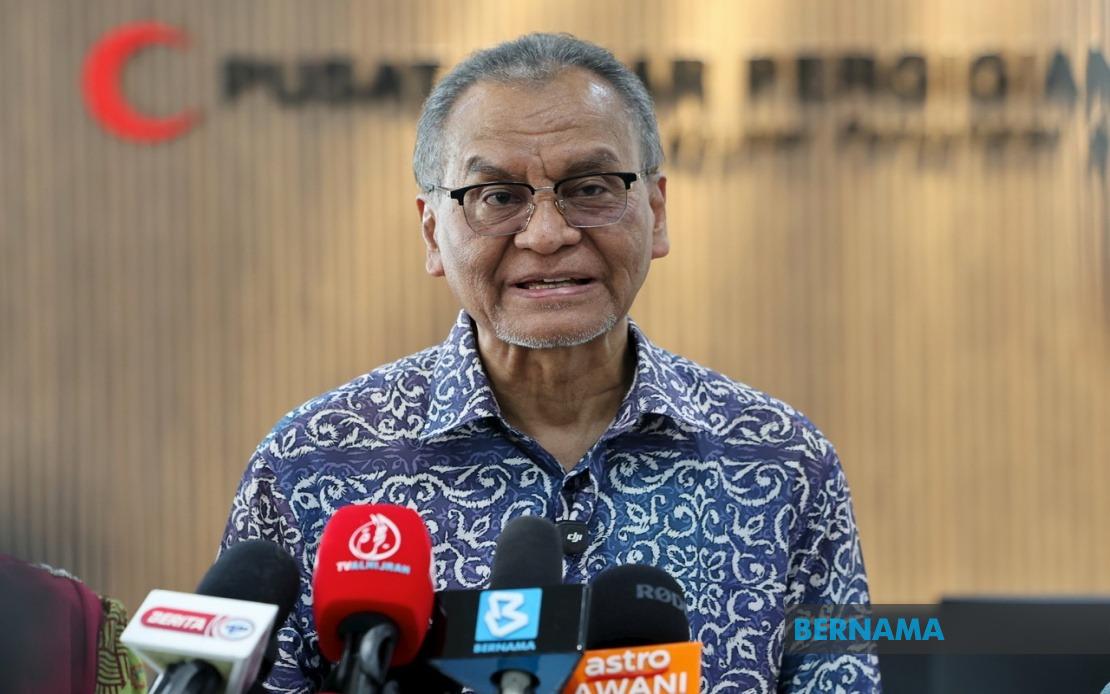
The Ministry of Health remains in the assessment phase regarding the incorporation of dengue vaccines into the National Immunisation Programme, according to Health Minister Datuk Seri Dr Dzulkefly Ahmad. Speaking in Seremban following the opening of the Negeri Sembilan Dental Specialist Centre, he outlined the deliberate approach being taken before making such a significant public health decision. The cautious stance reflects the complexity of introducing new vaccines into a national programme that affects millions of Malaysians annually.
A key constraint slowing the decision-making process is the substantial financial burden associated with current dengue vaccine options. Dr Dzulkefly noted that while one vaccine has already received registration approval from the National Pharmaceutical Regulatory Agency (NPRA) and is available in private healthcare settings, the pricing structure remains prohibitively expensive for widespread public adoption. The Ministry is conducting detailed cost-benefit analyses, particularly for a dengue vaccine sourced from Japan, to determine whether public funding can be justified across the entire population.
The urgency of dengue control has intensified dramatically this year, creating mounting pressure on the decision-making timeline. As of Epidemiological Week 33 in 2026—corresponding to August 22—Malaysia had recorded more than 61,000 confirmed dengue cases, representing a substantial 60.8 per cent increase compared to the equivalent period in 2025. The disease has claimed 58 lives to date, underscoring the public health challenge facing the nation. This escalating trajectory has prompted the MOH to activate dedicated operations rooms and redeploy personnel to identified hotspot areas, particularly in Kuala Lumpur and Selangor.
Beyond vaccine development, the Ministry is expanding its arsenal of dengue control measures to address the breeding patterns of disease vectors. The deployment of Wolbachia-infected mosquitoes represents an innovative biological control strategy that complements traditional vector management. This approach works by reducing the capacity of wild Aedes mosquitoes to transmit the dengue virus, offering a complementary layer of protection whilst the Ministry deliberates on vaccine integration. Such multi-pronged strategies reflect the complexity of tackling an endemic disease that continues to evade simple solutions.
The Ministry has deliberately emphasised that combating dengue cannot remain solely the responsibility of health authorities. Dr Dzulkefly stressed the necessity of collaborative action involving local government bodies, municipal corporations, and community organisations to eliminate breeding grounds in residential and commercial premises. Public cooperation in maintaining clean environments and eliminating standing water sources remains fundamental to reducing Aedes mosquito populations, particularly during monsoon seasons when breeding sites proliferate across urban and suburban areas.
Parallel to dengue considerations, the Health Ministry is advancing broader preventive healthcare initiatives through dental programmes. A proposal is under review to expand basic dental screening and treatment services through the PeKa B40 scheme, which targets lower-income households. Dr Dzulkefly characterised dental health as an often-overlooked component of preventive medicine and primary healthcare, particularly given its interconnections with non-communicable disease management. Implementation is expected to commence following the necessary administrative approvals.
The newly inaugurated Negeri Sembilan Dental Specialist Centre represents a significant infrastructure investment totalling RM32 million, marking Malaysia's first standalone dental specialist referral facility outside traditional hospital settings. Since commencing operations on September 25, 2025, the centre has processed 11,085 patient cases through June 2026, demonstrating substantial public demand for specialist dental services. The facility functions as a central zone hub serving Negeri Sembilan, Selangor, Kuala Lumpur and Putrajaya, as well as Melaka, collectively covering a population of 11.89 million residents across Malaysia's most densely populated corridor.
Operational capacity improvements have been immediately evident following infrastructure enhancements. The addition of 18 modern dental chairs has expanded daily treatment capacity by nearly 90 per cent, increasing throughput from 80 to 150 patients daily. Equally significant, specialist treatment waiting periods have contracted from two months to two or three weeks, substantially reducing the access barriers that previously discouraged people from seeking necessary dental interventions. These metrics indicate the efficiency gains achievable through modern facility design and integrated digital systems.
Technological integration forms a cornerstone of the centre's operational success, with the Dental Information System enabling better coordination and resource allocation. Modern imaging capabilities and dedicated skill laboratories support continuous clinical training for dental professionals, ensuring staff competency remains current with evolving treatment standards. This investment in human capital development recognises that facility modernisation must be paired with professional upskilling to deliver sustained service improvements.
The Ministry envisions expanding this centralised dental model progressively across Malaysia's geographic regions, beginning with zonal development strategies encompassing areas such as the Borneo zone before advancing to state-by-state implementation. This phased approach acknowledges the logistical challenges of establishing similar facilities in less densely populated regions whilst ensuring equitable access to specialist dental services nationwide. The strategy balances fiscal responsibility with the equity principle underlying Malaysia's public healthcare philosophy.
Community-level dental services are simultaneously being strengthened through outreach expansion. Eight additional Mobile Dental Clinics are scheduled for delivery by year's end, with deployment planned for Sabah, Perlis, Penang, Selangor, Putrajaya and Johor. These mobile units extend basic dental services to communities with limited fixed-facility access, particularly in rural and remote areas where geographic barriers otherwise prevent residents from accessing preventive and primary dental care. The combination of specialist centres and mobile clinics creates a comprehensive service architecture addressing diverse population needs across Malaysia's varied landscape.

