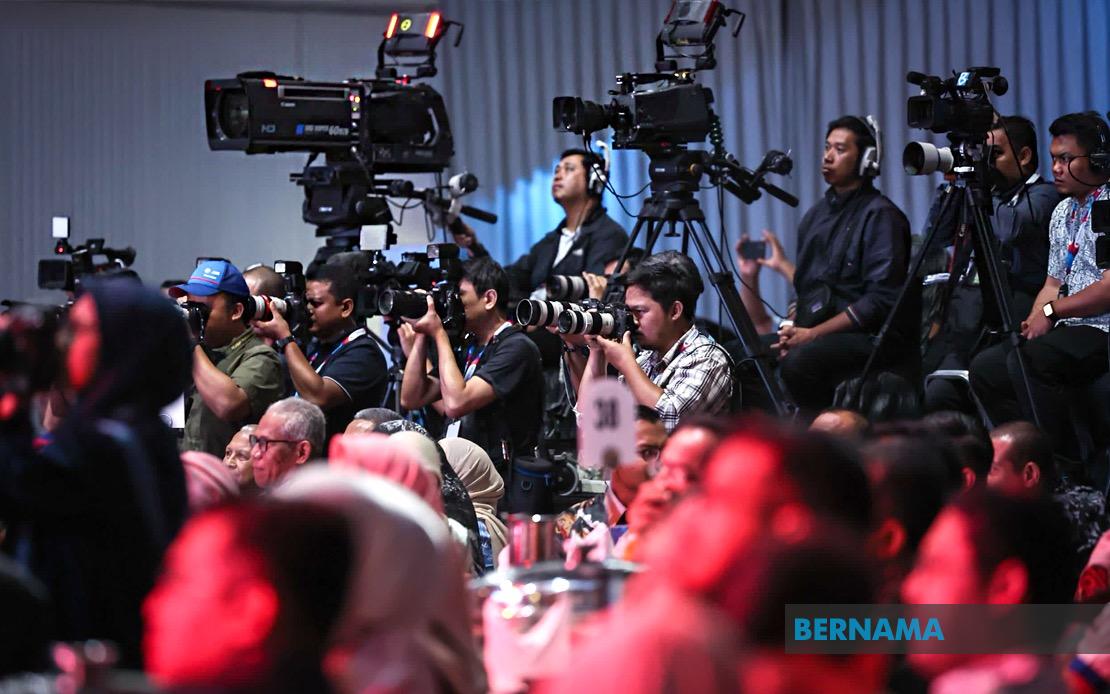
The Malaysian Media Council (MMM) has expressed strong approval of Prime Minister Datuk Seri Anwar Ibrahim's recent directive establishing a structured pathway for complaints involving journalists from established media organisations. Under the Prime Minister's guidance, such complaints must first be submitted to the Council before any subsequent action may proceed, a protocol the MMM characterises as fundamental to strengthening both media independence and journalistic integrity across the country.
This endorsement signals MMM's view that the government recognises the critical distinction between self-regulatory mechanisms and law enforcement intervention. By channelling complaints through the Council rather than permitting immediate legal or administrative action, the framework aims to prevent journalists from facing arbitrary pressure while ensuring that legitimate concerns about media conduct receive appropriate professional review. For Malaysia, where press freedom rankings have come under international scrutiny, this approach represents an attempt to demonstrate commitment to balanced accountability without compromising the investigative capacity and editorial independence that define functioning journalism.
The Council emphasises that its role extends beyond simple complaint management. As an independent self-regulatory institution, MMM serves to strengthen professional journalism standards, promote ethical media practice, and provide mechanisms for addressing disputes grounded in clear procedures rather than ad-hoc intervention. This positioning reflects international best practice in media governance, where industry bodies operate as buffers between government action and newsrooms, protecting against politically motivated prosecutions while maintaining genuine accountability to the public.
Crucially, MMM acknowledges that journalists and media organisations remain fully subject to Malaysian law. The Council does not claim authority to supersede courts or law enforcement agencies in matters involving criminal conduct or civil wrongdoing. Rather, its mandate focuses on questions of journalistic practice, editorial ethics, reporting accuracy, rights of reply, and whether media outlets have treated subjects fairly and in the public interest. This distinction matters significantly because it preserves legal remedies for demonstrable harms while filtering out complaints rooted primarily in disagreement with editorial judgment or news coverage.
The Council's position reflects growing recognition that not every complaint warrants immediate investigation or formal action. By introducing a review stage that contextualises journalism within democratic societies' broader information ecosystem, the MMM framework attempts to shield journalists from harassment tactics while maintaining genuine recourse for affected parties. This graduated approach prevents the chilling effect that automatic investigations produce—where reporters become reluctant to pursue legitimate stories for fear of baseless accusations triggering formal proceedings.
Under the MMM complaints mechanism, members of the public, organisations, government bodies, and any party affected by media reporting may lodge grievances with the Council. The Secretariat initially assesses whether complaints fall within MMM jurisdiction and involve journalistic practice rather than purely personal matters. Where appropriate, the Council refers cases to relevant media organisations for response, clarification, or corrective measures. Should preliminary resolution prove impossible, complaints proceed to formal assessment under the Council's Code of Conduct and established journalism principles.
This tiered structure serves dual purposes. It legitimises public access to complaint channels, ensuring that genuine grievances reach professional reviewers rather than remaining unaddressed or escalating through informal pressure. Simultaneously, it screens out frivolous or politically motivated complaints before they consume investigative resources or generate publicity disproportionate to actual wrongdoing. For Malaysian media outlets operating in an increasingly polarised political environment, such protection proves valuable when facing coordinated complaint campaigns designed to intimidate rather than address genuine editorial failures.
MMM's statement acknowledges the international dimensions of Malaysia's media governance challenges. The Prime Minister's directive was issued partly in response to concerns regarding Malaysia's standing in the World Press Freedom Index, an annual ranking that influences international perceptions of the country's democratic health and judicial independence. By visibly supporting structured self-regulation, the government signals commitment to international norms around press freedom without surrendering state authority over genuinely unlawful conduct. This positioning matters for foreign investors, diplomatic relationships, and Malaysia's credibility in regional discussions about democratic governance.
The Council calls upon all stakeholders—government agencies, politicians, public institutions, civil society organisations, and ordinary citizens—to utilise the MMM complaints mechanism rather than resorting to public pressure, threats, harassment, or punitive measures. This appeal represents an implicit criticism of existing practice, acknowledging that disputes over media coverage have sometimes escalated through extrajudicial channels including online campaigns, official intimidation, and defamation threats. By promoting professional dispute resolution, MMM attempts to replace confrontational dynamics with structured dialogue.
The framework reflects an understanding that media freedom and media responsibility need not conflict. Rather than viewing accountability as a constraint on journalism, MMM positions professional self-regulation as strengthening long-term media credibility and public trust. When complaints receive fair hearing through transparent processes, media organisations can respond, correct errors, or explain editorial decisions without suspicion that judgments reflect political bias or legal jeopardy. This approach potentially serves Malaysian journalism better than either unchecked authority or complete immunity from scrutiny.
For Malaysian newsrooms, the implications extend beyond formal complaint procedures. The directive creates space for substantive journalism on sensitive topics—corruption, governance failures, official misconduct—by establishing that editorial judgment will receive consideration before formal action proceeds. This breathing room proves essential in environments where government bodies or powerful figures might otherwise weaponise complaint mechanisms to discourage coverage. However, the framework's success ultimately depends on MMM maintaining genuine independence and demonstrating that its reviews produce fair, principle-based outcomes rather than protecting media outlets from legitimate accountability.
Moving forward, MMM emphasises its commitment to collaborating with government, Parliament, media organisations, civil society, and the public to implement this approach effectively and consistently. The Council's ability to fulfil this mandate while maintaining credibility with all stakeholders—neither appearing as a propaganda tool for media interests nor as a fig leaf legitimising government interference—will determine whether Malaysia successfully develops media governance that balances freedom, responsibility, and democratic accountability. The coming months will reveal whether this framework produces genuine professional improvement or merely displaces conflicts into the MMM complaints process itself.

