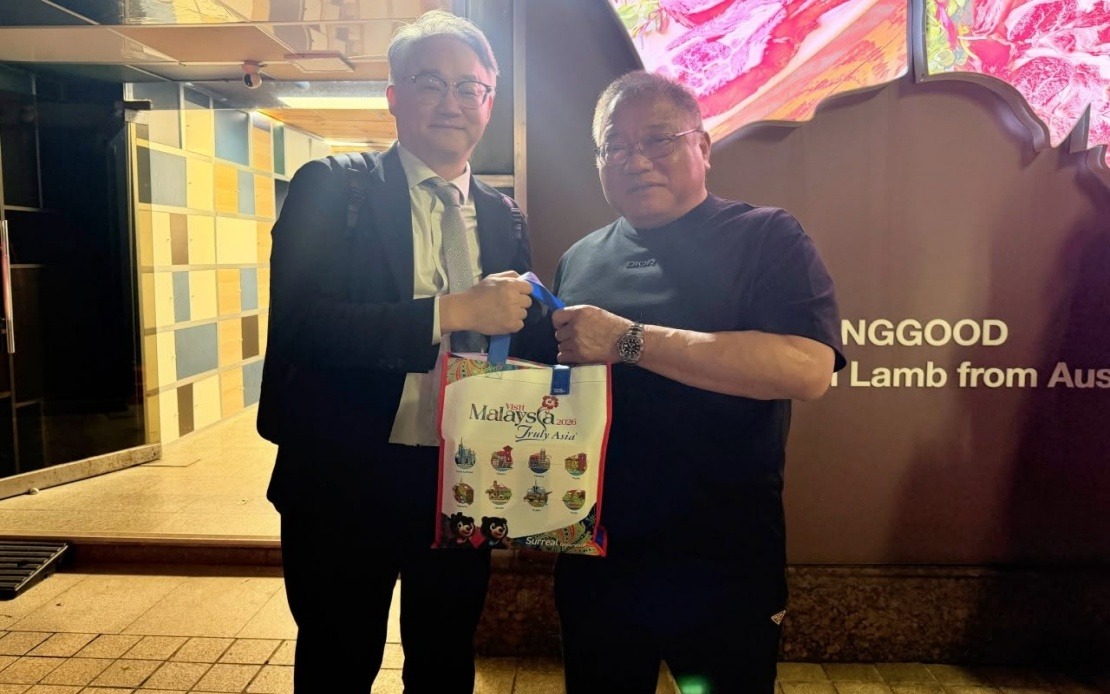
Malaysia's Tourism, Arts and Culture Minister Datuk Seri Tiong King Sing has issued a strong directive to Malaysia My Second Home (MM2H) agents, emphasising that operating overseas requires strict adherence to local regulatory frameworks, not merely possession of a Malaysian licence. Speaking following discussions with Malaysian communities abroad, the minister underscored the critical distinction between domestic licensing and international legal compliance, a nuance that appears to have been lost on some participants in the increasingly globalised MM2H market.
The impetus for Tiong's intervention emerged during his recent visit to the Republic of Korea, where representatives from the Malaysian Association raised concerns about inconsistent practices among agents promoting the MM2H programme to Korean nationals. The association's leadership, including president Dr Aaron Kim Hong-Seok, highlighted a troubling trend whereby agents licensed in Malaysia were operating in South Korea without fully understanding or adhering to the country's regulatory environment. This disconnect has created a marketplace characterised by opacity and duplication, wherein multiple parties claim authority to process MM2H applications without clear jurisdictional oversight or accountability mechanisms.
The core issue, as articulated by the minister, centres on a fundamental misunderstanding among some MM2H agent companies regarding the territorial limits of their Malaysian licences. Obtaining approval from authorities in Kuala Lumpur to recruit international clients does not automatically confer the right to operate in foreign jurisdictions or supersede those nations' consumer protection, financial services, or immigration laws. Several agents appear to have overlooked this crucial principle, instead assuming that Malaysian regulatory clearance provides blanket permission to conduct business activities anywhere globally. This assumption has spawned confusion among prospective applicants, creating an environment ripe for fraudulent schemes and malpractice.
The situation in Korea exemplifies broader systemic challenges facing the MM2H programme as it expands internationally. According to information shared with Tiong, some agents lack comprehensive knowledge of Korean law and regulatory expectations, yet proceed to engage directly with Korean individuals and businesses without establishing proper institutional channels or obtaining necessary clearances from relevant authorities. This ad-hoc approach has resulted in a proliferation of intermediaries and self-appointed facilitators, many of whom lack formal credentials or accountability to any regulatory body. For Korean retirees and investors considering Malaysia as a retirement destination, such fragmentation breeds legitimate concerns about the legitimacy and trustworthiness of promotional efforts.
Tiong's response prioritises transparency and consumer protection over mere volume metrics. He explicitly rejected a purely quantitative approach to programme growth, stating that the number of applications processed should not be the defining success measure. Instead, the minister emphasised that protecting applicants' interests and fostering orderly, lawful market development must take precedence. This reframing represents an important policy shift, signalling to the industry that regulatory compliance and ethical conduct are non-negotiable prerequisites for continued operation. Upon returning to Malaysia, Tiong committed to personally reminding all licensed MM2H agent companies of their obligations to adhere to applicable rules and regulations in all jurisdictions where they operate.
The Korean market holds particular strategic significance for MM2H programme expansion. South Korea possesses a substantial population of affluent retirees and semi-retired individuals actively seeking alternative retirement destinations in Asia, particularly locations offering milder climates during the harsh Korean winter months. Malaysia's tropical climate, developed infrastructure, relatively affordable cost of living, and cultural amenities have positioned it as an attractive option for this demographic. However, realising this market potential requires that promotional channels be professional, trustworthy, and fully compliant with Korean regulatory standards. Reputation damage from fraud or misrepresentation could undermine Malaysia's competitive advantage among Korean prospects for years to come.
The minister advocated for establishing clearer institutional collaboration frameworks between licensed MM2H agents in Malaysia and vetted local industry partners in key overseas markets, particularly Korea. Rather than encouraging agents to independently navigate foreign regulatory landscapes, a formalised cooperation mechanism would provide structure, reduce ambiguity, and establish clear lines of accountability. Such frameworks would define roles, responsibilities, and ethical standards applicable to all parties involved in recruitment and application processing. By institutionalising relationships between Malaysian agents and Korean partners, the programme could simultaneously enhance operational efficiency and minimise fraud risk whilst building confidence among prospective applicants that their engagement with the programme reflects legitimate, transparent processes.
The broader context for this intervention reflects growing recognition within Malaysia's tourism and immigration sectors that the MM2H programme must evolve from a relatively informal recruitment effort into a professionally managed international initiative. As more countries develop competing long-stay visa programmes for retirees and remote workers—including Thailand's Elite visa, Portugal's D7 visa, and various Southeast Asian alternatives—Malaysia cannot afford reputational damage resulting from poorly managed or non-compliant overseas operations. The quality of the MM2H experience for foreign participants directly influences whether participants recommend Malaysia to peers, whether their overseas investment and spending contribute positively to the Malaysian economy, and whether the programme achieves its strategic objectives of attracting high-value foreign residents and generating economic activity.
Moving forward, Tiong's directive signals that the Ministry of Tourism, Arts and Culture will intensify oversight of MM2H agent activities in overseas markets. This likely presages future requirements for agents to demonstrate compliance with host country regulations before renewal of their Malaysian licences, establishment of clearer dispute resolution mechanisms for international applicants, and possibly formalised bilateral agreements between Malaysia and key source markets governing promotional and recruitment activities. The Korean market, given its economic significance and the existence of an organised Malaysian diaspora community capable of providing feedback and oversight, may serve as a pilot jurisdiction for testing enhanced compliance and cooperation protocols.
For Malaysian stakeholders in the MM2H ecosystem—whether licensed agents, tourism boards, immigration authorities, or destination service providers—the minister's message is unambiguous: sustainable international expansion of the programme depends on rigorous legal compliance, ethical business practices, and institutional cooperation across borders. Agents unwilling or unable to meet these standards face potential sanctions, including licence suspension or revocation. Meanwhile, the programme itself stands to benefit from enhanced credibility, reduced fraud and disputes, and stronger consumer confidence among prospective international participants seeking legitimate pathways to Malaysia's second home opportunity.

