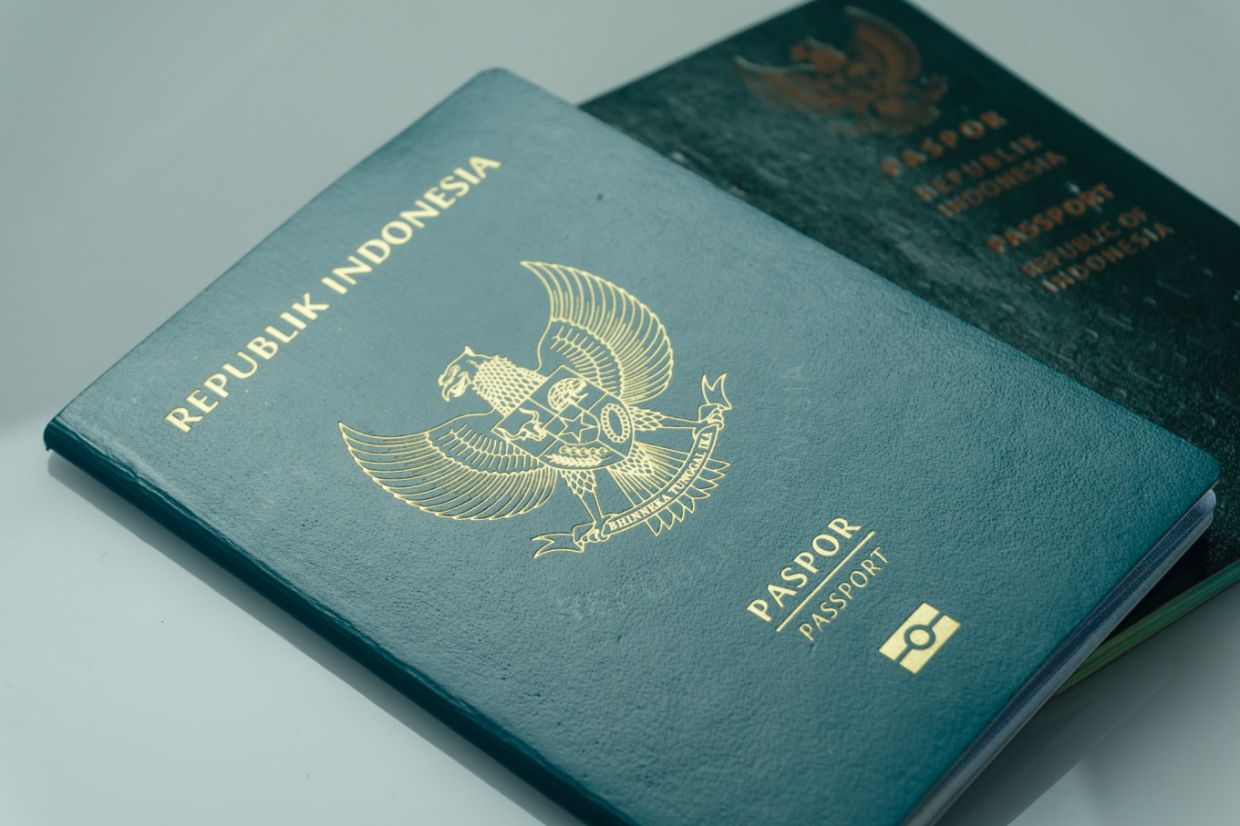
Indonesia's government is moving forward with a contentious proposal to allow dual citizenship for select adults with skills the state considers essential, but the initiative has triggered pushback from advocates representing mixed-nationality families who contend the plan contradicts the country's fundamental citizenship principles and unjustly overlooks those with the most legitimate claims to dual status. Law Minister Supratman Andi Agtas announced last week that his ministry has requested a presidential letter to initiate parliamentary discussions on the policy, signalling the proposal is entering a more advanced stage of deliberation despite lingering legal and ethical concerns.
Indonesia's current citizenship framework has remained strictly singular since independence, with one significant exception: children born to mixed-nationality parents are permitted to hold both nationalities until age 18, when they must elect a single citizenship within three years. This provisional arrangement exists precisely because Indonesian law recognises citizenship by descent—the principle that bloodline to an Indonesian parent confers rights to nationality. Yet the government's latest iteration would dramatically depart from this logic by restricting dual citizenship to adults whose expertise serves state interests, a shift that advocates argue inverts the legal hierarchy and transforms citizenship from a birthright into a commodity exchanged for perceived national utility.
Rulita Anggraini, who leads the Indonesian Mixed-Marriage Society (Perca), articulated the fundamental tension at the heart of the dispute. She questioned why the government would grant dual citizenship to unrelated adults while excluding children of mixed marriages, who possess an objective legal foundation for such status grounded in descent principles that Indonesia itself has long enshrined. According to Anggraini, the proposal represents a troubling departure from citizenship understood as an equal right, instead converting it into a subjective calculation where the state selects beneficiaries based on instrumental value. She emphasised that children of mixed families possess not a transactional claim to Indonesian nationality but an inherent one, rooted in the organic connection forged through blood ties to an Indonesian parent.
The government's approach, as outlined by Supratman, would establish an opaque nomination process whereby only ministries and state institutions could recommend candidates for dual citizenship status. The minister cited examples including nuclear scientists, national sports team members, and chemists whose expertise the government deems urgently necessary. This narrow gatekeeping mechanism raises serious questions about equity and transparency, particularly when no clear criteria exist for determining which professions qualify or how selection disputes would be resolved. The absence of publicly defined standards creates conditions for arbitrary and potentially discriminatory implementation, a concern that extends beyond legal principle to practical governance.
The dual citizenship question has surfaced periodically over recent years as Indonesia grapples with human capital challenges and pursues its aspirational Golden Indonesia 2045 development vision. Policymakers have explored multiple iterations of the concept, including variants offering permanent residency schemes for diaspora members and mixed-marriage families as an alternative that might avoid the legal complexities inherent in formal dual citizenship. However, each proposal has encountered similar structural problems: how to reconcile selective dual citizenship with Indonesia's stated commitment to equal citizenship rights, and whether special status categories ultimately serve national interests or undermine legal coherence.
Legal experts, civil society organisations, and policy observers have expressed concern that the current proposal would generate legal ambiguity, overlapping and potentially conflicting rights and obligations, and enforcement confusion. A system where some adults hold dual nationality based on professional criteria while their siblings—including children of mixed marriages—do not would create internal contradictions within Indonesia's legal framework. These inconsistencies could spawn litigation, administrative disputes, and diplomatic complications, particularly where third countries involved question the legitimacy or stability of Indonesia's citizenship determinations.
Perca has devoted nearly two decades to advocating for comprehensive legal protections for mixed-nationality families, making the current proposal's exclusion of mixed-marriage children particularly galling from their perspective. The organisation views the government's emphasis on expertise-based selection as a fundamental misreading of Indonesia's own legal tradition and priorities. By Perca's analysis, if the government intends to expand dual citizenship beyond the current temporary arrangement for mixed-marriage children, logical consistency demands that these children receive priority, given their established legal standing under descent principles that the state recognises in other contexts.
Anggraini articulated a principled position that transcends mere advocacy for a particular constituency: she argued that citizenship policy must remain anchored to objective criteria rooted in law rather than shifting political calculations about national needs. When dual citizenship becomes a tool for recruiting talent or managing diaspora relations, citizenship itself risks becoming instrumentalised—a status awarded or withheld based on cost-benefit analysis rather than legal principle. This distinction matters profoundly for how states relate to their people and the stability of citizenship regimes themselves.
The advocate further emphasised that Perca could accept either outcome—Indonesia maintaining single citizenship as it has historically, or adopting dual citizenship as a permanent regime—provided the government applied consistent legal reasoning. What the organisation finds unacceptable is a hybrid approach that appears to prioritise state convenience over legal coherence, granting dual status to adults selected for economic or cultural utility while denying it to mixed-marriage children whose legal claims rest on principles Indonesia has already accepted.
As the presidential letter moves the proposal toward parliamentary consideration, the coming months will reveal whether Indonesian legislators engage seriously with the principled concerns raised by mixed-marriage advocates and legal scholars, or whether political expediency and development aspirations override calls for legal consistency. The resolution of this debate will signal not merely what Indonesia's citizenship policy will become, but also what the country understands citizenship to mean: a fundamental right anchored in law and equal application, or a conditional status subject to state calculation about who deserves to belong.

