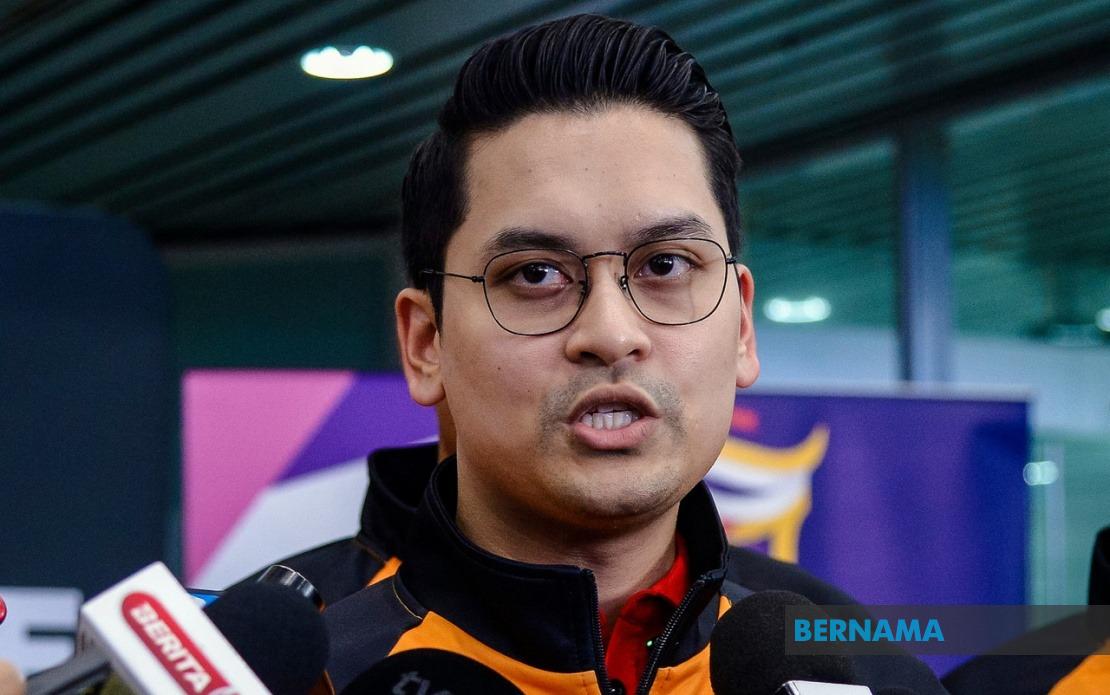
The Ministry of Youth and Sports has demonstrated renewed commitment to weightlifting by allocating RM4.1 million for the sport's development in 2026, while remaining receptive to the Malaysia Weightlifting Federation's proposal for an additional RM1 million in yearly support. Minister Dr Mohammed Taufiq Johari announced the funding after welcoming Malaysia's Commonwealth Games contingent at Kuala Lumpur International Airport, underscoring the government's confidence in the discipline as a pathway to medal success on the global stage.
The 2026 allocation spans multiple strategic initiatives designed to nurture talent from grassroots level through to elite competition. The funding covers athlete development, coaching advancement, and several structured talent pathways including the Road to Gold programme, the Podium scheme, and the Pelapis framework, which systematically identifies and supports emerging athletes. This tiered approach reflects international best practices in sports development, where investments at every level create a sustainable pipeline of competitive talent.
Dr Taufiq Johari indicated that discussions with the Malaysia Weightlifting Federation president Datuk Ayub Rahmat and various state weightlifting associations have already commenced regarding the additional funding request. He acknowledged that the federation's submission includes components related to coaching expenditure and athlete compensation, matters requiring detailed examination before final approval. The minister's willingness to engage substantively on this issue signals that the government views weightlifting as a legitimate contender for increased resource allocation within the competitive sports funding landscape.
The strategic importance of weightlifting to Malaysia's Olympic aspirations cannot be overstated. Dr Taufiq Johari explicitly framed the sport as holding genuine potential to deliver Malaysia's first Olympic gold medal, a milestone that has eluded the nation across multiple Summer Games. This articulation of ambition reflects a shift toward concentrating resources on disciplines where Malaysia demonstrates comparative advantage and realistic medal prospects, rather than dispersing funding thinly across numerous sports with marginal medal potential.
Currently, the weightlifting ecosystem under these development programmes encompasses a modest but promising cohort. Two weightlifters are enrolled in the Road to Gold programme, representing the highest tier of competitive development. An additional eight athletes participate in the Podium scheme, which targets competitors capable of medal performances at major championships. Two further lifters are in the Pelapis programme, which focuses on athletes transitioning toward competitive readiness. This structured progression suggests that Malaysia's weightlifting administration has adopted a systematic identification and development model.
Beyond athlete-focused initiatives, the ministry has pledged to examine the welfare conditions of state-level coaches operating under National Sports Council oversight. Dr Taufiq Johari recognised that coaching quality and continuity are foundational to sustained athletic improvement, and that inadequate coach compensation and support create risks to programme stability. This acknowledgment addresses a frequently overlooked dimension of sports development: the human capital infrastructure that directly influences training quality and athlete development trajectories.
Weightlifting's recent performance at the Commonwealth Games provided compelling evidence for the sport's developmental trajectory. Malaysian weightlifters contributed five gold medals, one silver, and one bronze to the national tally, a contribution that exceeded expectations and significantly assisted Malaysia in surpassing its overall Games target. The team ultimately secured eight gold, three silver, and five bronze medals, with weightlifting representing a disproportionately successful discipline within this portfolio. This outcome validated investment decisions and demonstrated that targeted funding and systematic development frameworks yield measurable results in competitive international contexts.
For Malaysian sports policy, weightlifting exemplifies a broader strategic question about resource allocation priorities. The discipline requires sustained investment in facilities, coaching expertise, athlete support systems, and sports science infrastructure to remain competitive at Olympic and Commonwealth levels. The relatively modest sums under discussion—RM4.1 million baseline with a RM1 million supplementary request—reflect Malaysia's constrained sports funding environment and highlight the opportunity costs embedded in every allocation decision.
The government's receptiveness to additional funding requests for weightlifting contrasts with the austerity measures often applied to sports perceived as lower-priority. This differentiation acknowledges that certain disciplines, through demonstrated performance and realistic medal prospects, merit preferential treatment within finite budgets. For Southeast Asian observers, Malaysia's approach provides a case study in targeting limited resources toward sports where regional and global competitiveness is achievable.
Looking forward, the outcome of detailed discussions between the ministry and the Malaysia Weightlifting Federation will signal the government's actual commitment level beyond rhetorical endorsement. Approval of the additional RM1 million would represent a meaningful vote of confidence, though coaches and athletes will scrutinise whether additional funds translate into improved training conditions, enhanced competition opportunities, and better international exposure. The measure will ultimately be judged by results—whether Malaysian weightlifters progress toward sustained medal performances at the Olympic Games and other premier international competitions.

