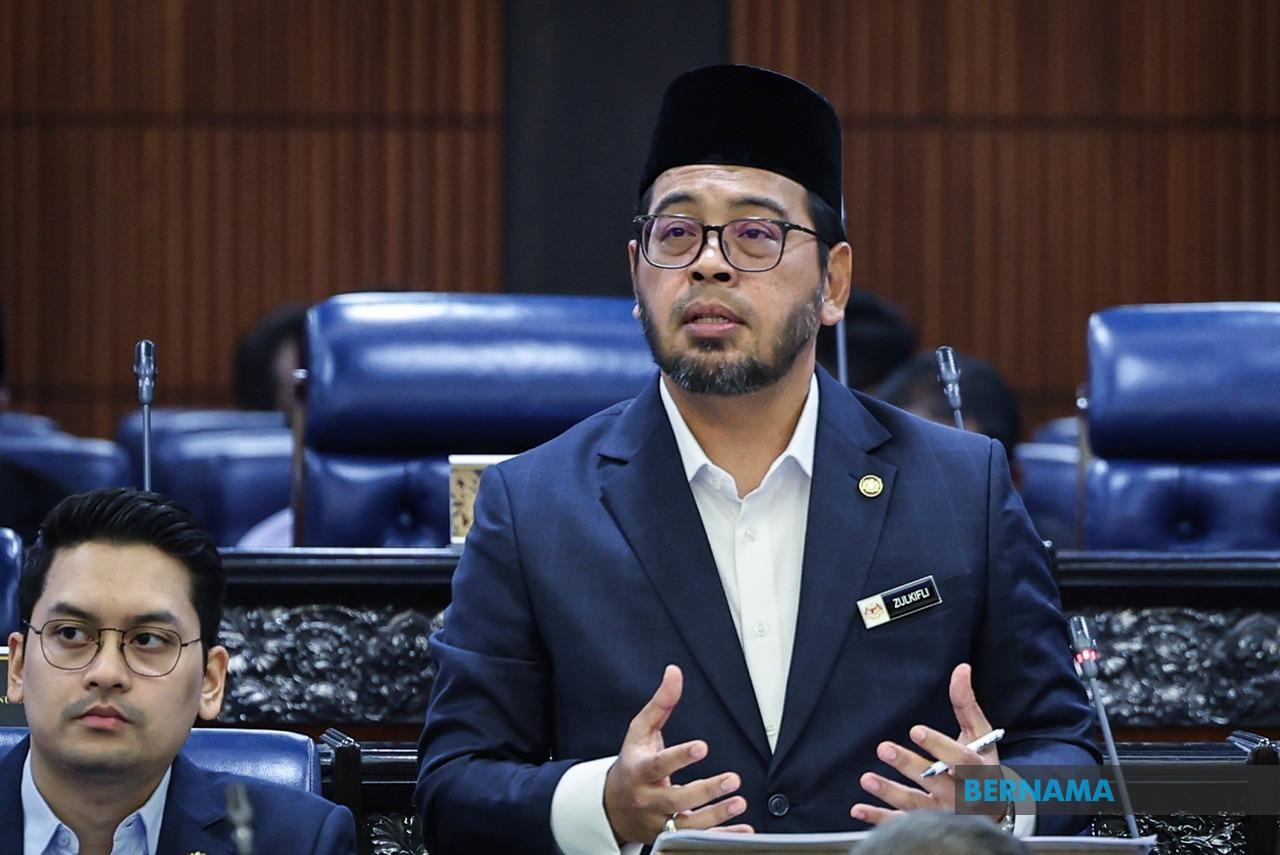
Religious Affairs Minister Dr Zulkifli Hasan has shed light on the financial crisis that engulfed Tabung Haji (TH) by employing a vivid local analogy during parliamentary debate on the Royal Commission of Inquiry findings. The minister drew comparisons to a struggling single mother named Mak Cik Senah to illustrate how the fund's management created an illusion of profitability through sophisticated accounting manipulations that ultimately masked a deteriorating financial position beneath layers of creative bookkeeping.
The core issue, as Zulkifli explained, centred on a fundamental violation of corporate financial principles. Under the Tabung Haji Act, the institution may only distribute profits to depositors when its total assets exceed its liabilities and obligations. The minister pointed out that while management reported substantial dividends and apparent growth, the underlying reality was starkly different: depositor savings were actually contracting as the fund's true financial health declined. This disconnect between reported performance and actual financial standing represents what financial regulators would classify as fraudulent misrepresentation of an institution's solvency.
The mechanics of this deception involved several interconnected practices that collectively obscured TH's actual position. Management employed creative valuation techniques, most notably something called Realisable Asset Value (RAV), which was conducted entirely outside the organisation's formally audited financial statements. By applying inflated valuations to assets that fell outside the scope of professional audit review, TH created the appearance of sufficient asset coverage for the profit distributions it declared. This approach fundamentally contravened Malaysian Financial Reporting Standards (MFRS) and represented a departure from accounting practices designed to present a fair and accurate financial picture to stakeholders.
Crucially, only a fraction of TH's stated assets had undergone professional valuation. Out of approximately RM4.6 billion in total assets claimed by the fund, merely RM556 million had been assessed by qualified professional valuers. The remaining RM4 billion-plus existed primarily on paper, supported by internal valuations that bore little scrutiny from independent experts. This selective approach to asset verification allowed management to maintain the façade of a well-capitalised institution while concealing insolvency from depositors whose life savings were entrusted to the fund.
Audit firms played an ambiguous role in this scenario. The minister clarified that Ernst & Young, contrary to some suggestions, was not TH's primary auditor and had not been responsible for asset valuations. Rather, Ernst & Young was merely commissioned to review pro forma statements that TH itself had prepared. It was PricewaterhouseCoopers (PwC) that conducted the 2018 audit which ultimately exposed the manipulation, confirming through its own investigation that the financial statements provided to the public fundamentally misrepresented TH's true condition. The audit process itself became compromised when management selected which assets would undergo professional scrutiny and which would escape independent verification.
The Mak Cik Senah analogy Zulkifli employed carries particular resonance for Malaysian audiences. Just as a single mother might appear to be thriving financially by spending down inherited wealth while pretending it represents earned income, TH was distributing capital back to depositors while simultaneously reducing the fund's actual asset base. Depositors believed they were receiving returns on investment when they were in fact receiving partial refunds of their own savings, funded by fictitious accounting entries rather than legitimate business returns. This arrangement inevitably leads to catastrophic collapse once the illusion becomes unsustainable—precisely what occurred with TH before government intervention became necessary.
The minister characterised this scheme as functionally equivalent to a Ponzi arrangement or the infamous Skim Pak Man Telo, where early participants appear to benefit while the system's underlying fundamentals deteriorate until the entire structure crumbles. In TH's case, the foundation was already crumbling well before 2018, yet management continued declaring high profit distributions that violated the Tabung Haji Act and jeopardised the institution's long-term viability. Each year of such distributions widened the gap between claimed assets and true liabilities, pushing the fund deeper into technical insolvency while maintaining public confidence through misleading financial communications.
The consequences of this mismanagement ultimately fell to Malaysian taxpayers. The government was forced to inject over RM10 billion to rescue TH from the brink of complete financial collapse, a sum that Zulkifli noted represents an opportunity cost of profound magnitude. Such resources could have constructed dozens of hospitals, hundreds of schools, numerous mosques, and various other critical infrastructure that Malaysian communities desperately need. The bailout was nonetheless essential—not merely to protect the accumulated savings of millions of Muslims who depend on TH for pilgrimage financing, but to preserve an institution of deep cultural and religious significance to Malaysia's Muslim population.
The Royal Commission of Inquiry's investigation revealed that these accounting practices preceded 2018 and had become systematic rather than isolated errors. Management decisions to manipulate asset valuations, alter impairment policies, and exclude substantial portions of the asset base from professional audit review appear to have been deliberate choices rather than inadvertent accounting mistakes. This deliberate character explains why the minister characterised the conduct as a form of fraud—the deception was engineered to serve a specific purpose: allowing TH to maintain distributable profit declarations while the institution was demonstrably insolvent.
For Malaysian depositors, many of whom are ordinary workers saving for Hajj pilgrimage, the crisis represented a profound betrayal of trust. These individuals had little ability to assess the fund's true financial condition, relying instead on official pronouncements and published financial statements. The revelation that these statements were systematically manipulated raises troubling questions about governance oversight within TH and whether sufficient independent monitoring mechanisms existed to detect such fundamental accounting improprieties before they spiralled into crisis.
The TH scandal carries broader implications for Malaysian financial regulation and institutional oversight. It demonstrates how institutions can circumvent established reporting standards through selective application of audit procedures and creative accounting practices, particularly when senior management prioritises short-term distribution declarations over long-term sustainability. The scandal underscores the vulnerability of even well-established institutions to governance failures when internal controls prove inadequate and external audit procedures fail to subject all material assets to professional scrutiny.
Moving forward, the lessons from TH's collapse extend beyond the fund itself. Financial institutions managing public savings—whether in the form of pension funds, pilgrimage financing vehicles, or investment schemes—must operate under robust governance frameworks with comprehensive independent audit coverage, transparent asset valuation procedures, and clear accountability mechanisms. The government's RM10 billion rescue, while necessary to protect depositors, should serve as an impetus for structural reforms across Malaysia's institutional finance sector to prevent recurrence of similar crises.

