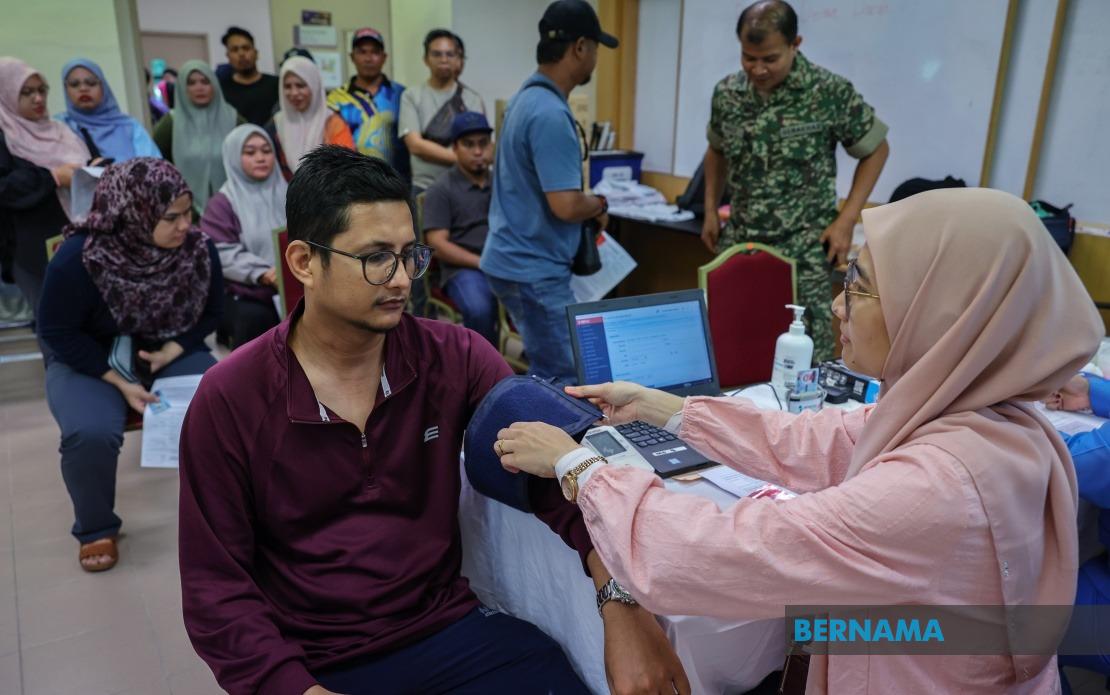
The Malaysian armed forces have expanded access to healthcare services in rural communities through a comprehensive civil-military initiative, bringing medical expertise and equipment directly to residents who might otherwise face logistical barriers to treatment. This effort, implemented through the Civil-Military Cooperation framework and branded locally as the 'Military with the People' programme, unfolded at Sultan Abdul Halim Mu'adzam Shah International Islamic University (UniSHAMS) in Kuala Ketil, near Baling in Kedah, during July 2024. By pairing health services with the conclusion of the Basic Commando Course (Series AK/1/26), the military successfully strengthened institutional relationships with the broader civilian population while addressing genuine healthcare gaps in the region.
The programme demonstrated the scope of what organised military health initiatives can accomplish when properly resourced and coordinated. Under the Medical Community Assistance Programme (MEDCAP) and Dental Community Assistance Programme (DENCAP), trained military medical officers and dental practitioners conducted screenings, provided immediate treatment for common conditions, and delivered emergency care when required. The dental component focused particularly on preventive and foundational care, including scaling, fillings, and extractions, coupled with education about oral hygiene practices. Health screening services covered blood pressure monitoring, blood sugar testing, and body mass index calculations, with medical personnel also assessing risks for chronic diseases such as hypertension and diabetes among vulnerable populations, particularly elderly attendees. This layered approach recognised that healthcare delivery in underserved areas requires both immediate relief and preventive instruction.
Community response to the initiative revealed both the appetite for accessible healthcare and the practical constraints many Malaysians face in obtaining routine medical attention. Siti Salmiah Said, a factory worker, reported that she had deliberately taken a day off specifically to participate, viewing the opportunity to access dental scaling without scheduling appointments at commercial clinics as a significant advantage. Her family's experience—where her husband received scaling and her six-year-old child obtained a filling—highlighted how such programmes serve multiple household members simultaneously, addressing care deficits that might otherwise persist for months. This efficiency contrasts sharply with civilian healthcare pathways, where appointment backlogs, travel time, and treatment costs often deter individuals from seeking preventive or routine care. Legal assistant Adam Ruzlan similarly emphasised the dual benefit of eliminating both waiting periods and out-of-pocket expenses whilst receiving professional guidance on oral health maintenance that he might not otherwise encounter.
For some participants, the programme resonated against personal historical memory and generational experience. G. Devindran, a factory worker aged 37 whose father served as a commando, recalled a comparable healthcare initiative from 28 years earlier but noted dramatic improvements in service delivery, professional capacity, and facility infrastructure in the intervening decades. His observation underscores how military healthcare programmes have evolved alongside broader institutional development and training standards within the Royal Medical Corps (KKD). By obtaining dental restorative treatment alongside comprehensive physiological assessments covering blood pressure, blood glucose, and body composition, Devindran experienced the integrated care model that contemporary military health initiatives attempt to deliver. This progression from episodic, rudimentary healthcare to coordinated, multidimensional service represents tangible institutional maturation.
Emergency medical situations that emerged during the programme illustrated the added-value security net that on-site professional staffing provides to community gatherings. When a child experienced dizziness and nausea during the event, Civil Defence Force (APM) personnel rapidly transported the patient to the MEDCAP tent, where military medical staff conducted systematic clinical assessment including temperature measurement, blood pressure recording, and oxygen saturation determination before administering appropriate medication. The child's mother, Norhasliza Nayan, explicitly contrasted this responsive professional intervention with her previous experience and expressed confidence that such health services should become integrated into other large-scale public events. This testimony reflects how emergency preparedness, when made visible and effective, enhances public perception of both the military institution and the value of proactive health infrastructure.
The programme operated through structured inter-institutional coordination that involved multiple government health agencies and military medical services working within a unified strategic framework. Lieutenant Colonel Dr Atiff Abdul Aziz, the Medical Officer overseeing MEDCAP and DENCAP operations at the Special Warfare Training Centre, identified strategic cooperation between the Ministry of Health through the Baling District Health Office and the armed forces as foundational to programme success. This collaboration enabled the Baling District Health Office to contribute general health screening capacity and mental health awareness promotion, channelling community-level health education infrastructure into the larger event. Such partnerships exemplify the potential for civil-military alignment around non-combat health priorities, creating multiplier effects where defence institutional capacity extends civilian health objectives rather than operating in parallel tracks.
Capt. Dr Muhammad Afiq Ishak, a dental officer from the 2nd Medical Battalion assigned to DENCAP, articulated the scope and limitations of military dental services realistically, emphasising that treatment focused on foundational procedures—scaling, fillings, and extractions—rather than sophisticated restorative work. This calibration reflected awareness that field-deployed dental teams operate within resource and time constraints that necessitate prioritisation. However, by identifying individuals with potential underlying conditions such as hypertension or diabetes and referring them to nearby civilian dental clinics when complex treatment exceeded military capacity, the programme ensured that initial assessment and triage did not become barriers to subsequent care. This referral pathway acknowledges that military health initiatives function most effectively as bridge services connecting populations to broader healthcare systems rather than as substitutes for comprehensive civilian medical infrastructure.
The programme encompassed additional public health functions beyond direct clinical care, notably a blood donation drive coordinated through Sultan Abdul Halim Hospital (HSAH) in Sungai Petani. This concurrent initiative attempted to collect approximately 100 bags of blood daily, framing voluntary donation as both a personal health awareness activity and a contribution to regional blood supply security. For Malaysia, where blood availability frequently constrains surgical capacity and emergency response capability, mobilising donor recruitment at public events represents a practical strategy for sustaining transfusion services. The integration of donation campaigns with health screening activities created multiple touchpoints for health system engagement, potentially cultivating longer-term community participation in health promotion activities.
The broader significance of this initiative extends beyond immediate service delivery to encompass civil-military relationship-building during a period when such cooperation can carry strategic value. By positioning the armed forces as health service providers embedded within community settings rather than as uniformed security actors, the 'Military with the People' programme cultivates positive institutional perception. This is particularly relevant in rural areas where military installations may be geographically proximate yet socially distant from civilian populations. When military personnel and resources visibly address tangible civilian needs—healthcare access, emergency medical response, preventive screening—institutional legitimacy strengthens through demonstrated competence and responsiveness. For Malaysian defence planning, programmes linking military capabilities to civilian welfare contribute to broader whole-of-nation resilience narratives whilst justifying defence sector expenditure to populations that might otherwise experience the military as abstract or peripheral.
Future expansion of such initiatives would require addressing several logistical and policy considerations specific to Malaysia's healthcare context. Rural areas in states like Kedah, Perlis, and Terengganu experience persistent primary healthcare access constraints, and military health assets could be deployed systematically to reduce these disparities. However, clarity regarding the relationship between military healthcare delivery and civilian primary healthcare strengthening would prevent parallel service development and ensure that military initiatives complement rather than substitute for community health centre investment. Training capacity within the Royal Medical Corps requires expansion if programmes are to scale significantly, and coordination mechanisms between military medical commands and civilian health ministry hierarchies require formalisation to prevent ad-hoc service delivery. The programme demonstrated feasibility and public receptivity; operationalising systematic replication represents the next institutional challenge.

