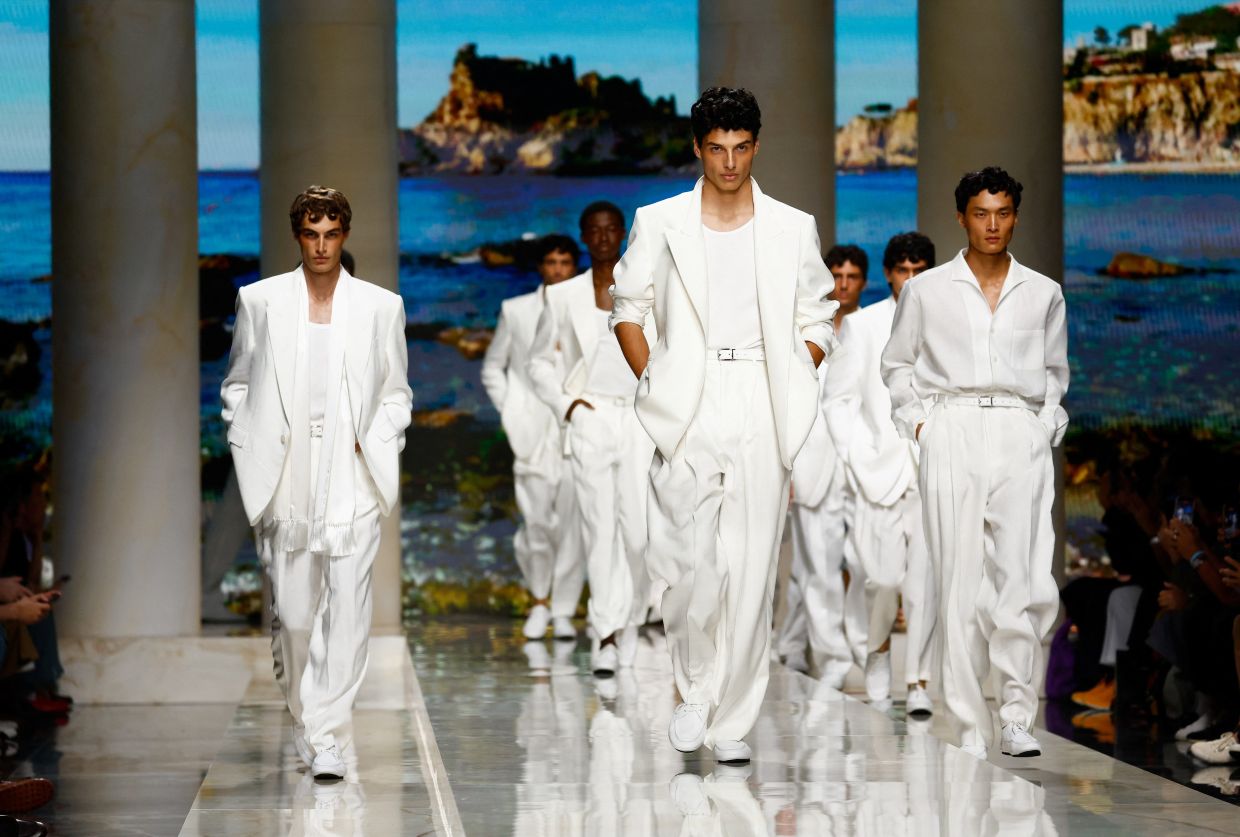
The Spring/Summer 2027 menswear collections that concluded at Milan Fashion Week on Monday, June 22, reveal a fashion industry intent on distilling complexity into elegance. Amid mounting economic pressures, geopolitical turbulence, and the literal heat of a sweltering city, Milan's designers have largely rejected excess in favour of streamlined proportions and essential silhouettes. This inclination towards minimalism signals not resignation but pragmatism—a recognition that in uncertain times, clarity and refinement resonate more powerfully than spectacle.
Prada's presentation, helmed by co-creative directors Miuccia Prada and Raf Simons, crystallised this philosophy. Their approach centred on timeless garment construction reanimated through innovative proportion and unexpected fabric treatments. By revisiting fundamental pieces—the five-pocket jean, the simple jacket—and interrogating their proportions and materiality, Prada demonstrated that restraint need not mean sterility. Instead, it opens space for nuance and intentionality, qualities increasingly valued by discerning consumers navigating turbulent global markets.
A central paradox emerged throughout the week: the dominance of leather, a material typically associated with weight and heat retention. Rather than abandoning this traditionally heavy textile, designers instead engineered solutions. Woven and perforated leather techniques transformed the material into something breathable without sacrificing its luxury associations or tactile appeal. This engineering-focused approach—using innovation rather than avoidance to solve practical problems—reflects a maturation in the menswear sector. Fashion's elite recognised that their customers inhabit a warming planet and may require strategic air-conditioning, elevated terrain, or northern latitudes to wear their creations comfortably.
After years of oversized, slouching silhouettes that dominated the 2020s, Milan menswear emphatically recalibrated towards the body itself. This shift represents a philosophical departure as much as an aesthetic one. Designers broadly reaffirmed that a properly cut suit remains the cornerstone of masculine dressing, but the challenge lay in adapting this formal grammar to contemporary climatic realities and lifestyle demands. The solution manifested across multiple approaches: dress shirts rendered transparent or discarded entirely, necklines widened, and construction softened to encourage airflow without abandoning tailoring's essential formality.
Dolce & Gabbana pushed this body-conscious direction to its most provocative extreme through microshorts that emphasised musculature, while select designers ventured into torso exposure. These decisions suggest an ongoing reassessment of how menswear communicates confidence and physicality. Rather than concealment beneath volume, the message now privileges revelation through proportion. This evolution reflects shifting cultural attitudes towards masculine display and comfort—a recognition that the post-pandemic era has fundamentally altered how men navigate dress codes and bodily presentation.
Thom Browne's return to Milan—his first appearance since 2008—marked a significant moment for the American designer, now operating under Zegna's ownership structure. His reintroduction featured layered suiting informed by summery seersucker and pleated skirts, garments traditionally coded as feminine or eccentric within menswear discourse. This willingness to incorporate unexpected textural and silhouette references, while maintaining tailoring integrity, exemplifies how contemporary menswear designers expand the vocabulary of masculine dressing without abandoning its foundational principles. The message resonated clearly: the suit endures, but it evolves.
Yet Milan's restraint remained incomplete. Philipp Plein and Dolce & Gabbana pursued aggressively decorative trajectories, with crystal-encrusted denim ensembles requiring days of handwork and beaded accents evoking marine imagery. This coexistence of maximalism and minimalism within the same fashion week underscores an industry-wide acceptance of aesthetic pluralism. Rather than enforcing a singular vision, Milan's menswear calendar accommodated contradictions—designers could embrace either reduction or ornamentation without invalidating the other approach. For Malaysian fashion consumers accustomed to tropical climates, this diversification offers interpretative flexibility, allowing engagement with both restrained and decorative expressions.
A lighter Milan calendar, likely reflecting industry consolidation and selective attendance, paradoxically created opportunities for emerging practitioners to gain visibility alongside established houses. Martin Quad, whose unconventional tailoring tricks earned attention in Copenhagen, made his Milan debut before an industry audience previously difficult to access. Similarly, Domenico Orefice introduced co-ed collections emphasising leather and richly textured fabrics, while Japanese designer Shinya Kozuka presented one of the season's most poetically coherent visions—a bare-chested model draped in billowing teal sheer coats paired with loose white trousers.
These emerging voices expanded Milan's conversation beyond the traditional power players, democratising the platform and suggesting that fashion institutions increasingly recognise merit and innovation beyond institutional pedigree. For regional audiences in Southeast Asia, this opening signals that menswear design innovation no longer concentrates exclusively within European power centres. Rising designers from Copenhagen, London, and Tokyo prove capable of articulating compelling sartorial narratives that resonate equally with global audiences.
The underlying tension between luxury and practicality that characterised this Milan season reflects broader questions confronting the fashion industry. How do designers maintain exclusivity and craftsmanship while acknowledging real-world climatic conditions? How does formality adapt to changing lifestyle patterns without losing its essential character? Milan's answers—ventilation, proportion, innovative material engineering, and selective ornamentation—suggest an industry learning to balance aspiration with pragmatism. For Malaysian readers navigating tropical menswear choices year-round, these collections offer both cautionary examples and innovative inspiration, demonstrating that contemporary fashion's ultimate sophistication lies not in defying practical constraints but in designing intelligently within them.