Authorities in Kelantan have uncovered a significant shift in smuggling tactics, as criminal networks transporting undocumented migrants across Southeast Asian borders increasingly fragment their operations into smaller groups to reduce detection risks. The discovery emerged during Operasi Taring Wawasan Kelantan, a security operation conducted by the General Operations Force that culminated in the arrest of 13 Myanmar nationals, including five women, in the Pasir Mas district. The operation, executed with support from the Criminal Investigation Division of Pasir Mas district police headquarters, represents a concerning evolution in how organised smuggling rings adapt to heightened enforcement efforts across Malaysia's porous land borders.
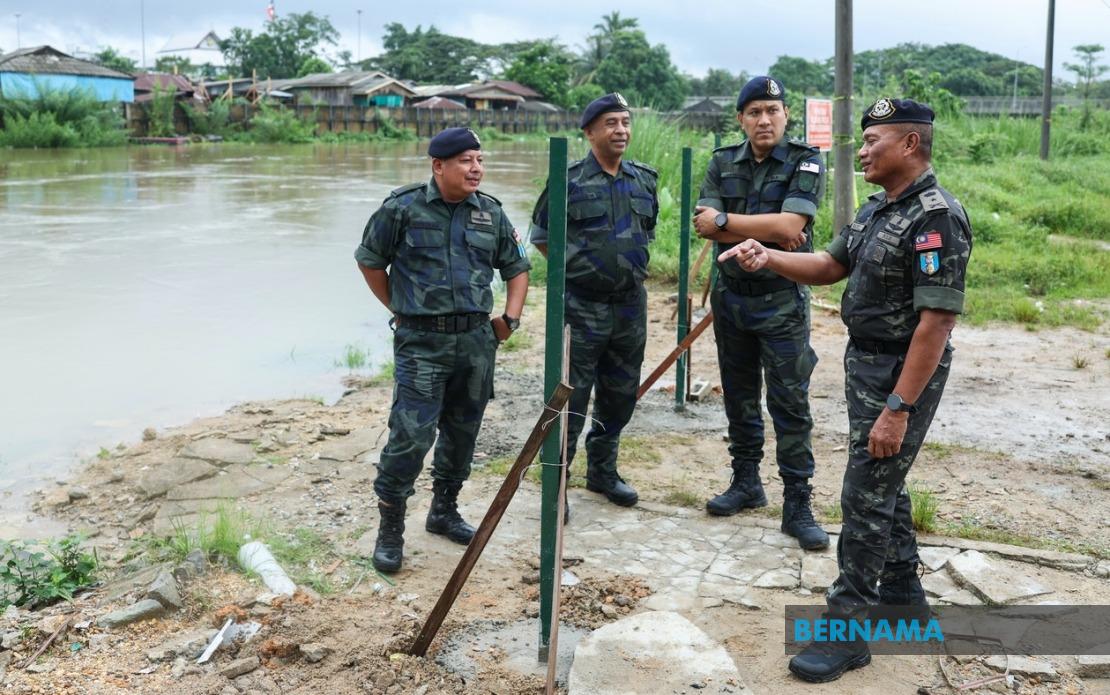
The tactical adjustment reflects the growing sophistication of human trafficking networks operating throughout the region. Rather than attempting to move large groups across borders in single operations—a method that inevitably attracts scrutiny from security checkpoints and patrols—smugglers now deliberately stage arrivals over extended timeframes and across dispersed locations. General Operations Force Southeast Brigade commander SAC Ahmad Radzi Hussain explained that this decentralised approach represents a calculated response to intensified border security measures, fundamentally altering the operational landscape that law enforcement agencies must navigate.
The breakthrough occurred in the early morning hours when GOF personnel, acting on actionable intelligence, observed suspicious activity near Kampung Banggol Kemian. At approximately 3.30 am, a team identified a Proton Exora vehicle displaying unusual behaviour in the area. Upon spotting the security personnel, the driver immediately abandoned the vehicle and fled into adjacent forest, successfully escaping the initial response. The four Myanmar nationals discovered in the rear seats of the vehicle possessed no valid travel documentation whatsoever, establishing the primary basis for their immediate apprehension.
Following the initial arrests, systematic searches of the surrounding forest within the subsequent hour yielded nine additional Myanmar nationals who appeared to have recently entered Malaysian territory through clandestine routes. Interrogation of these individuals revealed the operational method deployed by their smugglers. They had been transported from Thailand by two unidentified operatives who deliberately ferried them across the Golok River at separate intervals, depositing each group at different forest locations to minimise the visibility of any single transport operation. This staggered delivery system fundamentally reduces the conspicuousness that large migrant movements typically generate.
The arrested individuals, ranging in age from 20 to 37 years, consistently reported that they were part of a larger coordinated movement aimed at reaching employment opportunities in the Kuala Lumpur metropolitan area. Their testimony underscores the continued economic motivation driving illegal migration flows into Malaysia, despite substantially increased enforcement activities along major entry corridors. The synchronisation between origin points in Myanmar, transit routes through Thailand, and final Malaysian destinations demonstrates the infrastructure underpinning these transnational criminal networks.
The Proton Exora utilised in the operation, valued at approximately RM30,000, was seized as evidence of the smuggling infrastructure. This vehicle represented a critical logistical component enabling the onward movement of migrants from border areas toward urban employment centres. The seizure disrupts not merely the immediate operation but potentially removes assets that these networks might otherwise deploy across subsequent smuggling cycles. Law enforcement officials emphasise that disrupting physical assets, while important, remains insufficient without simultaneous dismantling of the financial and organisational networks sustaining these operations.
From a broader security perspective, the evolution toward smaller group movements compounds challenges facing Malaysian border agencies. Traditional enforcement strategies rely partly on detecting anomalous movements of substantial numbers of people, heightened alert levels during reported surges in crossing attempts, and tactical deployments to known smuggling corridors. When criminal organisations fragment their operations into smaller, more frequent movements, they essentially overwhelm the detection capacity of finite security resources. A single group of four or five migrants draws substantially less attention than a convoy of thirty, yet achieves identical throughput across borders when coordinated systematically.
The individuals apprehended have been transferred to CID custody for investigation and processing under Section 6(1)(c) of the Immigration Act 1959/63. This legislative framework establishes the primary legal mechanism through which Malaysian authorities address undocumented migration cases. However, prosecution of individual migrants, while necessary within existing legal frameworks, addresses symptoms rather than root causes. The fundamental challenge confronting policymakers involves disrupting the economic and organisational structures rendering migrant smuggling consistently profitable for criminal enterprises.
Geopolitical developments across Southeast Asia amplify these enforcement difficulties. Myanmar's ongoing political instability continues generating migration pressures, while Thailand's position as a transit hub reflects its geography and relatively porous borders. Malaysia's proximity to Thailand, combined with significant economic wage differentials between Myanmar and Malaysian employment markets, maintains powerful incentives for both migrants and smugglers alike. Regional cooperation remains essential, yet practical coordination across multiple sovereign jurisdictions involves substantial diplomatic complexity and competing governmental priorities.
The detection and disruption of this particular operation demonstrates that Malaysian security forces maintain operational capacity and intelligence gathering capabilities within the region. However, individual successful enforcement actions must be contextualised within overall migration flow volumes. The persistence of smuggling operations despite known risks, legal sanctions, and enforcement activities suggests that deterrence alone proves insufficient. The underlying economic asymmetries rendering Malaysia attractive to migrants from neighbouring countries remain fundamentally unresolved, ensuring continued pressure on border security systems.
Looking forward, the tactical adaptation documented in this operation underscores how criminal networks continuously evolve methodologies to circumvent enforcement. Malaysian authorities acknowledge this reality implicitly through enhanced intelligence operations and sustained enforcement activities. Simultaneously, addressing root causes—including economic development initiatives in Myanmar, dialogue with Thai authorities regarding transit controls, and legal pathways for labour migration—represents a complementary strategic imperative. Without addressing these deeper structural factors, enforcement alone will struggle to achieve meaningful reduction in undocumented migrant flows.

