A fresh outbreak of geopolitical tension in the Middle East has sent shockwaves through Asian financial markets, strengthening the U.S. dollar and triggering a broad-based retreat in regional currencies and equities. The renewed conflict has lifted crude oil prices by 4% in a single trading session, reviving investor concerns about potential inflation acceleration and prompting expectations that central banks across the globe may need to maintain or even increase interest rates. The broader U.S. dollar index gained ground against a basket of major currencies as risk appetite deteriorated and investors sought the safety of the greenback.
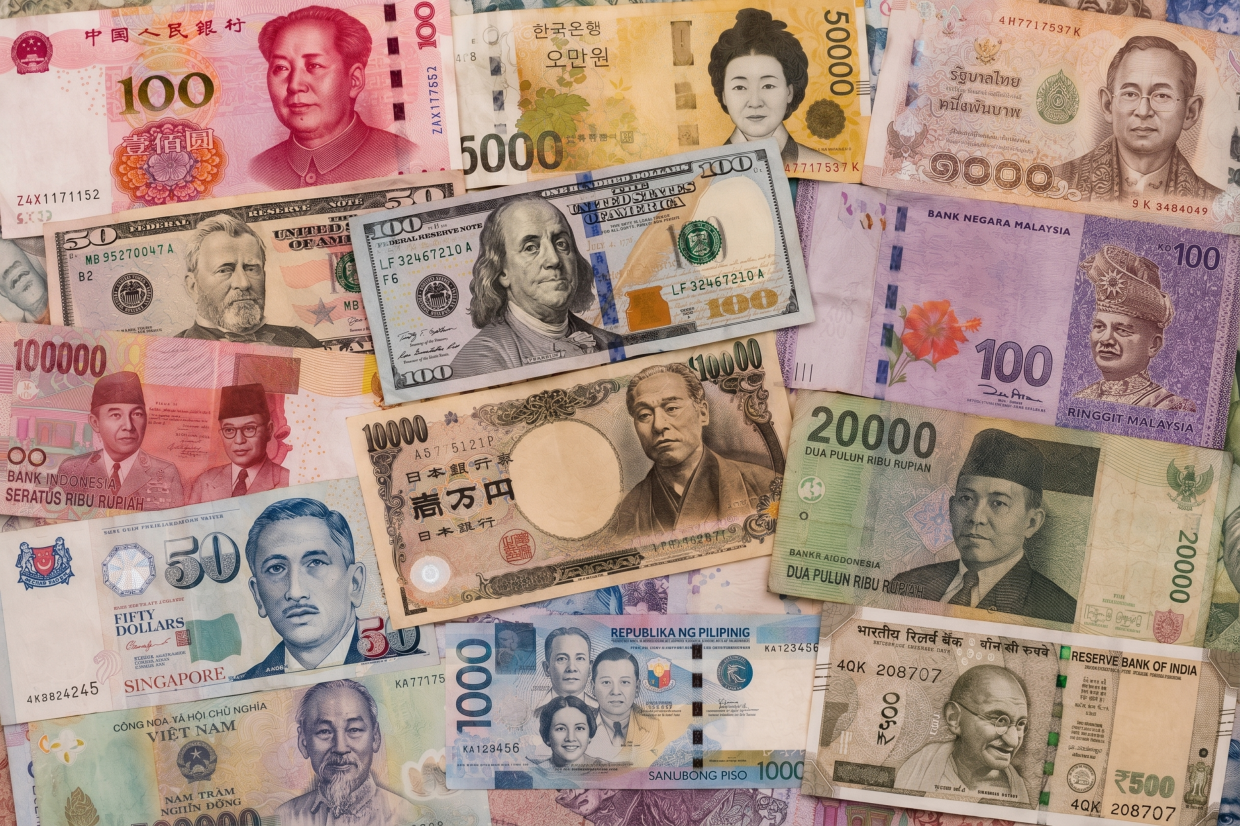
Emerging market currencies across Asia have borne the brunt of this geopolitical shock. Indonesia's rupiah slipped to 18,140 per dollar, marking its weakest performance in over a month and reflecting widespread concern about commodity-dependent economies facing higher energy costs. The South Korean won similarly weakened to 1,507.9 per dollar, placing pressure on exporters even as the nation's tech sector grapples with separate challenges. Malaysia's ringgit softened to 4.0780 against the greenback, though this movement occurred against the backdrop of domestic political developments that have complicated the country's economic outlook.
South Korea's stock market delivered the most dramatic response to the global risk-off sentiment. The KOSPI index plummeted 7.96% to touch a 10-week low, with the sharp decline triggering circuit breaker mechanisms designed to halt trading during extreme volatility. The benchmark index's collapse was disproportionately driven by semiconductor stocks, particularly SK Hynix, the world's leading manufacturer of artificial intelligence memory chips, which shed 13% of its value. This capitulation followed a strong performance during the previous week when the company completed a blockbuster debut on the U.S. market, suggesting that investors have begun taking profits after the stock's recent rally.
The vulnerability of chip manufacturers to profit-taking reflects deeper anxieties about the sustainability of the artificial intelligence-driven boom that has underpinned much of the sector's recent gains. Market participants have grown increasingly concerned about whether the extraordinary earnings growth generated by surging demand for high-bandwidth memory chips can be maintained over the medium term. Adding to these concerns, major AI companies have begun adopting more disciplined capital allocation strategies, which threatens to moderate their semiconductor procurement in coming quarters. The situation has been exacerbated by the outsized influence of highly leveraged single-stock exchange-traded funds, which amplify volatility by mechanically selling positions as prices decline.
Despite the sharp one-day decline, South Korea's equity market has maintained its position as a relative outperformer on a longer timeframe. The KOSPI remains approximately 25% below its record closing level established on June 22, yet the index has still accumulated a gain of around 63% for the calendar year to date, underscoring the strength of the underlying bull market before this correction. The current pullback, therefore, represents a healthy consolidation rather than a collapse in investor confidence, though it serves as a timely reminder of the market's sensitivity to both global geopolitical events and sector-specific profit cycles.
Malaysia presents a more complex picture, with currency weakness coinciding with equity strength as domestic political concerns weigh on the ringgit even as stockpickers seek bargains. Following the coalition government's significant defeat in Saturday's Johor state election, questions have intensified regarding the stability of Prime Minister Anwar Ibrahim's alliance, with some observers speculating about the possibility of an early federal election. This political uncertainty introduces fresh risk premium into the Malaysian ringgit, even as the underlying macroeconomic fundamentals of the country remain sound. Goldman Sachs analysts have warned that any sustained erosion of confidence in federal coalition cohesion could undermine the policy-stability premium that has supported financial assets, though they expect the central bank's recent measures to encourage foreign exchange inflows to help contain excessive currency depreciation.
Across the broader region, the equity market response to geopolitical stress has been uneven. Philippine stocks edged marginally higher, suggesting some selective buying interest in the Southeast Asian market, while Indonesian shares gained 0.5% on the day. Taiwan's exchange declined in sympathy with the broader regional selloff, and Singapore's benchmark index dropped as much as 0.7%, snapping an impressive streak of seven consecutive sessions of record highs. The varied responses highlight how different market segments have priced in geopolitical risk differently and how domestic factors continue to influence trading despite the powerful global crosscurrents.
Looking ahead to the coming week, multiple data releases and central bank decisions will command investor attention and could either amplify or temper the risk-off sentiment currently gripping markets. Singapore is scheduled to release advance second-quarter economic growth figures that will provide insight into the health of one of Asia's most sophisticated economies. In the United States, the inflation print for the latest reporting period will offer crucial guidance on whether the energy price spike translates into broader price pressures. South Korea's Bank of Korea will announce its interest rate decision, with markets scrutinizing any signals about the future path of monetary policy given current economic crosscurrents. Malaysia too will release inflation data alongside preliminary figures for economic output, providing important data points for assessing how domestic political uncertainty is affecting economic momentum.
The intersection of geopolitical shock, currency weakness, and political uncertainty in Malaysia exemplifies the multifaceted challenges confronting policymakers across the region. While energy-dependent economies face the most acute near-term pressure from oil price increases, the broader risk is that sustained geopolitical tension could derail the recovery narrative that has supported asset valuations throughout much of 2024. Central banks will need to calibrate their policy responses carefully, balancing inflation concerns against the need to maintain financial stability and economic growth. For investors, the next several days will prove critical in determining whether current weakness represents a tactical buying opportunity or signals the beginning of a more sustained correction as recession fears resurface.

