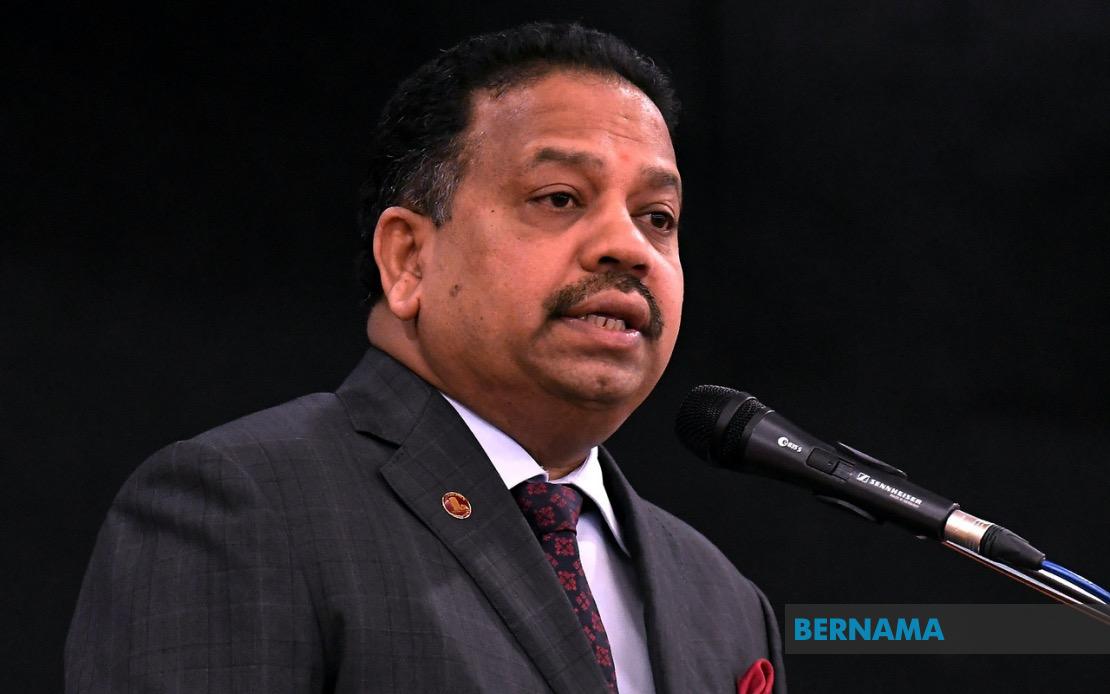
The Malaysian Indian Congress (MIC) has expressed optimism about securing support from the Indian community in the Johor state election, betting on its established track record of collaboration with the federal and state administrations on issues affecting minority communities. MIC president Tan Sri S.A. Vigneswaran outlined this confidence while addressing journalists in Kulai on the eve of the 16th Johor state election, emphasizing that Indian voters would recognize the party's consistent efforts to translate community grievances into government action.
Vigneswaran grounded his optimism in what he described as a productive relationship between MIC and governing bodies at both levels of administration. He stressed the importance of having parliamentary representatives who could work constructively alongside state officials to deliver tangible solutions to constituent problems. This framing positions MIC not as a party seeking to challenge the political establishment, but rather as a bridge between the Indian electorate and administrative machinery. For Malaysian readers familiar with MIC's historical role within the Barisan Nasional coalition, this messaging reflects a continuity of the party's strategic positioning as a coalition partner focused on pragmatic governance rather than adversarial politics.
The party has fielded four candidates across constituencies in the state contest. K. Raven Kumar will represent MIC in the Kemelah state assembly seat, while V. Rugendran is contesting Kahang. P. Pannir Selvam and R. Kumaran complete the slate, competing in Perling and Bukit Batu respectively. These four candidates represent MIC's formal commitment to the election, a relatively modest number that reflects the party's modest electoral footprint in Johor despite its presence as a coalition member.
During his campaign, Vigneswaran noted that MIC had maintained what he characterized as a mature political stance, deliberately eschewing personal attacks on opposition candidates. Instead, the party concentrated its messaging on substantive policy proposals and problem-solving initiatives addressing community concerns. This approach differs markedly from the increasingly combative tone that has defined recent Malaysian electoral contests, where personal attacks and character assassination have become commonplace. By adopting this measured stance, MIC appears to be banking on an electorate that values competence and consensus-building over fiery rhetoric.
A separate controversy emerged when Vigneswaran moved to address allegations regarding party funding. A Tamil-language news portal had claimed that MIC had received government financial assistance totaling RM221 million, a figure that drew immediate pushback from the party leadership. Vigneswaran characterized the report as fundamentally inaccurate and presented a misleading narrative about the nature and purpose of government allocations tied to MIC's interests.
The actual situation, according to Vigneswaran, involves annual grants directed toward AIMST University, an institution owned by a charitable foundation rather than by MIC itself. He clarified that since Datuk Seri Anwar Ibrahim assumed the Prime Minister's office in 2023, the federal government has allocated RM25 million annually to the university, with the current year included in this allocation schedule. This distinction between party funding and institutional grants represents a crucial clarification, as it suggests the monies in question serve educational rather than partisan political purposes.
The utilization of these grants, Vigneswaran explained, follows a transparent auditing process. Funds have been directed toward facility improvements including dormitory upgrades and the installation of solar energy systems, as well as offsetting the university's operational expenses. By redirecting resources toward infrastructure and cost-reduction measures, the university can maintain student fees at affordable levels, thereby supporting the institution's accessibility mandate. This accounting of expenditure appears designed to demonstrate responsible stewardship and public-interest alignment rather than misappropriation of state resources for party benefit.
The party's response to the funding allegations has extended beyond public clarification. MIC's legal team has been instructed to prepare a formal letter of demand directed at the Tamil news portal, requesting correction and retraction of the allegations. Vigneswaran characterized the original reporting as defamatory, signaling that MIC intends to pursue legal remedies alongside public-relations correctives. This dual approach—simultaneous fact-checking in the court of public opinion and the legal system—reflects standard playbook tactics employed by major Malaysian political parties when confronting what they deem to be false or misleading reporting.
The Johor state election has become a consequential contest within Malaysia's electoral calendar, particularly for coalition partners like MIC seeking to validate their continued relevance within the broader Barisan Nasional framework. Indian voter participation in Johor, while not constituting an absolute majority, remains strategically significant in competitive constituencies. For MIC specifically, performance in this contest carries implications for the party's standing within coalition negotiations and resource allocation in future electoral cycles.
Vigneswaran's confidence in Indian voter support rests partly on an implicit argument about coalition stability and institutional continuity. By emphasizing governmental responsiveness to community concerns and collaborative administration, he has positioned MIC as the custodian of Indian interests within an established political framework. Whether this argument resonates with an electorate increasingly skeptical of coalition politics and seeking alternatives remains a substantive question for the voting public to determine.
The party's emphasis on problem-solving and mature campaign conduct reflects a broader strategic calculation that Indian voters value practical delivery of services and responsive governance above all else. This pragmatic calculus has historically served MIC well in retaining community support, though generational and ideological shifts within the Indian electorate have complicated this traditional formula in recent years. The Johor contest will provide an important indicator of whether this approach continues to command sufficient voter confidence or whether alternatives have gained traction among the community.

