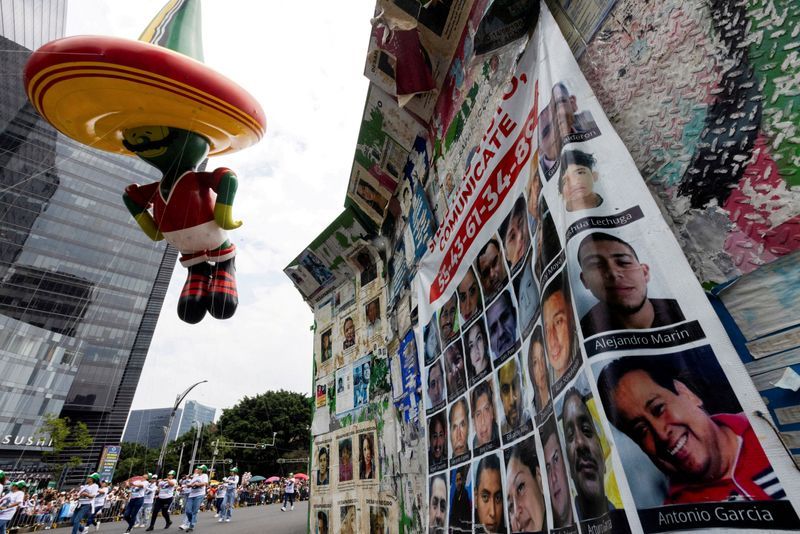
Mexico City's gleaming World Cup preparations mask a deeply fractured national narrative. Alongside the massive screens celebrating the nation's football triumph sit posters documenting over 135,000 missing people—a grim testament to the drug-fuelled violence that has ravaged the country since 2006, when then-President Felipe Calderon declared war on organised cartels. The banners lining Paseo de Reforma serve as silent reminders that while fans gather to cheer their unbeaten national team's progression to the last 16, unresolved tragedies continue shaping Mexican society at every level.
The juxtaposition between celebration and crisis has become impossible to ignore. Reforma, the capital's principal avenue, has witnessed an unusual duality in recent weeks—cordoned off alternately for World Cup festivities and for political protests demanding government action on long-neglected issues. This alternating rhythm reveals the psychological tension many Mexicans experience: the desire to embrace patriotic pride collides uncomfortably with awareness of systemic failures and unmet social obligations that persist regardless of international sporting events.
Media commentators have articulated this tension with precision. Carlos Mendoza, a podcaster and journalist, explained how sporting success functions as a form of national escapism, allowing citizens to temporarily suspend concerns about corruption allegations connecting ruling Morena party politicians to drug trafficking organisations. Yet Mendoza's observation contains a cautionary note—the World Cup provides only temporary psychological relief from underlying structural problems that will resurface once the tournament concludes and stadiums empty.
Economic pressures intensify the contradictions. Although Mexico achieved some inflation moderation in early June, the central Bank of Mexico's core inflation rate remains stubbornly above its three percent target, leaving households across income brackets struggling with elevated living costs. This backdrop transforms World Cup participation itself into an economic exclusion mechanism. Tournament organisers set ticket prices at levels prohibiting ordinary working families from attending matches, effectively barring fans who lack substantial disposable income from supporting their national team in person—a shift from earlier eras when ticket scarcity rather than affordability determined stadium attendance.
The death of four people during celebrations following Mexico's historic victory over Ecuador—their first knockout-stage win in four decades—further darkened the festivities. What should have represented an unalloyed moment of national achievement became shadowed by tragedy, illustrating how violence remains embedded within Mexican public life even during moments ostensibly reserved for joy and togetherness. Anti-World Cup graffiti decorating walls throughout Mexico City and surrounding the Azteca Stadium similarly testifies to organised opposition to the tournament from communities prioritising other grievances.
Teachers' union representatives from the CNTE staged sustained protest encampments in central Mexico City, their tents blocking entire thoroughfares to demand government implementation of campaign promises regarding a 2007 pension and social security law affecting public-sector workers. These demonstrations compete directly with World Cup celebrations for public space and media attention, forcing the government to manage parallel narratives—one celebrating sporting excellence and another confronting demands for policy reversals and wage increases that strain the national budget.
Local political figures have attempted to articulate a more nuanced understanding of national identity during this period. Rodrigo Cordera, a Mexico City politician, acknowledged that citizens possess sufficient emotional and intellectual capacity to experience simultaneous reactions: excitement at football excellence coupled with anger toward FIFA's tournament structures, criticism of municipal governance, and concern about national leadership. His perspective rejects false binary thinking that demands choosing between patriotic enthusiasm and critical engagement with systemic dysfunction.
President Claudia Sheinbaum's political standing offers one counterpoint to national discontent. An El Financiero poll registered her approval rating at 69 percent, representing a reversal of the gradual decline that commenced in March. Her administration claims to prioritise locating missing persons as a foundational national objective, though critics question whether rhetoric translates into substantive resource allocation and investigative commitment. The government's messaging emphasises stability and progress, yet simultaneous protests and persistent structural crises suggest these narratives remain contested.
Local residents themselves express the contradictory impulses shaping contemporary Mexican consciousness. Alejandra Gonzalez, a Mexico City resident, described how major sporting events temporarily subordinate societal concerns without genuinely resolving them, instead creating space for governmental postponement of urgent decisions. She advocates simultaneous celebration and critical scrutiny, arguing that positive national sentiment must coexist with unrelenting pressure on governmental institutions, commercial entities, and individual citizens to acknowledge and remedy inequalities and inconsistencies.
The World Cup experience ultimately illuminates a fundamental Mexican predicament: the nation's capacity for joy and collective identity exists within a complex landscape where systemic violence, economic hardship, and institutional accountability deficits remain non-negotiable realities. Whether the tournament concludes with Mexican advancement or elimination, the underlying crises—missing persons, inflation, unfulfilled pledges—will reassert their primacy in national consciousness. The sporting spectacle provides temporary psychological respite but cannot substitute for genuine policy reform addressing root causes of social fragmentation and citizen grievance that define contemporary Mexico.

