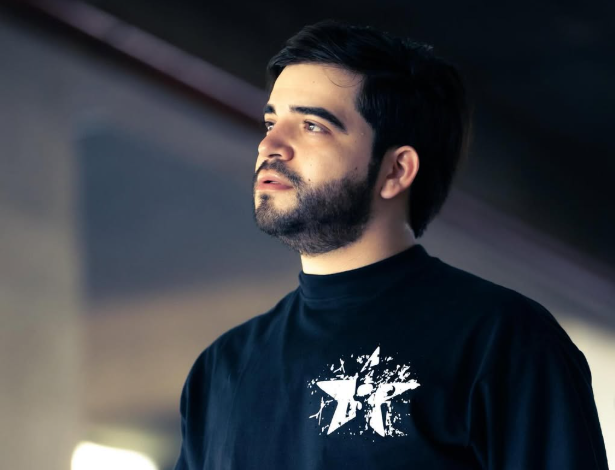
A prominent Mexican social media influencer has been gunned down in broad daylight while streaming live to his followers, the latest casualty in a wave of violence sweeping Mexico's northwestern Sinaloa state. Cesar Gastelum, 25, who commanded a substantial audience of nearly 600,000 on TikTok through comedy content, was fatally shot on Tuesday afternoon as he broadcast from outside a fast food establishment in Culiacan, the state capital. Local authorities confirmed his death following the brazen attack, which occurred in front of witnesses and was partially captured during the ongoing livestream.
The attack unfolded with chilling efficiency as two helmeted figures arrived on a motorcycle near Gastelum and his companions gathered outside the restaurant. In footage reviewed by international news agencies, the driver can be seen drawing a firearm and opening fire directly at the influencer. The livestream was subsequently terminated and taken down by the platform, though images and video clips documenting the shooting have since proliferated across social media platforms and messaging services, difficult to fully contain once released into the digital sphere.
Initially, local police departments reported the incident as the killing of a delivery worker, creating confusion around the victim's identity. However, investigators later clarified that the deceased was Gastelum, a creator known throughout Mexico's social media landscape for producing comedy material. The misidentification speaks to the chaotic nature of such incidents and the pressure under which law enforcement operates in regions where violence has become disturbingly routine.
The security response was swift, with both military personnel and police units deploying to the scene in Culiacan. Forensic teams methodically gathered evidence at the location while recovering the body for medical examination and formal identification. Local television broadcasts showed the extent of the operational presence, underlining the gravity authorities assigned to the incident, though such high-profile shootings in the city have become distressingly frequent.
Culiacan has endured years of intense gang violence as rival criminal syndicates wage battles for territorial control and drug trafficking supremacy. The city, located in one of Mexico's primary drug production regions, has experienced cycles of extreme bloodshed as organized crime groups fight for dominance. This latest killing represents merely one data point in a broader pattern of instability that extends beyond traditional cartel conflicts to encompass public figures and ordinary citizens caught in the crossfire.
Gastelum's death echoes a similarly shocking incident from May 2025, when Valeria Marquez, a 23-year-old beauty influencer, was assassinated while conducting a TikTok livestream at the salon where she worked in Zapopan, Jalisco state. Marquez was shot by an assailant who entered the premises and began firing, prompting prosecutors to investigate the killing using femicide protocols—suggesting possible gender-based violence motivations. The parallel cases highlight a disturbing trend of content creators becoming targets for violence in Mexico.
Investigations into the Marquez killing led authorities to identify Ramon Angel Alvarez Ayala, a criminal operative known by the alias "El R-1," as a central figure in the attack. Alvarez Ayala, arrested in Jalisco in July, was identified by Security Minister Omar Garcia Harfuch as the leader of a criminal cell operating under the Jalisco New Generation Cartel (CJNG) banner. This criminal organization has expanded dramatically in recent years, establishing presence across multiple Mexican states and earning a reputation for brutality and sophistication in its operations.
Beyond the Marquez murder, authorities have connected Alvarez Ayala to additional high-profile killings that underscore the reach and ruthlessness of the criminal networks operating in western Mexico. In November 2025, Uruapan's municipal mayor Carlos Manzo was murdered in what prosecutors allege was orchestrated and financed by Alvarez Ayala. The assassination of an elected official demonstrates how organized crime has evolved to directly challenge governmental authority rather than operating purely in shadows.
For Southeast Asian observers, these developments in Mexico warrant attention as a cautionary case study. The nexus between social media prominence and criminal targeting reveals vulnerabilities in the digital age, while the apparent coordination between violent crime and organized cartels illustrates how traditional gang structures have adapted to contemporary conditions. Mexico's inability to adequately protect its citizens—even those with public platforms and visibility—suggests systemic security failures that transcend simple law enforcement capacity issues.
The targeting of content creators specifically may reflect criminal organizations' attempts to eliminate witnesses, suppress information dissemination, or simply demonstrate power through high-profile murders that generate maximum publicity. Gastelum's livestream was itself weaponized as an opportunity for the attack, suggesting perpetrators deliberately sought the visible, documented nature of the killing, possibly to amplify intimidation effects across social networks.
For influencers and public figures throughout Mexico and Latin America broadly, the pattern emerging from these incidents raises serious personal security concerns. The ease with which attackers identified and reached Gastelum, combined with the apparent impunity with which they acted, suggests limited protective capacity from authorities. As social media continues transforming how people build audiences and generate income, the associated risks of visibility have become acutely apparent.
The killings also reveal how criminal organizations in Mexico have penetrated investigative and security institutions themselves, allowing for effective targeting and execution of planned murders with minimal interference. The delayed identification of Gastelum by police—reporting him initially as a delivery worker—may reflect genuine confusion or potentially indicate compromised information-sharing within law enforcement chains. Either scenario points to dysfunction impeding effective security responses.
As investigations into Gastelum's murder proceed, the broader challenge facing Mexican society remains unresolved: establishing governmental monopoly on violence and creating conditions where citizens, public figures and ordinary people alike, can move through public spaces without facing targeted assassination. Until these foundational state capacities strengthen substantially, Mexico will likely continue experiencing such high-profile tragedies with depressing regularity.

