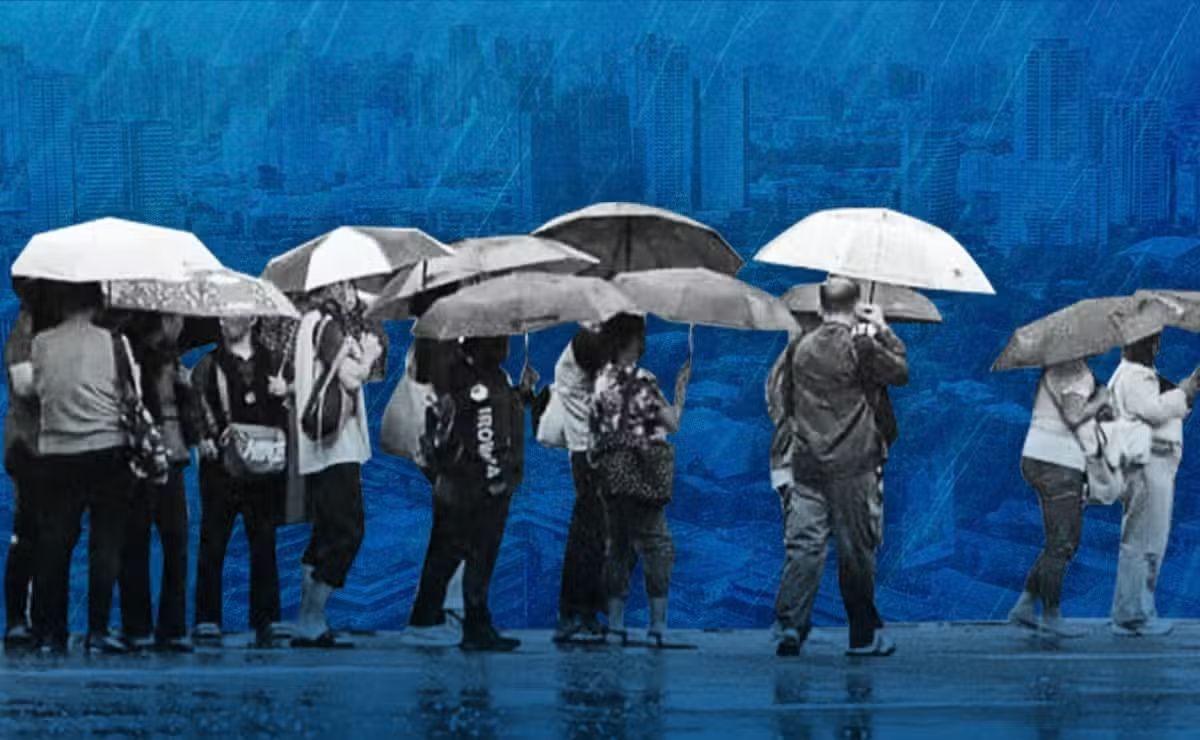
The Philippine capital absorbed a staggering volume of water over a single ten-day stretch in August, forcing conversations about whether existing flood defences are fit for purpose. Between August 5 and 14, as the Habagat (southwest monsoon) and successive cyclones pummelled Luzon, Metro Manila's weather stations recorded an average of 483.4 millimeters of cumulative rainfall—a figure that masks the intensity of individual downpours and reveals the mismatch between precipitation events and drainage capacity.
Dr Alicor Panao, an associate professor at the University of the Philippines who specializes in data science, analysed readings from 23 operational Philippine Atmospheric, Geophysical and Astronomical Services Administration (Pagasa) weather stations across the metropolis. His findings underscore a troubling pattern: the region's infrastructure struggles not because rainfall records are necessarily broken, but because the sheer volume arriving in compressed timeframes overwhelms systems designed for slower-release patterns. The ten-day average translates to roughly 48.3 millimeters falling daily, yet this hides the uneven distribution that makes the situation critical.
The concentration of precipitation into just two days—August 9 and 10—demonstrates how quickly the metropolitan area can become inundated. On August 9 alone, Pagasa's Airport station recorded 226.5 millimeters, a volume that would exhaust most conventional drainage networks within hours. While this fell short of Metro Manila's recorded extreme from 2009, when Tropical Storm Ondoy deposited 455 millimeters in a single day at the Science Garden station, the sustained nature of the recent downpour presents its own dangers. Historical records show a previous benchmark of 334 millimeters was set in June 1967, meaning modern storms consistently exceed mid-twentieth century baselines.
When visualized across the metropolitan footprint, the water volume becomes almost incomprehensible. Applied uniformly over Metro Manila's approximately 620 square kilometres, the 483.4-millimeter accumulation would distribute roughly 300 million cubic metres of water across the city—equivalent to filling approximately 120,000 Olympic-sized swimming pools, or nearly 200 pools per square kilometre. Certain areas experienced far heavier falls: Sitio Wawa recorded 708 millimeters, San Mateo-2 reached 701 millimeters, and La Mesa Dam captured 645.5 millimeters. These disparities reveal how hydrological systems are spatially unevenly stressed during monsoon events.
Dr Panao's analysis carries particular weight in the context of Southeast Asia's accelerating urbanization and climate volatility. The Philippines, as a tropical archipelago, faces intensifying weather systems that arrive with greater frequency and unpredictability than infrastructure planners of previous decades anticipated. When successive heavy rainfalls occur within short intervals, rivers and drainage basins lack sufficient recovery time between events. Flood management therefore cannot rely solely on engineering solutions—more channels, larger pumping stations, or elevated barriers.
Instead, Dr Panao argues that the fundamental challenge revolves around implementation quality and resource stewardship. He highlighted alleged instances of ghost projects, substandard construction, and inflated costs plaguing the flood-control sector, matters now under criminal investigation. This pattern resonates across the region, where capital allocation for infrastructure frequently diverges from actual delivery. A highway widened to half the promised specifications, a drainage system built with inferior materials, or a pump station inadequately maintained all represent failures that occur downstream of policy decisions.
The governance dimension distinguishes this crisis from purely technical concerns. Nations across Southeast Asia have invested substantially in flood protection following devastating events—Thailand's 2011 floods, Indonesia's recurring Jakarta inundations, and Malaysia's own urban drainage challenges all prompted large budget commitments. Yet implementation frequently falters due to oversight deficiencies, political interference, or insufficient maintenance funding. A well-designed system deteriorates if nobody removes accumulated sediment, clears vegetation, or repairs corroded pipes.
For Malaysian observers, the Metro Manila experience offers instructive lessons. The country's own exposure to monsoons and tropical cyclones creates similar hydrological pressures, particularly in densely developed areas like Kuala Lumpur, Selangor, and Penang. The lesson from the Philippines is not that bigger infrastructure is needed, but that existing systems must function with integrity and consistency. This requires sustained bureaucratic discipline, transparent procurement, professional engineering oversight, and political commitment to maintenance rather than headline-grabbing construction announcements.
The August rainfall in Metro Manila also illustrates climate change's practical implications for tropical megacities. Warmer oceans and altered atmospheric circulation patterns intensify monsoon precipitation while compressing rainfall into shorter periods. Infrastructure designed decades ago, when historical rainfall patterns were more stable and predictable, faces stress it wasn't engineered to withstand. Southeast Asian cities must simultaneously upgrade aging systems, ensure quality execution, and prepare for more extreme hydrometeorological events.
Dr Panao's emphasis on repeated rainfall leaving drainage systems and watersheds insufficient recovery time cuts to the heart of contemporary flood risk. Traditional approaches that focused on engineered capacity fail when nature delivers multiple high-intensity events in succession. The transition to climate adaptation requires rethinking development patterns—restricting construction in flood-prone areas, restoring wetlands and floodplains, improving maintenance protocols, and ensuring that flood-control budgets actually purchase functioning infrastructure rather than disappearing into opaque procurement chains.
The Philippines currently faces these challenges with unusual transparency, as criminal investigations into flood-control project failures continue. This accountability mechanism, rare in the region, creates an opportunity for institutional learning. Malaysian policymakers and urban planners monitoring these developments will recognize similar vulnerabilities in their own systems. The broader implication is that Southeast Asian cities cannot engineer their way out of intensifying monsoon rainfall through structural solutions alone. Instead, governance quality, financial integrity, and maintenance discipline become the decisive factors separating functional flood protection from infrastructure that fails when most needed.

