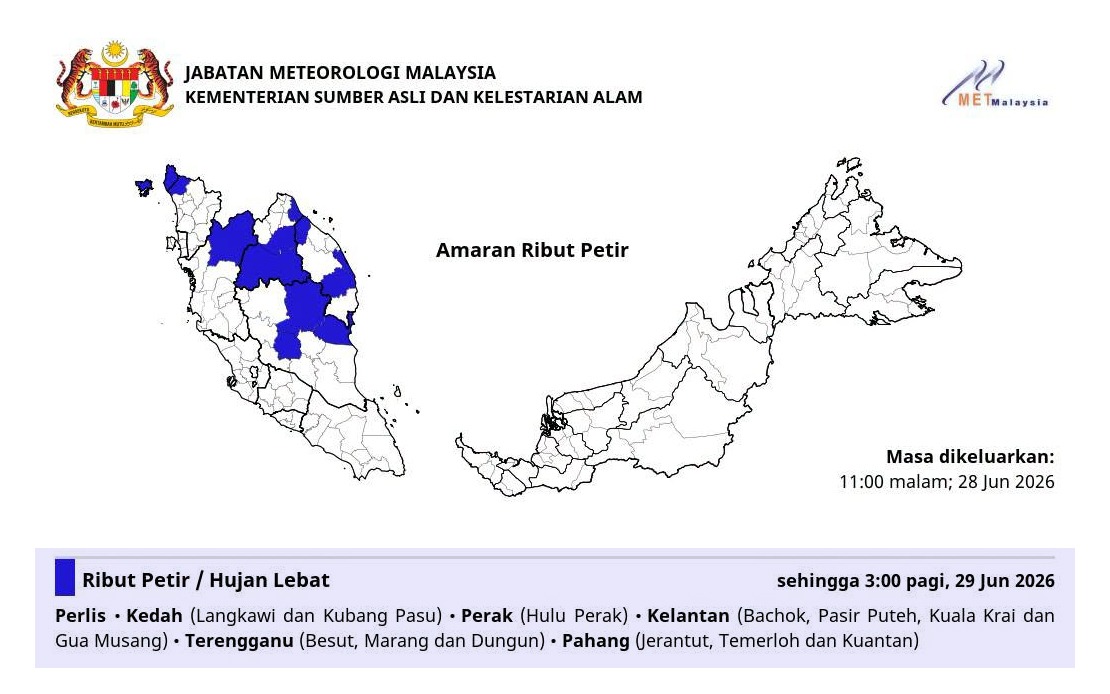
The Malaysian Meteorological Department has alerted residents across six states to prepare for severe thunderstorms, heavy rainfall and strong winds expected to persist until 3am, as a significant weather system moves across the country. The warning, which encompasses populated areas and rural regions alike, underscores the unpredictable nature of Malaysia's monsoon season and the ongoing meteorological challenges facing the peninsula during this period.
Perlis, situated at the nation's northern tip, forms part of the affected zones, alongside multiple districts within Kedah including the tourist destination of Langkawi and the agricultural area of Kubang Pasu. The alert extends into Perak's inland regions, specifically Hulu Perak, where mountainous terrain and isolated communities may face heightened risks from flash flooding and landslides during periods of intense precipitation.
On the east coast, Kelantan faces widespread exposure, with warnings covering Bachok on the northeastern shoreline, Pasir Puteh inland, Kuala Krai in the central region, and Gua Musang towards the state's western boundary. These districts span diverse geographical zones from coastal areas vulnerable to storm surge and tidal complications to highland regions susceptible to sudden runoff and terrain instability.
Terengganu's involvement encompasses three separate districts: Besut in the north, Marang in the centre, and Dungun to the south, suggesting a broad weather system affecting the entire state's coastal and transitional zones. Neighbouring Pahang, the peninsula's largest state, will experience the phenomenon in its populated western sections, including Jerantut with its forest reserves, Temerloh as a significant river port town, and Kuantan as the state capital and major urban centre.
The timing of this warning carries particular significance for early morning commuters, night-shift workers, and commercial activities dependent on stable weather conditions. Schools, businesses, and transportation operators across these regions must prepare contingency plans, while residents should secure loose objects, avoid flood-prone areas, and monitor official updates throughout the night.
Thunderstorm warnings in Malaysia typically indicate atmospheric instability capable of generating destructive wind gusts, which can damage structures and topple trees. Heavy rain alerts suggest precipitation rates exceeding normal seasonal averages, creating flood risks in low-lying zones and areas with poor drainage infrastructure. The combination of both hazards multiplies the potential for disruption to daily life and economic activity.
For Malaysian residents and visitors across the affected regions, immediate protective measures include staying indoors, avoiding travel unless essential, and maintaining awareness of local flood and weather updates via radio, television, and official government channels. Parents should exercise caution regarding children's outdoor activities, while agricultural workers should consider temporarily halting operations in exposed areas.
The east coast and northern regions of Peninsular Malaysia frequently experience such weather phenomena due to geographical exposure to monsoon systems and proximity to warm maritime air masses. The concentration of alerts in these areas reflects predictable seasonal vulnerability rather than unprecedented conditions, though cumulative rainfall from successive weather systems can still pose genuine hazards to infrastructure and public safety.
MetMalaysia's proactive warning system represents a crucial public safety mechanism, allowing residents and authorities sufficient advance notice to implement protective measures. The specificity of the alert—naming individual districts rather than entire states—enables residents to gauge their particular vulnerability and respond proportionately to identified risks.
Businesses dependent on reliable transportation networks, particularly those in logistics, retail, and food distribution, should consider adjusting delivery schedules and staffing arrangements to accommodate potential disruptions. Financial services and government offices may need to adjust opening hours or implement alternative service delivery methods should weather conditions deteriorate significantly.
The alert duration extending to 3am suggests that the primary weather system's intensity will peak during late evening and early night hours, typically when outdoor activity is minimal. However, residents should remain cautious even after the official alert expiration, as secondary weather effects including saturated ground conditions and swollen watercourses may persist into daylight hours.
For the broader Malaysian context, this alert demonstrates the nation's ongoing vulnerability to tropical weather systems and the critical importance of maintaining robust early warning infrastructure. As climate patterns shift and extreme weather becomes increasingly frequent, meteorological agencies like MetMalaysia face growing demands to provide accurate, timely guidance that enables communities to minimize disruption and protect lives and property effectively.

