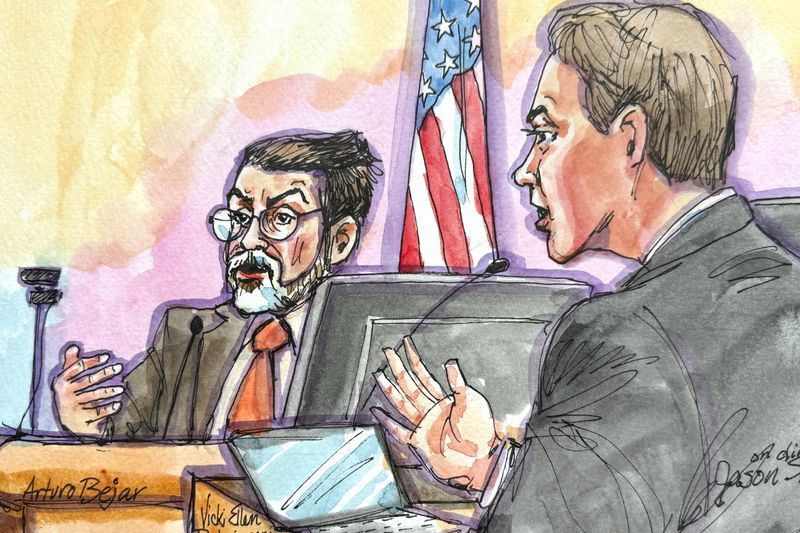
Arturo Bejar, a former engineering director at Meta who became one of the company's most prominent internal critics, resumed his testimony on Wednesday in a groundbreaking trial that could fundamentally reshape how Facebook and Instagram operate. The case represents the most significant legal challenge yet to social media's impact on young people, with a coalition of states arguing that Meta deliberately designed its platforms to addict children and teenagers while misleading the public about their safety and illegally harvesting personal data from users under thirteen.
Bejar's central role in the proceedings underscores the weight of his evidence. Having worked at Meta between 2009 and 2015, and returning as an independent contractor from 2019 to 2021, he occupied a unique vantage point within the company's product development hierarchy. During that later period, he oversaw surveys examining teen wellbeing on Instagram, giving him direct insight into how the platform affected young users' mental health. His decision to testify against his former employer carries substantial credibility precisely because he possessed institutional knowledge and access to internal research that external observers cannot obtain.
In his testimony, Bejar painted a picture of systemic misalignment between what Meta's surveillance mechanisms recorded and the actual harm experienced by young users. He emphasized that the company's internal monitoring systems focused narrowly on policy violations rather than on measuring the genuine damage caused to teenagers. This distinction matters significantly: a post might technically violate Meta's rules, but the real injury occurs when that violation reaches vulnerable young people and causes emotional or psychological distress. In an email he shared with jurors addressed to Meta's chief product officer Chris Cox, Bejar highlighted what he characterised as a substantial gap between the prevalence figures Meta reported and the actual harm young people reported experiencing directly.
The human toll articulated in Bejar's testimony carries particular weight. He testified that young people were experiencing harm at extraordinarily high rates across the platform, and he stressed that parents would have wanted to know this reality when deciding whether their children should use Instagram. This framing transforms the dispute from an abstract question about platform design into a concrete parental concern about child welfare, which resonates powerfully with jurors who themselves may be parents or guardians.
The trial, currently scheduled to run for six weeks in the Oakland, California federal courthouse, involves accusations from California, Colorado, Kentucky and New Jersey that Meta deliberately architected Facebook and Instagram to hook young users, thereby fueling anxiety, depression and in some cases suicide. Additionally, 29 states have brought claims that Meta violated federal law by improperly collecting and using personal data of children while they accessed its platforms. The breadth of this coalition signals how deeply concerns about social media's effects on youth have penetrated state-level governments across the country.
Bejar's credibility as a witness has already been tested in other proceedings. He previously testified before a United States Senate committee in 2023, where he stated plainly that Meta was aware of harassment and other harms facing teenagers on its platforms but chose not to address them adequately. This consistent message across different forums strengthens the narrative that his concerns reflect genuine observations rather than opportunistic criticism developed for litigation purposes.
Meta faces thousands of similar lawsuits alleging harm to children, and the stakes are measurable. In one case brought by New Mexico that went to trial, Bejar served as a key witness and the state obtained 942 million dollars in damages and penalties, along with a court order requiring Meta to implement specific changes to platform operations within that state. These precedents demonstrate that Bejar's testimony has already influenced judicial outcomes and altered how Meta must conduct business in certain jurisdictions. His appearance in this Oakland trial carries the potential to set even broader precedents that could affect Meta's operations across the entire United States.
Meta's defence strategy has attempted to constrain Bejar's impact. The company sought unsuccessfully to block his testimony entirely, arguing that he had failed to preserve evidence by deleting communications with other former Meta employees on the encrypted messaging platform Signal. Meta cited comments Bejar made during an ongoing Tennessee trial to support this obstruction effort. However, U.S. District Judge Yvonne Gonzalez Rogers, presiding over the Oakland proceedings, rejected this motion firmly, characterising it as a long-shot attempt to eliminate a pivotal witness rather than as a legitimate evidentiary concern.
The trial commenced with opening statements from both sides on Tuesday before Bejar took the stand, and the proceedings are occurring against a backdrop of intensifying scrutiny of social media companies' practices. For Malaysian and Southeast Asian audiences, this case carries implications beyond the United States. Many platforms Meta owns operate globally with largely consistent features and algorithms, meaning that design choices made in response to American litigation could affect how young Malaysians and other regional users experience these services. Additionally, the trial's focus on data collection practices raises questions about how meta-data concerning regional youth is handled and protected.
Bejar's continued testimony and the overall trial reflect a pivotal moment in technology regulation. For decades, social media companies operated with minimal legal accountability for the impacts of their platforms on younger users. This trial represents a shift toward holding those companies responsible for decisions made in product design and safety oversight. The outcome could establish important precedents about corporate responsibility for the psychological and emotional welfare of young people in digital spaces.

