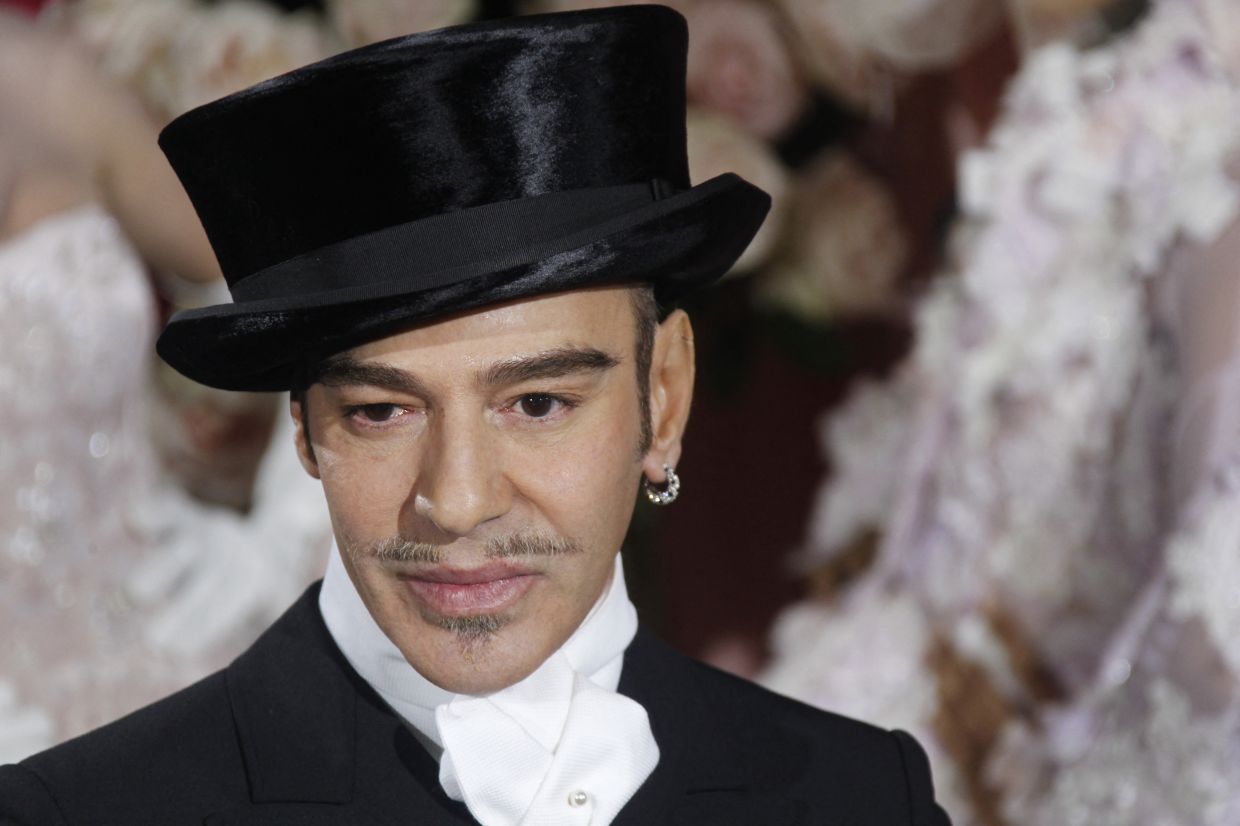
The Metropolitan Museum of Art's upcoming spring exhibition will place designer John Galliano in the spotlight, creating an unusually complicated retrospective that interweaves celebrated creative achievements with documented ethical lapses. The May 2025 Met Gala will launch the Costume Institute show devoted entirely to the British designer, making him only the third living designer to receive such a solo honour—a recognition that carries substantial weight given his controversial trajectory through the fashion world.
Galliano's ascent to prominence culminated in his appointment as creative director at Christian Dior, one of fashion's most prestigious positions, which he held for nearly fifteen years. His tenure produced some of the most memorable couture collections of the era, cementing his reputation as a visionary capable of synthesizing historical references, theatrical grandeur, and technical mastery into wearable art. Yet this period of unprecedented professional success ended abruptly when he made a series of public statements between 2010 and 2011 that contained antisemitic and racist content, remarks that circulated widely and ultimately led to his conviction by a Paris court.
The fallout was swift and devastating. Dior terminated his relationship with the designer, and his eponymous label severed ties as well. For several years, Galliano largely disappeared from public view, undergoing treatment for substance addiction and engaging in what the museum characterises as both public and private rehabilitation efforts. This period of exile from the industry raised questions about whether his career could survive such reputational damage, and whether the fashion world would ever welcome him back into positions of influence.
His professional resurrection began in 2014 when Maison Margiela, the Paris-based fashion house known for experimental and boundary-pushing design, appointed him as creative director. The appointment was controversial but signalled a willingness to provide space for redemption. Over the subsequent decade, Galliano produced acclaimed collections that demonstrated his technical abilities remained undiminished and that his creative vision had matured. This period allowed him to rebuild relationships within the industry while attempting to demonstrate substantive change.
The Met's decision to proceed with a major retrospective reflects broader cultural questions about how institutions should address complicated legacies. Rather than ignoring or minimising the controversies, museum leadership has committed to foregrounding them directly. Andrew Bolton, the primary curator who oversees most of the Met's major fashion exhibitions, has structured the show to examine "how Galliano has remapped the world through fashion and how his conduct, its consequences, and changing cultural values have reshaped our understanding of his work." This framing explicitly acknowledges that ethical accountability cannot be separated from artistic evaluation.
The museum's preparations have included deliberate engagement with New York's Jewish community leaders to ensure the exhibition approaches the subject with appropriate sensitivity and context. These conversations involved Bolton, Galliano himself, and Anna Wintour, the influential editor of Vogue and a central figure in global fashion discourse. Such consultations signal that the institution recognises the exhibition will inevitably resonate beyond fashion circles and that community input is essential to responsible curation.
The exhibition will be divided into three distinct sections, each addressing different dimensions of Galliano's career and its meaning. The first section, titled "Bearings," directly confronts the rupture in his career by examining his 2010-2011 conduct, his dismissal from major positions, his Paris court conviction, and his subsequent treatment for substance addiction. Rather than burying this narrative, it becomes the entry point—the foundation upon which visitors must ground their understanding of everything that follows.
The second section, "Horizons," pivots toward examining the sources and influences that have animated Galliano's design philosophy. This portion explores how historical periods, geographic locations, artistic movements, storytelling traditions, and theatrical performance have shaped his aesthetic vision. By grounding his work in these intellectual and cultural contexts, the exhibition invites visitors to comprehend the intellectual complexity underlying his creations.
The final section, titled "Atlas Of Transformation," concentrates on the technical and creative dimensions of his work—craftsmanship, experimentation, and innovation in garment construction and design methodology. This structure allows the exhibition to acknowledge that artistic skill and ethical failure can coexist, and that understanding either requires grappling with both.
For Malaysian and Southeast Asian audiences, this exhibition raises pertinent questions about how cultural institutions navigate accountability in an era of heightened scrutiny around public figures and brands. The fashion industry holds particular resonance in the region, where numerous local and regional designers have built international reputations. The Met's approach signals that future retrospectives and honours will likely demand more nuanced engagement with complicated histories rather than celebratory narratives that elide difficulty.
The May 2025 Met Gala itself will undoubtedly attract intense international attention, particularly regarding which designers, celebrities, and cultural figures choose to attend or visibly engage with the exhibition. The red carpet, traditionally a space for sartorial celebration, will carry additional weight given the exhibition's thematic concerns. Every garment choice and public statement will be interpreted through the lens of the exhibition's central tensions.
Ultimately, the Met's willingness to mount this exhibition reflects a conviction that artistic legacies need not be binary—celebrated uncritically or rejected entirely. Instead, institutions can create spaces where excellence and accountability exist simultaneously, where audiences are invited to hold multiple truths at once: that Galliano demonstrated extraordinary creative ability, that his actions caused real harm, that rehabilitation is possible but requires genuine effort, and that understanding his work requires wrestling with all these dimensions together.

