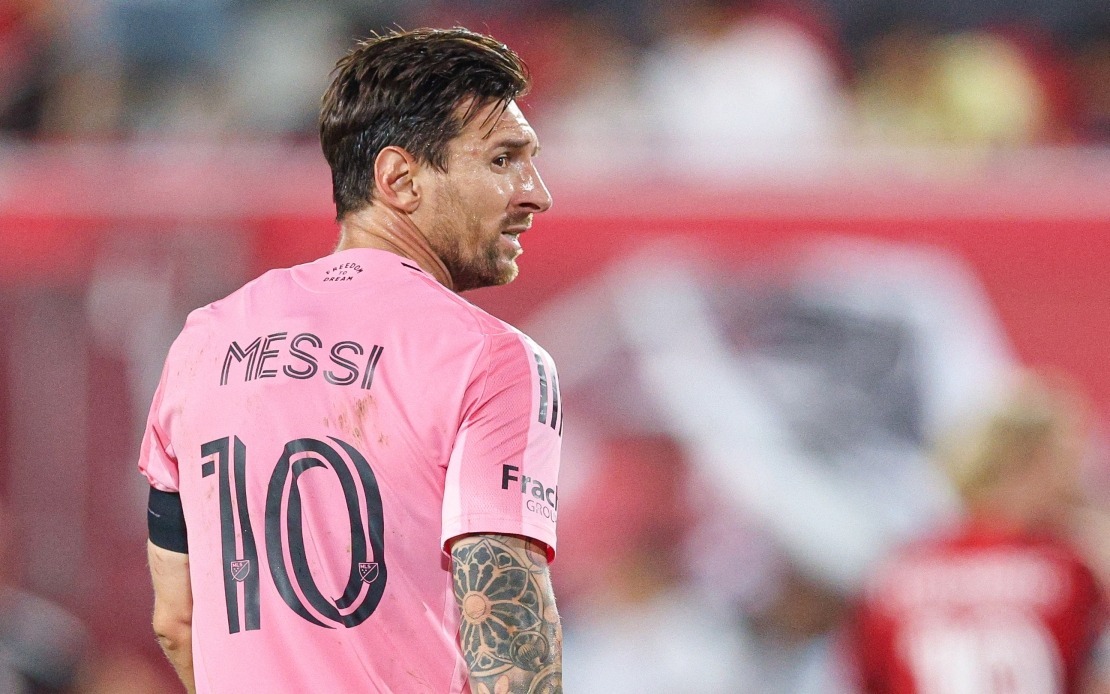
Lionel Messi took to the pitch for Inter Miami on Wednesday as a substitute in the second half, marking his return to action after grappling with profound personal loss. The Argentina captain featured in a 3-2 defeat to Leon during the final group stage match of the Leagues Cup competition, ending weeks of uncertainty over whether he would continue his professional career. His appearance came just days after he shared an anguished statement on social media, expressing deep doubts about his future in football following the death of his father, Jorge.
The emotional toll of losing his father became evident when Messi published a raw and candid message addressing his late parent. In the statement, he questioned how he would navigate life and football without his father's guidance, saying he no longer felt certain about continuing to play professionally. He described his uncertainty starkly, noting that football had once been straightforward but now filled him with doubt. The post resonated globally as a rare glimpse into the personal struggles of one of sport's greatest athletes during a moment of acute grief.
Messi had already withdrawn from Inter Miami's previous engagement, a 2-1 loss to Monterrey on Saturday, to attend a private funeral service at a cemetery in Perez, a town near his hometown of Rosario in Argentina. The decision to skip the match underscored the gravity of his father's passing and his need to honour family observances during this difficult period. The absence itself served as a public acknowledgment that something significant had shifted in the footballer's personal circumstances.
Jorge had occupied an extraordinary position in his son's life and career spanning three decades. Beginning when Lionel was merely fourteen years old, Jorge served as his agent and mentor, guiding him through the formative years and into superstardom. He witnessed firsthand the transformation of a young talent into what many consider the greatest footballer to ever play the game. Most notably, Jorge was present when his son captained Argentina to victory in the 2022 FIFA World Cup in Qatar, a crowning achievement that represented the culmination of a long international career.
The weight of Jorge's influence on Messi's decisions became apparent through details about recent tournaments. According to Messi's statement, his father encouraged him to participate in one more World Cup despite declining health, a testament to Jorge's belief in his son's capabilities even as his own condition deteriorated. This summer's Copa America tournament in the United States saw Argentina reach the final, where they fell to Spain 1-0 after extra time, a heartbreaking conclusion that would have been difficult for Jorge to witness given his unwavering support.
Inter Miami's coach Guillermo Hoyos offered a compassionate perspective on Wednesday evening, acknowledging the universal nature of paternal loss. He drew parallels to his own experience of losing his father, describing the sense of abandonment that accompanies such bereavement. Hoyos characterised the blow as particularly severe for someone of Messi's stature, emphasising that grief transcends status and affects even the most accomplished individuals profoundly. His remarks provided crucial context for understanding why Messi's return, rather than being a triumphant comeback, represented an act of courage amid overwhelming sorrow.
Opposition coach Javier Gandolfi similarly recognised the magnitude of what Messi had endured, offering tribute to both his on-field abilities and his character as a human being. Gandolfi's assessment positioned Messi as historically unparalleled as a footballer while also noting qualities that extended beyond technical mastery. The acknowledgment from an opposing coach underscored how the global football community understood that Messi's appearance, limited though it was to the second half, held meaning beyond mere statistics.
For Malaysian and Southeast Asian readers, Messi's situation reflects broader themes about family obligation, grief, and the demands placed on elite athletes. In many Asian cultures, filial piety and family responsibilities hold paramount importance, making Jorge's role as both agent and guide particularly resonant. The question of whether Messi would continue his career after his father's death speaks to how deeply intertwined personal and professional lives become at the highest levels of sport, and how loss can fundamentally alter one's sense of purpose and direction.
The Leagues Cup defeat itself became secondary to the narrative of Messi's presence on the field. Though Inter Miami fell to Leon, the match served as a testing ground for whether Messi could compartmentalise his grief sufficiently to perform. The fact that he took the field, even as a substitute, suggested a tentative decision to carry forward rather than walk away, though his own statements indicated this remained an evolving and uncertain journey through mourning.
Messi's career has consistently been defined by extraordinary achievement and record-breaking performances, yet his current chapter represents something different: a test of emotional resilience and personal conviction amid loss. The coming weeks and months will likely reveal whether his appearance on Wednesday signified a decision to continue or merely a temporary return as he processes the reality of his father's passing. For fans across Southeast Asia and beyond, the question of whether football's greatest player will continue his journey has transformed from a matter of performance into one of personal healing.

