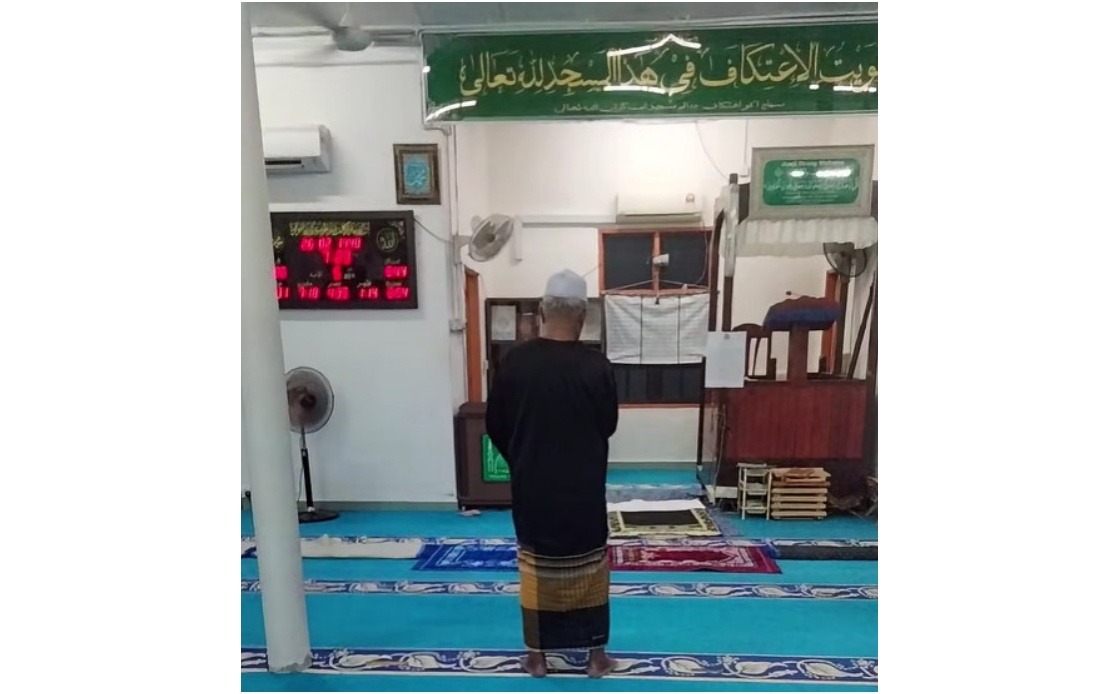
A brief video clip circulating on Facebook and WhatsApp has drawn unexpected attention to Masjid Tanjung Resang in Mersing, highlighting the real pressures facing rural religious institutions across Malaysia as communities experience significant demographic shifts. The 15-second recording, which depicted what appeared to be a lone worshipper at prayer, immediately raised questions about the mosque's viability and operational capacity, touching on a wider conversation about how out-migration affects the social fabric of smaller settlements throughout the country.
The footage, which suggested that a single individual was simultaneously fulfilling the roles of congregation member, imam, and bilal, quickly spread across social networks and reached audiences far beyond the small coastal village. Muhammad Islahuddin Abas, the Member of Parliament for Mersing and a village resident himself, acknowledged his own surprise upon receiving screenshots through WhatsApp from contacts in Kuala Lumpur, underscoring how readily local concerns can amplify into broader public discourse through digital channels. Rather than dismissing the incident, Islahuddin adopted a measured response that acknowledged both the legitimate challenges facing the mosque and the opportunity the viral moment presented.
The core issue affecting Masjid Tanjung Resang reflects demographic realities common to many Malaysian rural areas. While the locality retains numerous residential structures, the actual resident population has contracted significantly as economic opportunities have pulled people toward urban centres. Islahuddin noted that many households sit empty, their occupants having relocated permanently or maintaining irregular presence due to employment elsewhere. This pattern of selective migration—where working-age adults depart while housing stock remains—creates a particular strain on community institutions that depend on regular participation and voluntary labour for their day-to-day operation.
Despite these headwinds, mosque leadership has maintained a structured programme of activities intended to sustain religious observance and community engagement. Islahuddin explained that the institution continues to organise religious talks, formal lectures, and group recitations of Yasin on a regular weekly basis. These initiatives represent deliberate efforts to preserve congregational life and provide meaningful engagement for those residents who remain, recognising that mere maintenance of the physical structure is insufficient without accompanying spiritual programming. The commitment reflects a broader principle that even small communities merit sustained religious support and pastoral attention.
Abdul Syamil Abdul Fadzil, the mosque's chairman, provided additional clarification regarding the circumstances depicted in the video. He indicated that the individual shown was actually performing a voluntary, non-obligatory prayer rather than a required congregational service, a distinction that materially changes the interpretation of the footage. The image of solitary worship, when recontextualised as an optional act of personal devotion, no longer suggests institutional failure but rather demonstrates the institution's availability for spontaneous religious engagement. Syamil also confirmed that he had been contacted by representatives from the Johor Islamic Religious Affairs Department (JAINJ) to address the matter, and that the department had been provided with a fuller explanation of the mosque's actual operational circumstances.
The viral moment, while initially framed as problematic, has generated certain tangible benefits for the institution. The publicity has significantly expanded awareness of the mosque's existence beyond its immediate locality and even beyond Mersing district itself. Islahuddin highlighted that the mosque's positioning—situated off the main road in a somewhat secluded location—had previously limited its visibility even among residents of the broader district. The unexpected national exposure has essentially accomplished what conventional promotional efforts might have struggled to achieve, introducing the institution to a vastly wider audience.
Beyond religious functions, Masjid Tanjung Resang has developed a broader community role that extends into practical service provision. Islahuddin characterised the mosque as welcoming to visitors of all faiths, a designation that reflects contemporary Malaysian approaches to religious institutions as civic assets rather than exclusively denominational spaces. The location proves particularly valuable for hikers undertaking expeditions on Gunung Arong, for whom the mosque serves as a useful checkpoint providing facilities and respite. This multifunctional purpose means the institution generates traffic and justifies resource investment beyond what strictly religious attendance figures might suggest.
The situation at Mersing illustrates a pattern replicated across rural and semi-rural Malaysia, where demographic decline creates genuine operational challenges for institutions historically dependent on stable, sizeable populations. The out-migration of working-age residents leaves religious institutions understaffed and underattended, yet removal of these facilities would likely provoke stronger community reaction than the current situation of struggling maintenance. For policymakers and religious authorities, the case suggests a need for creative approaches to supporting rural mosques—potentially through innovative staffing arrangements, resource sharing between proximate institutions, or integration with government services that might justify ongoing investment.
The role played by digital media in amplifying the story merits consideration as well. A situation that might previously have remained a localised concern, known primarily to district officials and immediate community members, instead became instantly visible to national audiences. This democratisation of attention can work both ways: while it creates pressure on struggling institutions to justify their continued operation, it also mobilises support and resources that might otherwise remain unavailable. The Mersing mosque's experience suggests that viral moments, even when initially framed as critical, can serve as catalysts for broader support and engagement with rural community challenges.
Moving forward, the experience at Masjid Tanjung Resang offers broader lessons for how Malaysian communities navigate the tension between traditional models of religious institutional life and the demographic realities of the contemporary period. Rather than viewing the viral video as exposing failure, both Islahuddin and Syamil positioned it as an opportunity to demonstrate the mosque's ongoing relevance and adaptive capacity. This reframing—from crisis narrative to opportunity narrative—may ultimately prove more productive for securing the long-term sustainability of rural religious institutions facing similar pressures across the country.

