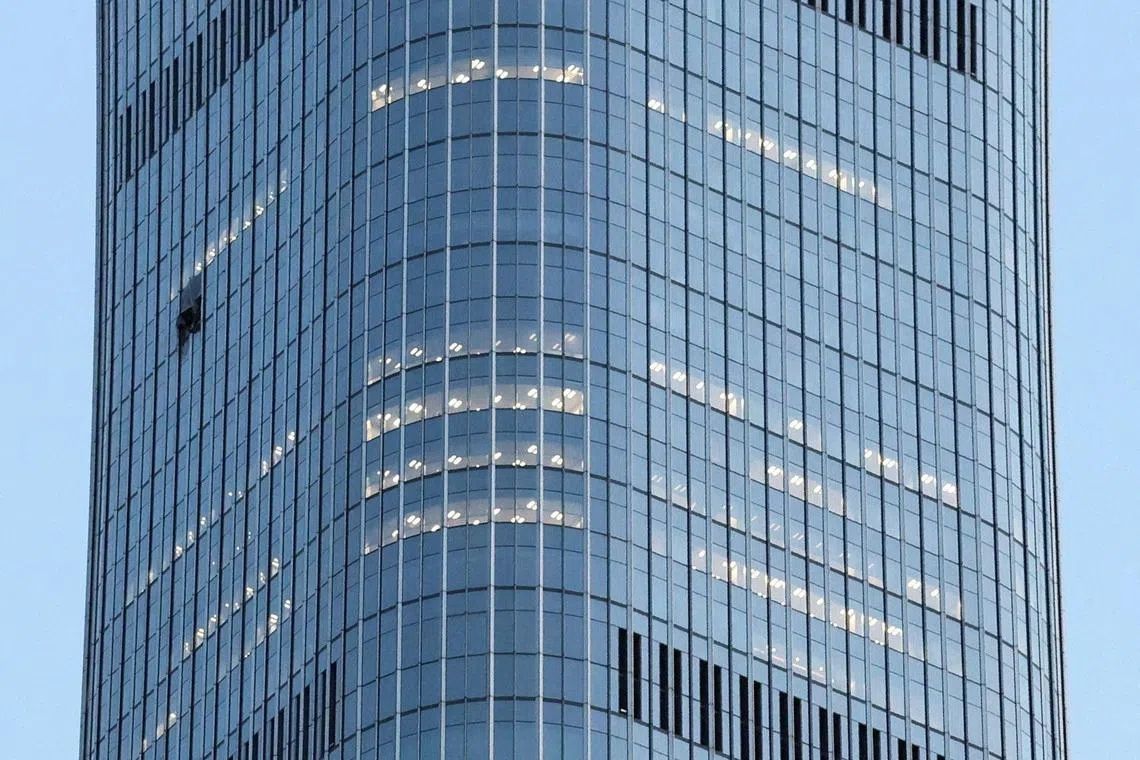
A pilot who died after flying a small aircraft into one of Beijing's most prominent landmarks had documented mental health concerns and had written about ending his life, according to statements released by Chinese authorities on Thursday. The incident on Friday, June 26, saw the 66-year-old man, identified by surname Liu, steer a two-seat propeller-driven plane into the 528-metre CITIC Tower in the city's Central Business District at 5:55 pm local time. The crash left 13 people injured and prompted immediate questions about the adequacy of security protocols in an airspace considered among the world's most tightly controlled.
The collision with CITIC Tower carries particular sensitivity given its proximity to the seat of Chinese power. The building stands merely seven kilometres from Zhongnanhai, the fortified compound housing China's top leadership including President Xi Jinping. The crash occurred just days before the ruling Communist Party's 105th anniversary celebrations at the nearby Great Hall of the People off Tiananmen Square, a period when security around major Beijing landmarks typically intensifies. The incident thus penetrated what residents and observers had long assumed to be an impenetrable defensive perimeter.
Chaoyang district authorities disclosed that Liu had suffered from chronic insomnia and anxiety, conditions that apparently worsened over time. His personal diary, recovered after the crash, contained multiple references to "ending his life," establishing a clear pattern of suicidal ideation. The pilot lived alone in Beijing following a divorce, a circumstance that may have exacerbated his isolation and mental health deterioration. Despite these warning signs, Liu had obtained a sport pilot license in 2021 and a private pilot license as recently as 2024, prompting observers to question what screening mechanisms exist to identify individuals with severe psychological distress seeking access to aircraft.
On the day of the incident, Liu departed from a general aviation airport in suburban Pinggu district. According to official accounts, he first completed a supervised flight alongside an instructor, then conducted a solo flight afterwards. It was during this unsupervised portion of his flight that Liu deviated markedly from his designated flight path and lost radio contact with the airport. The precise reasons for this deliberate deviation remain unexplained in official statements, though the timing and trajectory suggest intentional action rather than mechanical failure or navigational error.
The aircraft involved, registered as B-12PP, was equipped only with basic instrumentation typical of small civilian planes. Its capacity to penetrate airspace adjacent to a permanent no-fly zone and traverse highly restricted corridors used by commercial traffic to and from Beijing Capital Airport, one of Asia's busiest aviation hubs, underscores troubling vulnerabilities in the capital's air defence architecture. China maintains regulations requiring all general aviation flights, including non-airline operators, to file detailed flight plans with authorities by 3 pm on the day preceding departure. Flying over urban areas is ostensibly prohibited under civil aviation law. Yet Liu's aircraft apparently navigated toward the city centre without triggering preventive measures.
Eyewitnesses at the scene reported seeing a distinctive hole puncturing the upper-floor windows of CITIC Tower, with plane debris scattered at the building's base and a small fire breaking out. Journalists from international news agencies who arrived at the scene were prevented by police from photographing the damaged structure, initiating what would become a comprehensive information suppression operation. Chinese social media platforms rapidly removed photographs, videos, and discussions of the crash within hours of its occurrence, a response consistent with Beijing's tendency to restrict narrative around incidents that reflect negatively on state security competence.
The authorities' framing of the incident as stemming purely from the pilot's personal circumstances and mental health struggles attempts to contain the narrative within individual pathology rather than systemic failure. The Chaoyang district government statement concluded that "this was an incident endangering public safety caused by personal reasons," positioning Liu's psychological state as the sufficient explanation for what occurred. However, this interpretation sidesteps uncomfortable questions about how an individual with documented suicidal ideation, living alone and demonstrating increasingly erratic behaviour, continued to maintain flight privileges and access to aircraft.
Among aviation professionals familiar with Chinese regulations, the crash has prompted scrutiny of medical certification processes. Obtaining a private pilot licence in China technically requires physical medical examination and appropriate certifications, yet the precise standards and frequency of psychological evaluation remain unclear. A qualified pilot requested anonymity while discussing the incident, citing its sensitivity, but acknowledged the medical examination requirement exists. Whether Liu's psychological condition would have triggered disqualification under standard protocols, or whether his examinations simply failed to detect or adequately assess his mental state, remains undisclosed.
The crash's occurrence in one of the world's most securitised airspaces raises questions extending well beyond the individual tragedy. Internet users posting on Chinese social media platforms beneath the official Chaoyang district statement attempted to probe these gaps in security, only to have their queries systematically deleted. The incident demonstrates that even societies with exceptionally restrictive airspace controls and comprehensive surveillance apparatus face challenges in preventing determined individuals from engaging in dangerous acts. For Southeast Asian readers, the Beijing incident offers sobering perspective on the limits of purely technical security measures when psychological assessment and preventive intervention systems prove inadequate.
The suppression of public discussion surrounding the crash contrasts sharply with emerging global best practices in aviation safety, which emphasize transparency and comprehensive investigation to prevent similar incidents. While Chinese authorities have disclosed certain facts about Liu's mental health and flight history, critical details about gaps in security response, the coordination between different control agencies, and systemic weaknesses in pilot medical certification remain shrouded. The incident ultimately illustrates a paradox facing authoritarian systems: the desire to maintain public confidence through narrative control frequently obscures the very systemic vulnerabilities that require transparent examination and remediation.

