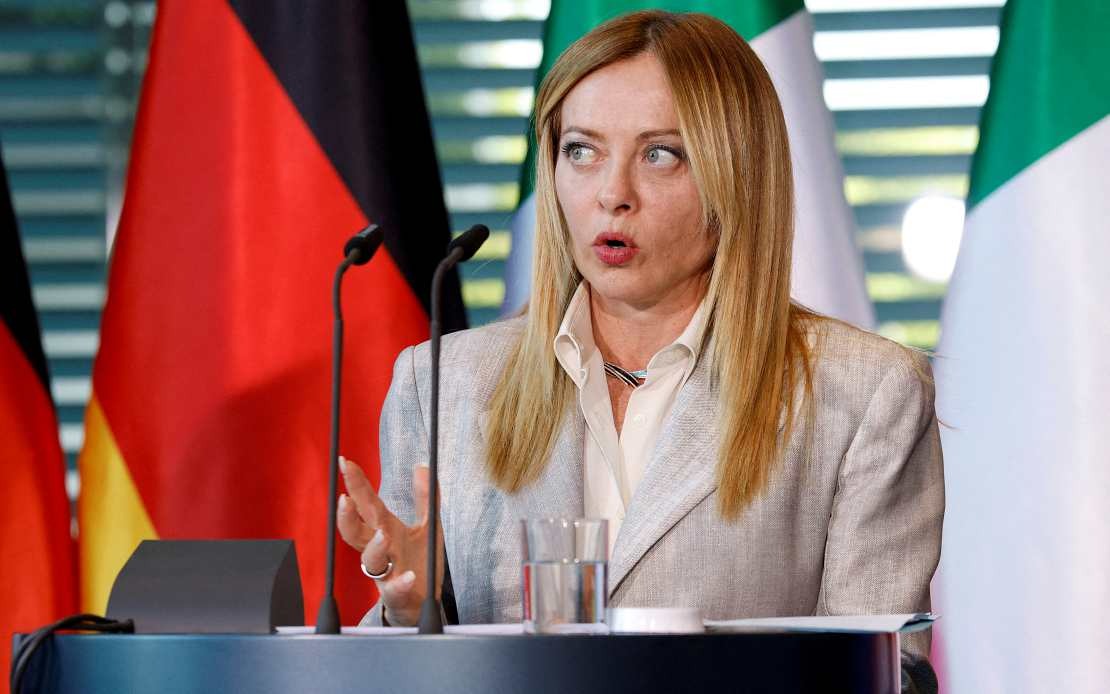
Italian Prime Minister Giorgia Meloni is championing a new approach to managing irregular migration in Europe: creating processing facilities for migrant returns in countries outside the European Union, with ambitions to launch the first centre by 2027. The proposal, which will feature prominently in discussions among EU home affairs ministers this week, represents a significant shift in how member states hope to address escalating border pressures and irregular arrivals. Interior Minister Matteo Piantedosi will present Italy's vision at an informal online meeting of EU officials, signalling Rome's determination to reshape continental migration policy.
The initiative gains momentum from broad European support, with 22 member states having penned a joint letter to European Commission President Ursula von der Leyen and European Council President Antonio Costa advocating for enhanced protection mechanisms against unlawful entry. This coalition reflects a continent-wide frustration with existing arrangements and a desire for tangible, workable alternatives. Danish Prime Minister Mette Frederiksen has publicly endorsed Italy's blueprint, adding weight to what could become a transformative shift in EU asylum policy. Greece, another frontline nation wrestling with migration pressures, has similarly committed to piloting such facilities from 2027 onwards, positioning itself as a champion of the approach alongside Rome.
Italy's blueprint essentially borrows from its existing arrangement with Albania, which has served as a testing ground for processing asylum seekers and managing deportations beyond EU territory. The Italian government now seeks to replicate this model by securing comparable agreements with other non-member countries by year's end. The financial architecture for these centres would lean heavily on EU coffers rather than individual member state budgets, a detail likely to influence negotiations with prospective host nations. Denmark, Austria, the Netherlands and Germany have emerged as leading proponents of this strategy, indicating substantial backing from both northern European and continental powers.
Rwanda and Uganda have advanced furthest in negotiations with European counterparts, positioning themselves as potential primary hosts for such facilities. The involvement of African nations underscores the broader geopolitical dimensions of this policy—shifting responsibility and costs to third countries while maintaining European strategic oversight. However, such arrangements raise complex questions about accountability, human rights standards and the legal frameworks governing migrants processed in foreign jurisdictions, matters that remain contentious within both European and international legal circles.
Yet Italy's own experience with external processing offers cautionary lessons about implementation challenges. Between May 2025 and mid-July 2026, approximately 685 individuals were transferred to the Gjader centre in Albania, yet fewer than 15 per cent ultimately faced repatriation. This conversion rate suggests that external processing facilities may prove less effective at driving actual deportations than policymakers anticipate. Maintaining the Albanian facility cost Rome an estimated €50 million in 2025 alone, a substantial expense for processing a relatively modest caseload. These figures raise uncomfortable questions about whether such expensive infrastructure delivers meaningful outcomes or merely symbolises political commitment to restrictive migration policies.
Complicating Italy's efforts further, the country's own judicial system has repeatedly obstructed the government's migration agenda. Italian courts have consistently prohibited the detention of migrants within such facilities, routinely ordering their return to Italian territory. Judges have additionally challenged expedited border procedures for nationals from putatively safe countries, carving out protections that executive officials view as undermining swift deportation. This institutional friction between Italy's executive and judiciary has severely hampered the effectiveness of existing arrangements, suggesting that third-country hubs would face analogous legal obstacles should migrants contest their processing or confinement.
The timing of Meloni's proposal follows a dramatic illustration of Europe's ongoing migration crisis. Late July witnessed Ceuta, the Spanish autonomous city on Morocco's coast, experience an unprecedented surge in arrivals. Mayor-President Juan Jesus Vivas reported that approximately 60,000 individuals crossed into Ceuta over a single 24-hour period—a figure that dwarfs the city's resident population of roughly 85,000. Spain responded by deploying supplementary police units, Civil Guard contingents and military personnel to patrol borders and discourage further unlawful entries. This spectacular influx crystallised the sense of urgency animating discussions among European policymakers and likely accelerated momentum behind Meloni's external processing concept.
For Southeast Asian observers, Italy's migration strategy offers a cautionary study in how wealthy democracies increasingly outsource border management and asylum processing. Malaysia, already hosting over 2 million registered and undocumented migrants, has long pursued similar externalisation tactics through agreements with Bangladesh and other neighbours. The EU's adoption of comparable frameworks signals a normalisation of such approaches globally, potentially legitimising bilateral and regional arrangements that shift responsibility—and often humanitarian burdens—from destination nations to transit and source countries. Understanding European policy innovation in this domain thus carries implications for how Southeast Asia will navigate its own migration management challenges.
The financial and political stakes surrounding external processing facilities remain enormous. EU backing would supply substantial funding, a factor that may appeal to African partners considering hosting agreements. However, the track record from Italy's Albanian experience demonstrates that investment alone cannot guarantee successful deportations or adequate protection standards. The proposition also raises uncomfortable questions about whether the EU is genuinely committed to asylum principles enshrined in international law or whether it seeks primarily to deflect irregular arrivals and outsource responsibility for vulnerable populations. As discussions intensify, these tensions between humanitarian commitments and restrictive impulses will likely intensify, shaping how migration governance evolves across Europe and its partner regions.

