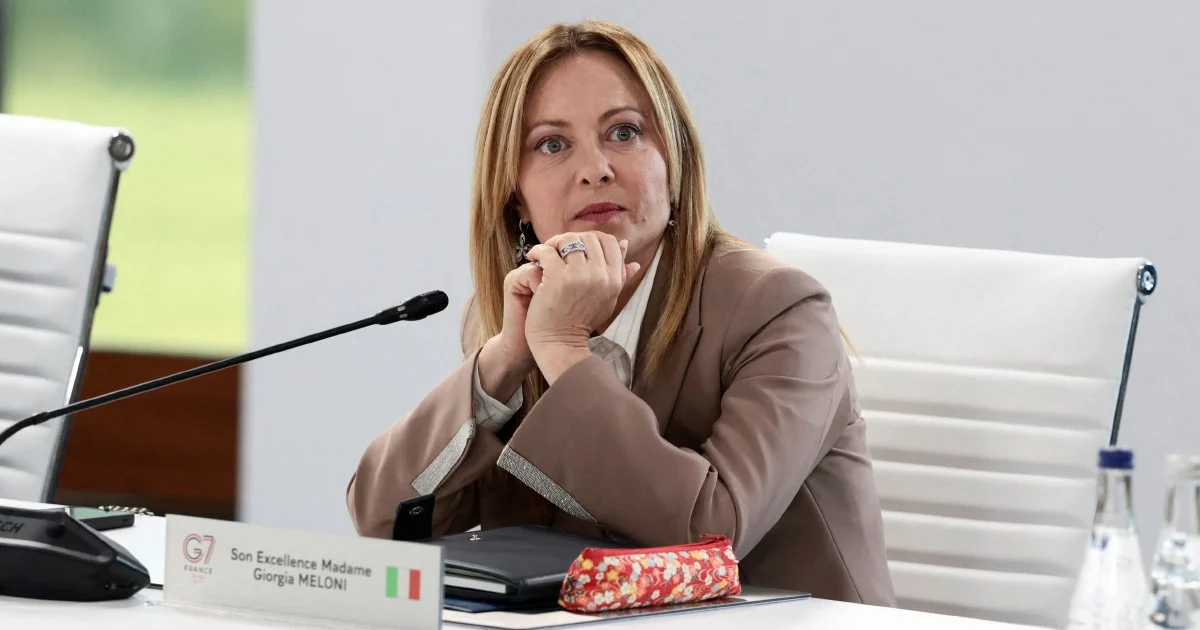
Giorgia Meloni's relationship with Donald Trump has undergone a striking transformation. When the American president began his second term in 2025, the Italian Prime Minister occupied an uniquely privileged position—she was the only European leader invited to his inauguration ceremony, a symbolic gesture that appeared to cement a close working relationship between Rome and Washington. That exclusive invitation seemed to herald a prosperous chapter in transatlantic dealings. Yet the diplomatic honeymoon has deteriorated sharply, with Meloni now openly challenging the American president in ways that would have been unimaginable during those early weeks of his tenure.
Meloni's initial positioning as Trump's favoured interlocutor in Europe reflected broader political alignments. As a conservative nationalist leader, she shared ideological common ground with the American president on several fronts—immigration scepticism, national sovereignty, and resistance to what both viewed as excessive multilateralism. This ideological kinship, combined with her reputation as a pragmatist willing to work constructively with Washington, elevated her profile significantly within Trump's circle. The decision to invite only her to the inauguration was a calculated statement, signalling that the Trump administration viewed Italy as a uniquely important partner within a Europe the president had often criticised for what he perceived as insufficient defence spending and insufficient commitment to American interests.
The early optimism surrounding the relationship suggested genuine potential for strengthened bilateral ties. Italian analysts and foreign policy observers anticipated enhanced security cooperation, potentially including military and technological partnerships. Trade discussions loomed on the horizon, with hopes that Italy might secure advantageous commercial terms despite Trump's protectionist rhetoric. Within Italy's political establishment, there was cautious optimism that being Trump's acknowledged European favourite might yield tangible benefits for the Italian economy and international standing.
The deterioration in this relationship reveals fault lines that emerged relatively quickly once the romance of symbolic gestures gave way to practical policy disagreements. Trump's approach to governing—marked by unpredictable decision-making, rapid policy reversals, and demands for absolute alignment with his administration's positions—has proven difficult for even sympathetic allies to accommodate. Meloni, despite her nationalist credentials and ideological affinities, faces domestic constraints and European obligations that frequently conflict with Trump's preferences. This collision between expectation and reality has forced her into an uncomfortable position where maintaining her earlier stance of uncritical support has become politically untenable.
Meloni's public criticism of Trump represents a calculated political manoeuvre reflecting both domestic and European considerations. Domestically, Italian voters expect their prime minister to defend national interests robustly, even against powerful allies. Capitulating entirely to American demands on sensitive issues—whether trade, military deployment, or technology policy—would damage her standing as a defender of Italian sovereignty. Internationally, maintaining excessive closeness to Trump could isolate Italy within the European Union, where most member states view the American president with considerable scepticism. Meloni must navigate between her natural alignment with Trump's ideological worldview and the practical reality that European integration and Italian interests sometimes require pushing back against Washington.
The specific issues driving this rupture remain instructive for understanding contemporary transatlantic dynamics. Trump's approach to trade negotiations, his demands regarding NATO spending and military commitments, and his unilateral decision-making on matters affecting European interests have created friction even with sympathetic leaders. For Italy, which relies heavily on European mechanisms for economic development and security coordination, subordinating these relationships to Trump's vision of America First governance becomes increasingly costly. The exclusive invitation to the inauguration, rather than creating lasting goodwill, may instead have raised expectations that Meloni couldn't realistically meet without damaging other crucial relationships.
This pivot also reflects broader lessons about Trump's diplomatic style and its limitations. Transactional relationships based primarily on personal rapport and ideological alignment prove fragile when confronted with competing national interests. Even leaders who share Trump's political outlook and initially view him as a potential ally discover that his demands for loyalty and alignment inevitably clash with their domestic political requirements and regional commitments. Meloni's shift from Trump confidante to public critic demonstrates that shared conservative ideology provides insufficient glue to hold together partnerships when fundamental policy interests diverge.
For Malaysia and Southeast Asia, Meloni's experience offers instructive parallels regarding great power engagement. Regional leaders often face similar pressures when cultivating relationships with major powers—the initial warmth of exclusive attention can quickly evaporate when countries cannot deliver the unqualified support demanded. The lesson extends beyond merely Trump or America; it applies to any powerful patron demanding absolute alignment. Successful middle-power statecraft requires maintaining multiple relationships while clearly signalling that no single great power partnership can override vital national interests or regional obligations.
The trajectory from Trump's European whisperer to Trump basher also underscores the volatility characterising contemporary international relations. Diplomatic positioning that seemed advantageous in January 2025 can become politically liabilities within months as circumstances shift. This instability rewards flexibility and pragmatism while punishing leaders perceived as overly committed to particular alignments. Meloni's willingness to adjust her public stance, while irritating to Trump, may ultimately protect Italy's broader interests by signalling that Rome refuses to be taken for granted despite earlier intimacy with the American president.