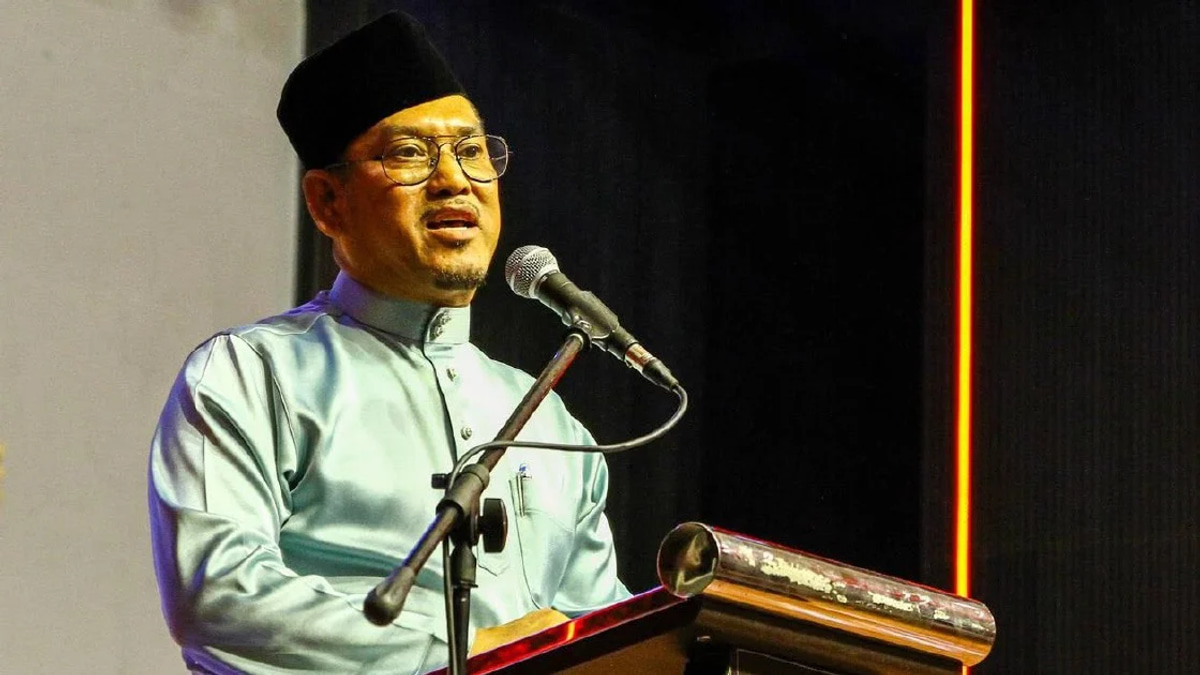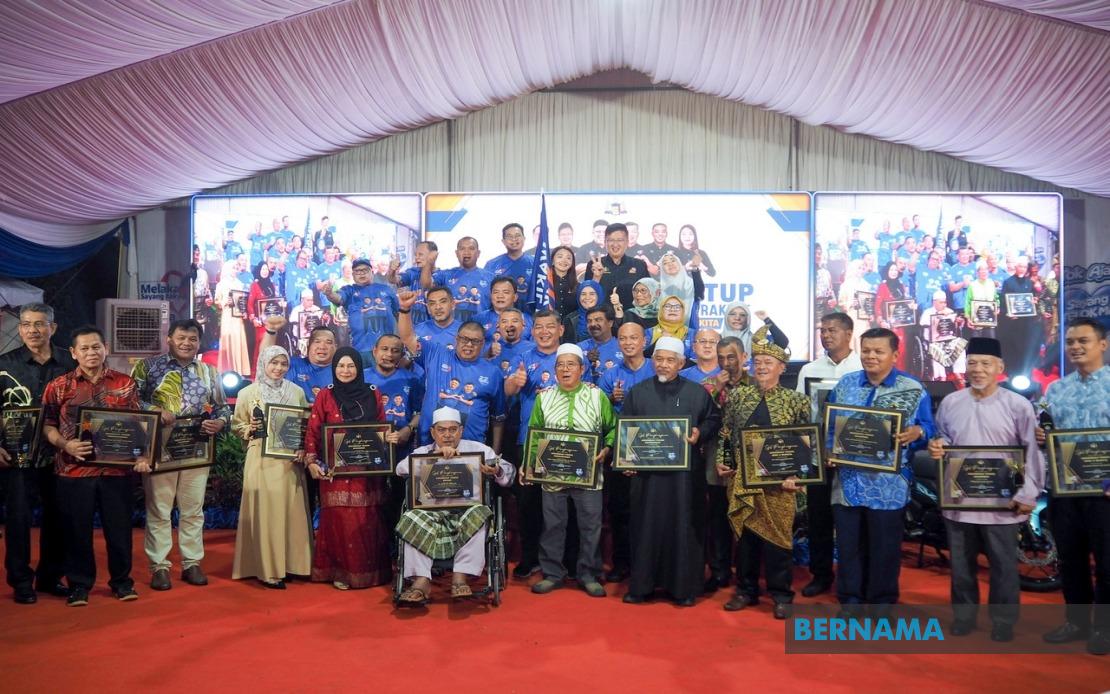
The Melaka state government has signalled a strategic shift in how it evaluates the success of its Wakil Rakyat Untuk Rakyat initiative, with Chief Minister Datuk Seri Ab Rauf Yusoh insisting that tangible improvements in residents' lives matter far more than programme proliferation. Speaking at the closing ceremony of the WRUR effort in Kota Melaka parliamentary constituency, Ab Rauf articulated a philosophy that resonates beyond Melaka's borders—one where government responsiveness is ultimately judged not by activity levels but by whether complaints actually get resolved and people feel the difference.
The WRUR approach represents a deliberate attempt to decentralise problem-solving to neighbourhood level, creating mechanisms whereby grievances from residents are systematically logged, tracked, and actioned regardless of political affiliation or geography. This localised complaint resolution model addresses a persistent frustration in Malaysian governance: the gap between promises made and solutions delivered. By establishing clear recording and follow-up protocols, the initiative aims to eliminate the common scenario where residents lodge complaints that disappear into bureaucratic limbo.
Since launching across 19 state constituencies, the programme has documented approximately 4,027 public complaints, with roughly 2,633—representing more than 65 per cent—successfully resolved. These figures suggest meaningful traction, though the headline metrics disguise the ongoing nature of many grievances. The fact that more than one-third of complaints remain pending highlights both the complexity of grassroots issues and the administrative load placed on government machinery when systems genuinely become accessible to ordinary people.
Kota Melaka's experience demonstrates the programme's operational scope. During its four-week implementation window, more than 500 activities were orchestrated across five state constituencies, reaching over 200,000 residents. Within Kota Melaka specifically, 470 complaints arrived during the deployment period, with 31 resolved immediately and the remainder entered into a priority-based processing queue. Critically, Ab Rauf committed that complaint resolution would continue indefinitely after formal programme closure, signalling that WRUR is designed as infrastructure rather than a temporary exercise.
This continuity commitment addresses a structural weakness in many Malaysian government programmes—their tendency to operate as seasonal initiatives with predetermined endpoints, after which institutional memory and accountability fade. By instructing relevant agencies to maintain engagement with outstanding complaints, the Melaka administration attempts to embed sustained responsiveness into normal governance architecture. Whether this translates into consistent follow-through across multiple electoral cycles and government transitions remains to be demonstrated.
The implementation across three parliamentary constituencies—Alor Gajah, Hang Tuah Jaya, and now Kota Melaka—suggests a measured rollout rather than state-wide saturation. This calibrated approach permits experimentation and refinement before broader scaling, potentially yielding lessons for other Malaysian states interested in formalising complaint management systems. The emphasis on quality resolution rates over quantity of programmes deployed inverts the conventional political incentive structure, which typically rewards visible activities and ribbon-cutting ceremonies.
Telok Mas assemblyman Datuk Abdul Razak Abdul Rahman supplied complementary evidence of sustained development investment, detailing 328 local projects worth nearly RM68 million executed over five years within his constituency. These encompassed road and drainage upgrades, residential rehabilitation, and community facility improvements—unglamorous but fundamental infrastructure addressing daily quality-of-life concerns. The breadth of beneficiaries, from 6,098 residents receiving direct welfare assistance to 1,694 SPM candidates receiving examination support, illustrates how development effort penetrates multiple population cohorts.
Welfare and assistance programmes have provided over RM1.2 million in direct support, whilst the Jualan Rahmah and Jualan Murah food subsidies have operated across 70 iterations since 2022. The Free Petrol Programme benefited approximately 15,000 residents with RM177,000 in assistance, representing targeted cost-of-living relief at a moment when fuel prices remain politically sensitive across Malaysia. Educational support totalled RM244,200 for Form Five achievers and tertiary students, attempting to address structural inequality in accessing higher education.
Beyond immediate service delivery, tourism development projects signal longer-term economic positioning. The RM2.4 million tourism facility upgrade in Sungai Punggor and Alai, scheduled completion in 2027, and the RM300,000 allocation to transform Dataran Telok Mas into a tourism information hub reflect attempts to diversify local economic opportunity beyond public sector employment. The Bukit Larang geosite's identification within the Melaka Geopark framework and pending National Geopark assessment in October suggest alignment with UNESCO-style heritage designation strategies increasingly employed across Southeast Asia for tourism monetisation and environmental conservation.
The Melaka model offers instructive lessons for Malaysian governance more broadly. Rather than pursuing expansion metrics—ever-larger programmes, ever-more constituencies covered—the emphasis on resolution effectiveness and sustained follow-through addresses voter frustration with apparent responsiveness gaps. In an era of declining political trust and electoral volatility, demonstrating that government actually solves problems people raise, rather than simply cataloguing them, represents meaningful differentiation.
Yet significant challenges remain in scaling and sustaining such initiatives. Complaint resolution quality depends substantially on inter-agency coordination, bureaucratic capacity, and political will to address systemic issues rather than merely papering over symptoms. The 65 per cent resolution rate, whilst respectable, indicates that roughly one-third of complaints remain unresolved—a backlog that could undermine public confidence if progression stalls. Moreover, measuring genuine impact requires going beyond counting resolved complaints to assessing whether residents' actual circumstances have meaningfully improved.
For Malaysian states observing Melaka's WRUR approach, the framework demonstrates that structural accessibility combined with transparent tracking mechanisms can enhance government-citizen relationships. The commitment to ongoing resolution after programme formal conclusion—rather than declaring victory and moving resources elsewhere—suggests learning from previous initiatives' shortcomings. As electoral competition intensifies across Malaysia, state governments increasingly recognise that effective local problem-solving delivers political legitimacy more reliably than grand announcements, making Melaka's pivot toward impact metrics over activity volumes a potentially significant governance evolution.