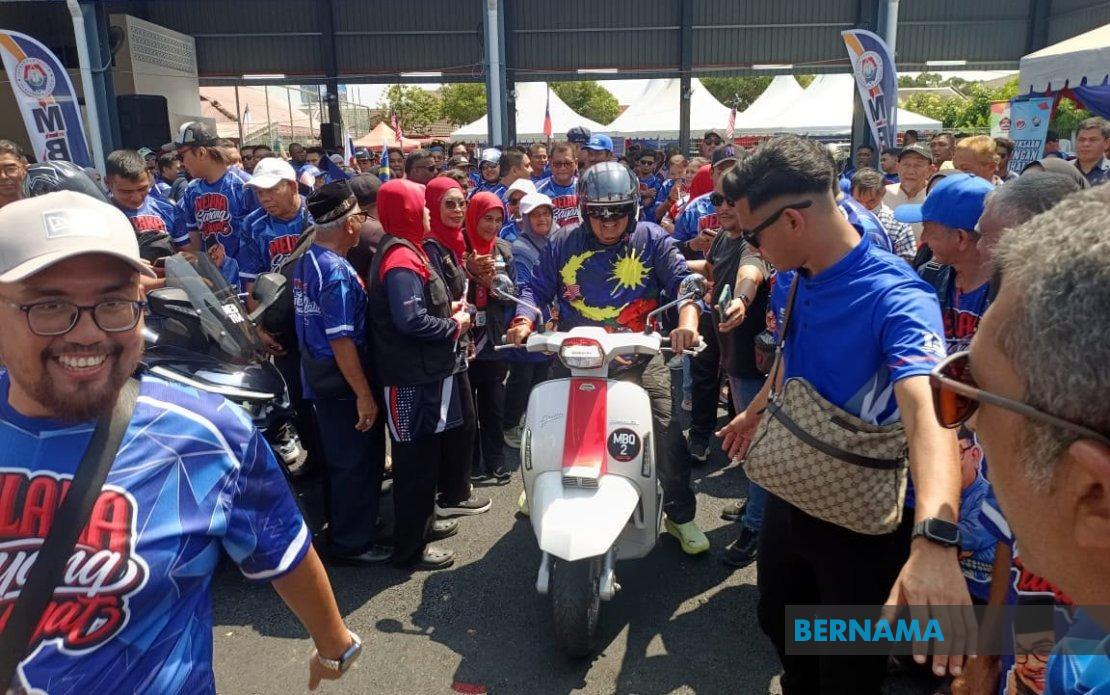
Melaka's Chief Minister Datuk Seri Ab Rauf Yusoh has sought to reframe the state government's ongoing grassroots engagement tour as evidence of institutional commitment to constituent service rather than opportunistic campaign activity. Speaking after the tenth edition of the 'Jelajah Ketua Menteri Sayang Rakyat' (Chief Minister's Affection for the People Tour) in the Pengkalan Batu constituency, Ab Rauf rejected characterizations of the programme as seasonal or election-driven, instead positioning it as an extension of the wider 'Wakil Rakyat Untuk Rakyat' (Representatives for the People) initiative that has anchored the state administration's approach to governance.
The framing carries significance in Malaysia's political context, where town hall tours and direct engagement programmes often attract scrutiny regarding their timing relative to electoral cycles. By emphasizing that the WRUR initiative began two years ago—well before any election atmosphere—Ab Rauf is attempting to establish the tour as routine policy implementation rather than politically motivated outreach. This distinction matters for legitimacy, as Malaysian voters increasingly question whether government resources deployed for public engagement serve genuine constituency needs or primarily advance electoral interests.
According to Ab Rauf, the tour model enables the Melaka state government to address public grievances with greater immediacy and precision than traditional bureaucratic channels might allow. The Chief Minister argued that this direct approach prevents issues from becoming mired in procedural delays, allowing resolvable complaints to reach resolution quickly. This operational philosophy reflects a broader trend among Malaysian state administrations that have invested in alternative service-delivery mechanisms to supplement formal complaint-handling systems, recognizing that citizen satisfaction often depends more on responsiveness than on the technical quality of solutions.
During the Pengkalan Batu visit, the state government highlighted eight constituent issues that it had successfully resolved through the combined framework of the WRUR, HEBAT (Exco Together with People), and the ongoing tour programme. These cases illustrated the range of community concerns the tours address, spanning infrastructure, housing, and religious affairs. The resolution of land acquisition for a Muslim cemetery—facilitated through a Chinese property owner's voluntary 50 percent discount from market value—exemplifies the kind of inter-community cooperation that the tours claim to generate through direct dialogue and collaborative problem-solving.
The housing component of the programme has similarly received emphasis. The state government noted that five dilapidated residences were repaired and a house valued at RM100,000 was provided under the Tenaga Nasional Berhad-sponsored 'Baiti Jannati' programme during this tour cycle. Additionally, the Melaka Historic City Council (MBMB) constructed and handed over a community hall for the constituency. These tangible deliverables serve as measurable outcomes that the administration can cite when defending the programme's effectiveness and its claim to prioritize welfare improvement over political positioning.
For Melaka's elected representatives, the tour model emphasizes the importance of ground-level understanding of constituent needs. Ab Rauf argued that direct engagement ensures that representatives—from the Chief Minister down to state assemblymen—maintain authentic connection with community priorities rather than relying solely on reports or secondhand information. This argument responds to a persistent criticism within Malaysian political discourse: that elected officials often become disconnected from the lived experiences of their constituents, making policies that fail to address genuine grievances. The tour format theoretically counteracts this disconnect by forcing regular face-to-face interaction.
The WRUR programme itself has now expanded to its 25th series, with only five of Melaka's state constituencies remaining uncovered by the current tour cycle. This coverage trajectory suggests the administration intends the initiative to achieve comprehensive constituency penetration, reinforcing the narrative of systematic, organized engagement rather than ad-hoc visits to politically advantageous areas. The completion timeline also implies that once the current round concludes, the programme will likely restart, establishing it as a recurring rather than one-time initiative.
From a governance perspective, Melaka's tour-based engagement model raises questions about scalability and sustainability that extend beyond the state's borders. Other Malaysian state administrations have observed similar programmes, and the Melaka model—combining issue resolution, housing assistance, and infrastructure delivery within a structured tour framework—offers a replicable template. However, the model's effectiveness ultimately depends on whether it generates genuine policy improvements or primarily serves public relations objectives. The distinction between authentic constituent service and performative engagement often turns on whether issues identified in tours translate into systemic reforms or whether they remain handled on a case-by-case basis.
Ab Rauf's emphasis on listening to constituent suggestions and complaints as input for improving state policies touches on a broader tension in Malaysian governance. While direct engagement generates valuable ground-level data, converting that feedback into coherent policy changes requires institutional capacity that extends beyond tour logistics. Whether Melaka's administration successfully translates tour findings into systematic policy adjustments—or whether the tours function primarily as pressure-release mechanisms allowing constituents to voice concerns without necessarily changing underlying governance structures—remains an open question for observers evaluating the programme's long-term impact.
The presence of state officials including Science, Technology, Innovation and Digital Communications Committee chairman Datuk Fairul Nizam Roslan and Pengkalan Batu assemblyman Datuk Kalsom Noordin underscored the multi-level nature of the engagement effort. By deploying various officials and coordinating across multiple government bodies—from TNB to MBMB—the administration demonstrates the horizontal coordination that constituent-facing programmes require. This coordination itself constitutes a claim about government effectiveness: the ability to align multiple agencies around direct constituent service suggests institutional coherence that supports the case for responsive governance.
As Melaka continues expanding its tour programme toward complete constituency coverage, the model will face tests that reveal whether it genuinely transforms constituent-government relations or ultimately functions as an incremental improvement to existing service delivery. The programme's credibility rests not merely on the number of issues resolved or amenities constructed during specific tours, but on demonstrable patterns showing that tour-identified problems receive sustained attention and systematic remediation. For Malaysian constituencies observing Melaka's approach, the real measure of success will emerge over time as subsequent tour cycles return to constituencies already visited, clarifying whether the programme generates continuous improvement or merely creates the appearance of engagement without corresponding institutional change.

