The Melaka state government is poised to receive a critical funding decision this October when Parliament tables the 2027 Budget, determining whether a long-awaited expansion of healthcare services in Bukit Rambai will proceed. The state health committee confirmed that a proposal for constructing a new Type 3 health clinic at the location has been formally submitted to the Ministry of Economy as part of Rolling Plan 2 under the 13th Malaysia Plan framework, positioning the project within the broader national development agenda for the coming decade.
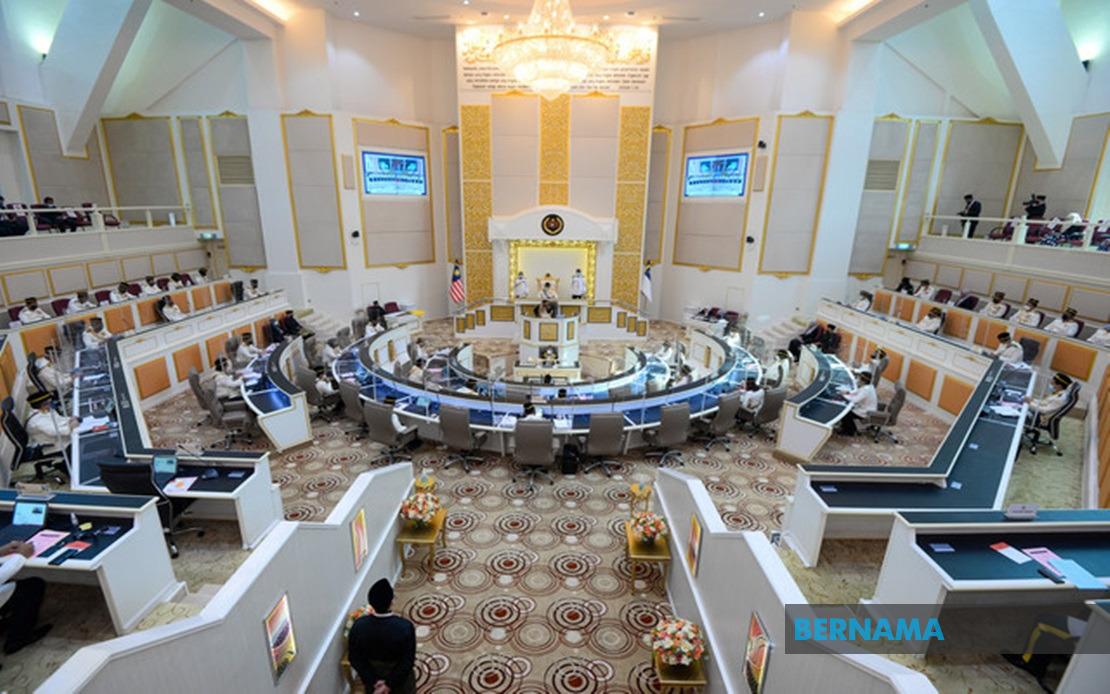
Speaking during a state assembly session, Datuk Ngwe Hee Sem, the State Health, Human Resources and Unity Committee chairman, outlined that preliminary groundwork has already begun, with site preparation completed opposite the existing Bukit Rambai Health Clinic. This advanced preparation suggests serious institutional commitment to the initiative, reducing implementation timelines should budget approval materialise. The project timeline extends across three years from commencement, meaning construction could conclude by 2030 if green-lit during the coming budget cycle.
The proposed facility represents a significant upgrade in healthcare infrastructure for the Bukit Rambai community and surrounding residential areas. Currently, residents rely on the existing clinic, which officials acknowledge cannot adequately meet mounting demand. The new clinic will introduce specialist services previously unavailable locally, including comprehensive radiology capabilities with X-ray facilities and a full-service dental unit housing five treatment chairs. These additions address critical service gaps affecting residents who previously required referral to distant healthcare facilities for basic diagnostic and dental procedures.
Beyond diagnostic services, the expansion encompasses preventive and therapeutic specialties designed to create a more holistic healthcare environment. Nutritional support will be delivered through dedicated dietetics and nutrition services, recognising the growing prevalence of diet-related chronic diseases across Malaysia. Physiotherapy and occupational therapy services will support rehabilitation and musculoskeletal health, while speech therapy addresses communication disorders particularly relevant for paediatric and stroke populations. The inclusion of psychology-informed counselling and medical social work reflects contemporary understanding that mental health and social determinants profoundly influence physical wellbeing.
Eye care represents another gap in the current service landscape, with the new clinic incorporating optometry services for routine vision screening and basic eye health assessment. This expansion matters considerably in a state where uncorrected refractive errors and age-related eye conditions impose substantial productivity costs on working-age and elderly populations alike. The bundle of allied health services reflects international best practice models where primary health facilities function as comprehensive community health hubs rather than purely acute or episodic treatment centres.
Functional integration across existing service divisions forms a cornerstone of the expansion's value proposition. Rather than bolting additional specialties onto an already congested facility, the new clinic will enable coherent service delivery across outpatient, emergency, maternal and child health, laboratory, and pharmacy divisions. This structural reorganisation addresses a persistent weakness in Malaysian primary care: the fragmentation that forces patients to navigate multiple locations and repeat assessments. By consolidating services within purpose-built facilities, waiting times should compress significantly whilst clinical handoff quality improves through proximity and integrated record-keeping.
The maternal and child health component carries particular significance for Melaka, where young families seeking affordable prenatal, delivery, and postnatal care currently face capacity constraints. Strengthening school health services through the new clinic creates systematic frameworks for preventive intervention during formative developmental years, aligning with national public health priorities around childhood obesity, immunisation uptake, and early detection of developmental disabilities. Robust laboratory services enable same-day test results for common conditions, reducing return visits and improving clinical decision-making velocity.
From a broader Malaysian perspective, the Bukit Rambai initiative exemplifies how state governments translate central development plans into localised infrastructure gains. The Rolling Plan 2 mechanism permits provinces to nominate priority projects responding to demographic shifts and emerging service gaps within their jurisdictions. This devolved approach contrasts with top-down allocation models, theoretically ensuring investments address genuine community needs rather than political optics. However, the extended timeline between proposal submission and budgetary decision—spanning more than a year—suggests bureaucratic processes remain constrained, potentially creating implementation bottlenecks even after approval materialises.
Clinician and administrative perspectives reveal complementary efficiency benefits alongside patient-facing improvements. Healthcare workers currently managing the existing clinic operate within space constraints that inflate administrative burden and limit capacity for preventive outreach. The new facility's expanded footprint enables task-shifting opportunities, with nurses and paramedics assuming greater clinical responsibility under appropriate supervision, addressing the persistent doctor-to-population ratio deficiencies plaguing Malaysian primary care. Enhanced laboratory and imaging capacity reduces manual documentation burdens and enables faster results communication, though realising these gains depends critically on electronic health record implementation and staff training investments.
Regional health system dynamics add further complexity to evaluating the Bukit Rambai project's significance. Melaka's three districts compete for limited state health allocations, and approving this expansion will necessarily constrain resource availability for competing priorities elsewhere. Secondary care services at Melaka Hospital and tertiary capacity at Sultan Ismail Petra Hospital require sustained funding to prevent bottlenecks in referral pathways. The new clinic's success ultimately depends on seamless integration with existing tertiary facilities; isolated excellence in primary care cannot compensate for downstream capacity failures.
International experience with similar primary care expansions demonstrates that infrastructure provision alone proves insufficient for service quality realisation. Staffing recruitment and retention, particularly for specialist allied health professionals, consistently emerges as the binding constraint in Malaysian rural and semi-urban contexts. Melaka's proven capacity to attract healthcare workers—given relative proximity to Kuala Lumpur and established residential amenities—offers comparative advantage. However, competitive private sector recruitment and brain drain toward federal capital facilities remain ongoing challenges that warrant targeted retention strategies alongside facility development.
The October budget decision will signal broader government commitment to primary healthcare strengthening amid competing fiscal priorities. Malaysia's post-pandemic fiscal trajectory leaves constrained space for new capital expenditures, and health sector allocation battles intensify against infrastructure deficits in education, transport, and water security. Approving Bukit Rambai would represent meaningful commitment to community-level health equity, though the three-year implementation horizon means substantial expenditures will concentrate in fiscal years 2027-2030, creating future budget pressures for the administration managing that implementation period. For Melaka's residents and Malaysian health policy observers alike, October's parliamentary announcement will clarify whether this proposal transcends planning documents to become concrete infrastructure advancing equitable healthcare access.

