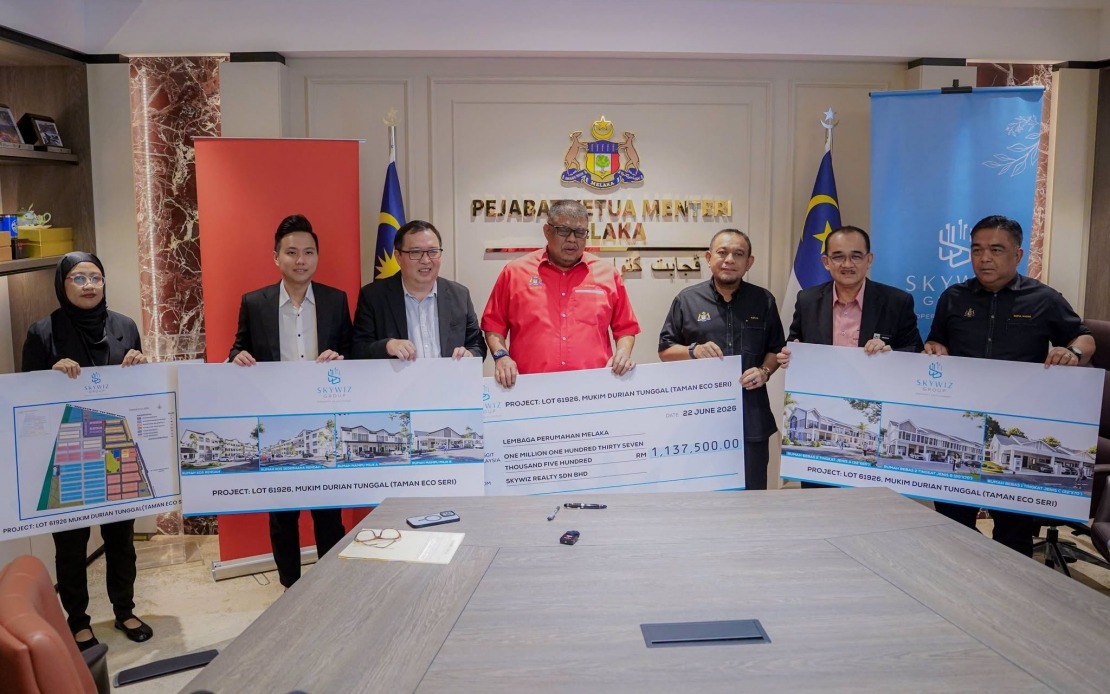
Melaka Chief Minister Datuk Seri Ab Rauf Yusoh has thrown his weight behind a proposal to make lift installations mandatory in newly constructed multi-storey buildings across the state, marking a significant shift in how developers approach property accessibility. Speaking at a housing development signing ceremony in Melaka on July 7, he underscored that such facilities represent a practical necessity rather than a luxury amenity, with particular emphasis on enhancing living conditions for elderly residents and disabled buyers who would otherwise struggle navigating steep stairwells.
The push for this policy has emerged from concrete market challenges facing the state's property sector. Ab Rauf highlighted that numerous multi-storey developments in established residential areas such as Kota Laksamana, Banda Hilir, and Melaka Raya have languished on the market, with inadequate accessibility cited as a primary culprit preventing sales conversions. Rather than viewing this as a developer preference issue, he framed the absence of lifts as a structural impediment to both buyer appeal and long-term property value retention—a recognition that demographic shifts towards an ageing population demand residential solutions adapted to their mobility needs.
The government intends to crystallise this vision through regulatory action. The proposed policy would require all newly constructed shoplots and residential buildings of three storeys or higher to incorporate lift facilities as standard. This represents a departure from existing building codes that may not explicitly mandate such features at lower-storey thresholds, positioning Melaka as potentially ahead of the curve in accessibility-driven urban planning. By institutionalising lift requirements, the state aims to prevent future inventory problems while simultaneously raising baseline living standards for property occupants across income brackets.
The broader context for this initiative lies within Melaka's ambitious affordable housing strategy. The state government has committed to delivering more than 38,440 affordable housing units in coming years as part of its vision to extend homeownership opportunities to middle and lower-income residents. To date, 23,514 units have been completed, demonstrating substantial progress toward this target. This expansion is anchored in the Melaka Sayang Rakyat (MeSRa) initiative, a comprehensive programme reflecting the government's conviction that home ownership forms the cornerstone of stable family structures, cohesive communities, and inclusive regional development.
One such project crystallising these objectives is an agreement signed between the Melaka Housing Board (LPM) and developer Skywiz Reality Sdn Bhd during the July 7 event. The partnership will yield 903 housing units developed across a 26.56-hectare site in Mukim Durian Tunggal, Alor Gajah, with construction expected to commence within ninety days of municipal clearance. Of these units, 453 will fall within the affordable category, comprising sixty-one low-cost houses, fifty-four low-medium cost dwellings, two hundred Type A affordable homes, and one hundred thirty-eight Type B affordable units. The remaining four hundred fifty units are designated for open-market sale, allowing developers to cross-subsidise affordable inventory while generating revenue.
For Melaka's coffers, this arrangement generates immediate fiscal benefits. The LPM is projected to receive RM2.38 million in returns from the Skywiz Reality development, capital that can be redirected toward future housing initiatives or municipal infrastructure. Beyond financial terms, the project exemplifies how public-private partnerships can scale affordable housing delivery without excessive government outlays, provided regulatory oversight remains robust. The Hang Tuah Jaya Municipal Council (MPHTJ) will be responsible for issuing the Form B that triggers the ninety-day construction window, giving local authorities a formal leverage point to enforce compliance.
The state government's supervisory role extends throughout project implementation. Ab Rauf emphasised that the LPM will maintain continuous monitoring to ensure developers honour commitments regarding timeline adherence, structural specifications, and quality standards. This governance stance reflects lessons learned from previous projects where inadequate oversight permitted corner-cutting or delays that undermined buyer confidence and state reputations. By centralising accountability through the LPM, Melaka attempts to safeguard both consumer interests and the programme's credibility among future participants.
The accessibility mandate carries implications that transcend Melaka's borders. As Malaysia's property market grapples with structural challenges—excess inventory, buyer hesitancy, demographic shifts—other states may scrutinise Melaka's approach as a potential template for revitalising stalled developments. Regions with ageing populations, particularly Penang and Selangor, face analogous problems and could benefit from similar policies. Moreover, the directive aligns with broader Malaysian commitments to inclusive design and universal accessibility, bringing residential development standards incrementally closer to international best practices observed in developed economies.
From a developer perspective, the proposal signals an expectation that lifting costs should be factored into project economics rather than treated as discretionary add-ons. This may initially constrain margins, particularly in lower-income market segments where per-unit profits are already compressed. However, by framing lifts as drivers of marketability and sales velocity, the government advances an economic argument that should ultimately reduce developer carrying costs and risk. Buildings that sell faster and achieve higher completion rates provide superior returns despite marginally higher construction expenditure.
The underlying demographic driver deserves emphasis. Malaysia's population is ageing, with the proportion of citizens above sixty-five years projected to climb significantly over the coming decades. This cohort possesses purchasing power and accumulated savings but faces genuine constraints when navigating conventional apartment living without elevator access. By anticipating this trend through policy, Melaka positions itself as a destination for retirees and older homebuyers who might otherwise gravitate toward single-storey properties or resort to relocating. The accessibility mandate, therefore, represents not merely a consumer protection measure but a strategic response to demographic inevitability.
Stakeholders across the property development, real estate agency, and construction supply chains will monitor Melaka's implementation closely. If the policy succeeds in accelerating sales velocity for previously stalled multi-storey projects while maintaining affordability, political pressure may build for adoption elsewhere. Conversely, if developers absorb costs in ways that inflate prices beyond intended affordability thresholds, sceptics will argue the mandate proves counterproductive. The coming months will provide empirical evidence of whether regulatory intervention can genuinely reshape market dynamics in Malaysia's property sector.
Ultimately, Ab Rauf's push for mandatory lift installations represents a recognition that housing policy must evolve beyond merely counting units delivered toward ensuring those units genuinely serve the entire community. By embedding accessibility into the development framework, Melaka articulates a vision where affordable housing need not sacrifice functionality for lower-income beneficiaries. Whether other states and the federal government embrace this philosophy will significantly influence how Malaysian cities accommodate their rapidly changing demographic composition over the next decade.

