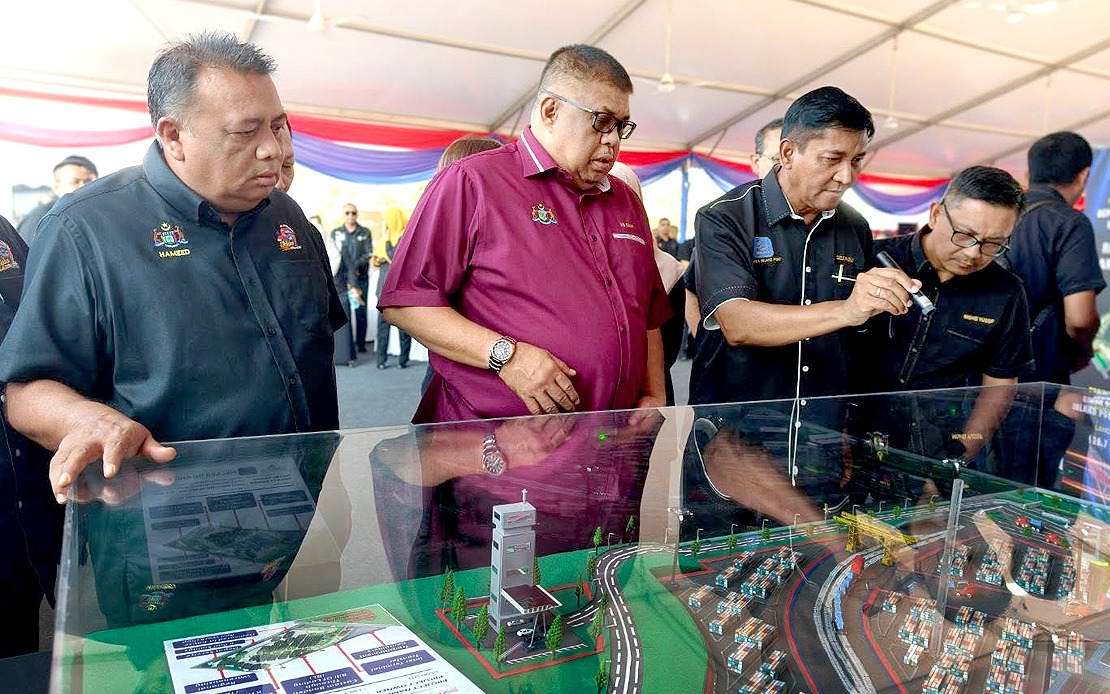
Melaka's state government is embarking on a significant infrastructure investment to strengthen its position as a regional logistics hub, planning construction of a 12-kilometre road that will directly connect the Kuala Linggi International Port to Ayer Molek in Kuala Sungai Baru. The project, estimated at RM129 million, represents a strategic attempt to optimise the state's fragmented port operations and reduce inefficiencies that have historically hampered cargo movement across Melaka's maritime facilities.
Datuk Hameed Mytheen Kunju Basheer, who chairs the state's Public Works, Infrastructure, Public Facilities and Transport Committee, outlined the initiative after a groundbreaking ceremony for the Melaka Inland Port, emphasising that the new thoroughfare will deliberately traverse the MIP area to create seamless connectivity among the state's existing port networks. This design choice reflects a broader strategy to consolidate Melaka's scattered port infrastructure into a more integrated system, recognising that the current arrangement has created redundancies and logistical bottlenecks for trucking companies and shipping operators working across multiple terminals.
The most immediate benefit of the project is the dramatic reduction in travel distances for cargo vehicles. Currently, journeys between these key port nodes require negotiating a circuitous 28-kilometre route that winds through populated areas and existing road networks. The new dedicated connection will compress this to just 12 kilometres, a 57 per cent reduction that translates directly into lower fuel costs, reduced emissions, and faster turnaround times for vehicles. For logistics operators already grappling with thin profit margins and rising operational costs, this efficiency gain represents meaningful competitive advantage, particularly as cargo volumes through Malaysian ports continue to surge.
The project is currently progressing through design stages under the supervision of the Works Ministry, with procurement processes anticipated to commence next year. Hameed indicated that formal quotation procedures, tender processes, and contractor selection will follow during 2024, setting the stage for actual construction work to commence thereafter. The timeline suggests completion is feasible by 2028 or 2029, though infrastructure projects in Malaysia often experience delays due to land acquisition complexities, environmental approvals, or supply chain disruptions, particularly for materials and labour.
Beyond this headline project, Melaka's government is pursuing a complementary suite of port connectivity upgrades designed to transform the state into a more cohesive logistics ecosystem. Plans include widening the existing road from Tangga Batu to Sungai Udang, which provides the critical link to Tanjung Bruas Port, one of Melaka's oldest and busiest maritime facilities. This upgrade acknowledges that vintage infrastructure has become a constraint on modern container volumes and heavy vehicle movements that characterise contemporary port operations.
Another planned six-kilometre route extending from Telok Gong through Kampung Pulau to Paya Lebar will cost approximately RM49 million and serve as a secondary arterial connecting peripheral areas directly to the Melaka Inland Port. This route is particularly notable because it will bypass traditional villages entirely, addressing a chronic tension between port development and residential communities. The segment from Paya Lebar to Kampung Pulau is already in quotation processes, while the Kampung Pulau-to-Telok Gong section remains in design phases, suggesting staggered implementation timelines.
These infrastructure investments must be understood within the context of broader regional competition among Southeast Asian ports. Melaka competes directly with facilities in Johor, Penang, and beyond for transshipment cargo and container volumes. Port efficiency is increasingly decisive in capturing market share, as shipping lines and logistics firms seek terminals that minimise dwell times and reduce overall voyage costs. By consolidating its port infrastructure and reducing internal congestion, Melaka aims to position itself as a more attractive alternative to congested neighbours.
The timing of these projects also reflects Melaka's response to Malaysia's economic diversification imperatives. As manufacturing activity becomes increasingly integrated with logistics and supply chain services, port efficiency becomes an economic multiplier affecting numerous downstream industries. A more connected port network potentially attracts manufacturing investments that depend on rapid inventory turnover and just-in-time supply models, sectors where days saved in cargo handling directly influence location decisions.
For Malaysian readers and businesses in neighbouring states, these developments carry implications for regional logistics costs and supply chain competitiveness. Improved port access in Melaka could offer alternative routing options for companies previously dependent on congested Klang Valley facilities or Penang ports. Reduced travel distances also have environmental ramifications, cutting vehicular emissions across an entire sector characterised by intensive heavy vehicle usage. The projects represent state-level commitment to infrastructure that historically receives insufficient priority relative to glamorous but economically less transformative developments.
However, successful implementation depends on factors beyond the engineering challenges. Land acquisition for the new routes remains a potential constraint, particularly for the Telok Gong-to-Paya Lebar segment traversing inhabited areas. Coordination between federal and state authorities responsible for planning, environmental clearance, and funding must remain seamless. The Works Ministry's involvement in design phases suggests federal-state cooperation, though historical experience suggests such arrangements sometimes spawn coordination difficulties that extend timelines.
Melaka's port development strategy also reflects recognition that individual port terminals cannot operate as isolated entities in modern logistics networks. The Melaka Inland Port's establishment itself signals an intention to move beyond traditional waterfront container operations toward integrated inland distribution, a model proven successful elsewhere. The road network being planned essentially provides the physical infrastructure backbone enabling this integrated vision to function operationally.
The broader significance of these infrastructure commitments extends beyond Melaka itself. They demonstrate state-level agency in developing economic infrastructure, a positive signal regarding Malaysia's sub-national governance capacity. Investment in port connectivity also signals confidence in maritime trade's continued importance despite global shifts toward digital commerce and supply chain localisation. For Malaysian logistics providers, shippers, and manufacturing exporters, improved Melaka port accessibility offers tangible benefits in the form of lower distribution costs and more reliable transit times, ultimately enhancing Malaysia's competitiveness in global supply chains increasingly sensitive to operational efficiency and sustainability metrics.

